
Roof Inspection Costs: What to Expect in 2026
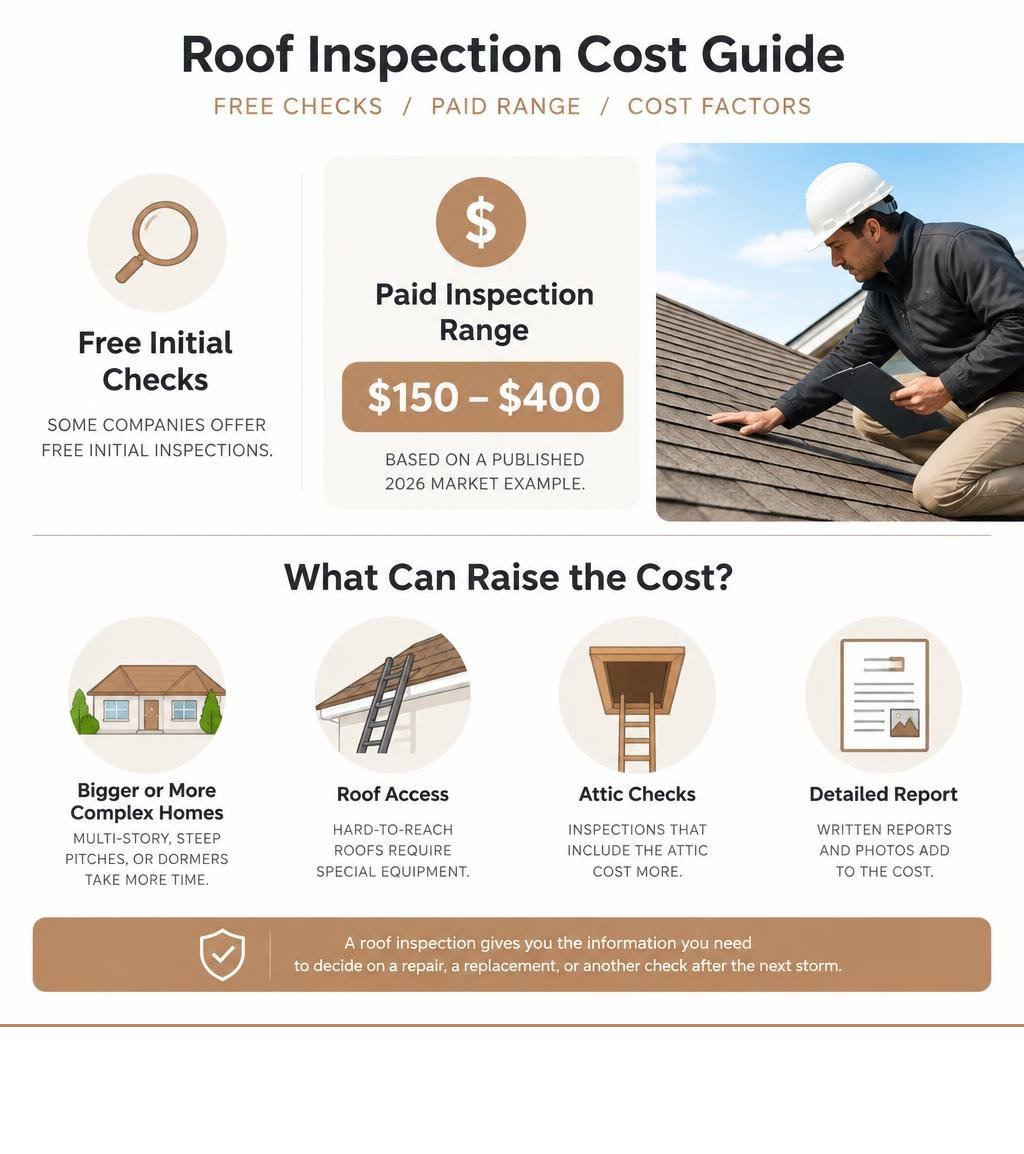
A paid roof inspection may cost about $150 to $400, based on a published 2026 market example. That is a planning range, not a Utah price quote. Some roofing companies offer free initial inspections, while a detailed written report or a hard-to-access roof may cost more. Before booking, ask what the price includes: roof access, attic checks, photos, and a written report.
A roof inspection checks the condition of your shingles, flashing, drainage, and other parts that keep water out. It can help you decide whether you need a repair, a replacement, or simply another check after the next storm.
We are Heaton Bros. Roofing, and our hands-on work repairing and replacing roofs in the Salt Lake City area helps us spot the issues a roof inspection should address. Here is how to weigh inspection costs against the information you will get.
What Influences the Cost of a Professional Roof Inspection?
When budgeting for professional evaluation, understanding the key variables helps you anticipate whether your assessment will sit at the lower or higher end of the typical spectrum. A simple visual walkthrough of a modest rambler requires far less time and equipment than a multi-story custom home with steep pitches and multiple architectural dormers.
Several key factors determine the final price:
- Roof Size and Total Squares: In roofing terminology, one “square” equals 100 square feet of roof area. Larger structures naturally require more time to evaluate thoroughly across every plane and penetration.
- Accessibility and Pitch: Low-slope roofs that allow easy walking are quicker to assess. High-pitch or multi-story structures require advanced fall protection, specialized ladder setups, or aerial assessment methods.
- Drone and Imaging Technology: Utilizing high-resolution 4K drones enables comprehensive documentation of steep, delicate, or otherwise inaccessible roof sections without risking technician safety or damaging fragile coverings.
- Attic and Interior Evaluation: Checking the underside of the decking, intake and exhaust ventilation, and insulation adds meaningful diagnostic value and requires extra time.
- Specialized Diagnostic Tools: Infrared thermography and moisture meters identify sub-surface water intrusion and saturated insulation before leaks become visible on interior drywall.
For a deeper dive into regional pricing tiers, explore our detailed roof inspection cost breakdown and price estimates to see how specific home features affect service pricing.
| Inspection Type | Typical Cost Range (2026 Benchmarks) | Best Suited For | Key Deliverables |
|---|---|---|---|
| Standard Visual Assessment | $0 – $200 | Routine annual maintenance, basic condition check | Exterior walkthrough, general condition summary |
| Comprehensive Drone & Diagnostic | $200 – $400 | Steep slopes, pre-purchase assessments, storm evaluations | High-resolution aerial imagery, attic moisture check, written report |
| Emergency / Specialty Evaluation | $300 – $600+ | Active interior leaks, immediate storm damage triage | Rapid response, immediate source pinpointing, full damage dossier |
Following recognized industry protocols, such as standard inspection practices, ensures that every plane, flashing connection, and drainage junction receives systematic review.
Flat vs. Steep-Slope Complexity
Roof geometry directly influences inspection safety and diagnostic methods. Slope represents the vertical rise over a horizontal run (such as a 4/12 slope, meaning 4 inches of vertical rise per 12 inches of run), whereas pitch represents a fractional relationship across the entire span.
When evaluating flat or low-slope membranes, inspectors focus on seam integrity, perimeter terminations, scuppers, and ponding water. Steep slopes require specialized ladder placement—maintaining a safe 4:1 ratio (roughly a 75-degree angle)—and non-destructive footwear. For very steep angles, drone technology captures clear high-resolution imagery without unnecessary safety risks.
Roof Material Lifespan and Degradation Factors
Different covering materials age at distinct rates depending on sun exposure and environmental stress. Standard 3-tab asphalt shingles generally offer an average service life of 20 years, while thicker architectural asphalt shingles last approximately 30 years. Metal roofing systems often protect structures for 40 to 80 years.
Material longevity is heavily influenced by:
- Thermal Cycling: Daily temperature swings cause building materials to expand and contract repeatedly, stressing sealants, fastener penetrations, and flashing joints.
- Intense UV Radiation: High levels of ultraviolet radiation accelerate granule loss on asphalt shingles and cause protective surface coatings to become brittle over time.
- Substrate and Layering Loads: Building codes limit roofs to a maximum of two covering layers. Adding extra layers traps heat and strains structural framing.
Roof Inspection vs. Free Roof Estimate: Key Differences
Homeowners often ask whether they should pay for a formal diagnostic inspection or simply call a contractor for a free estimate. While both involve someone looking at your roof, their goals and deliverables are fundamentally different.
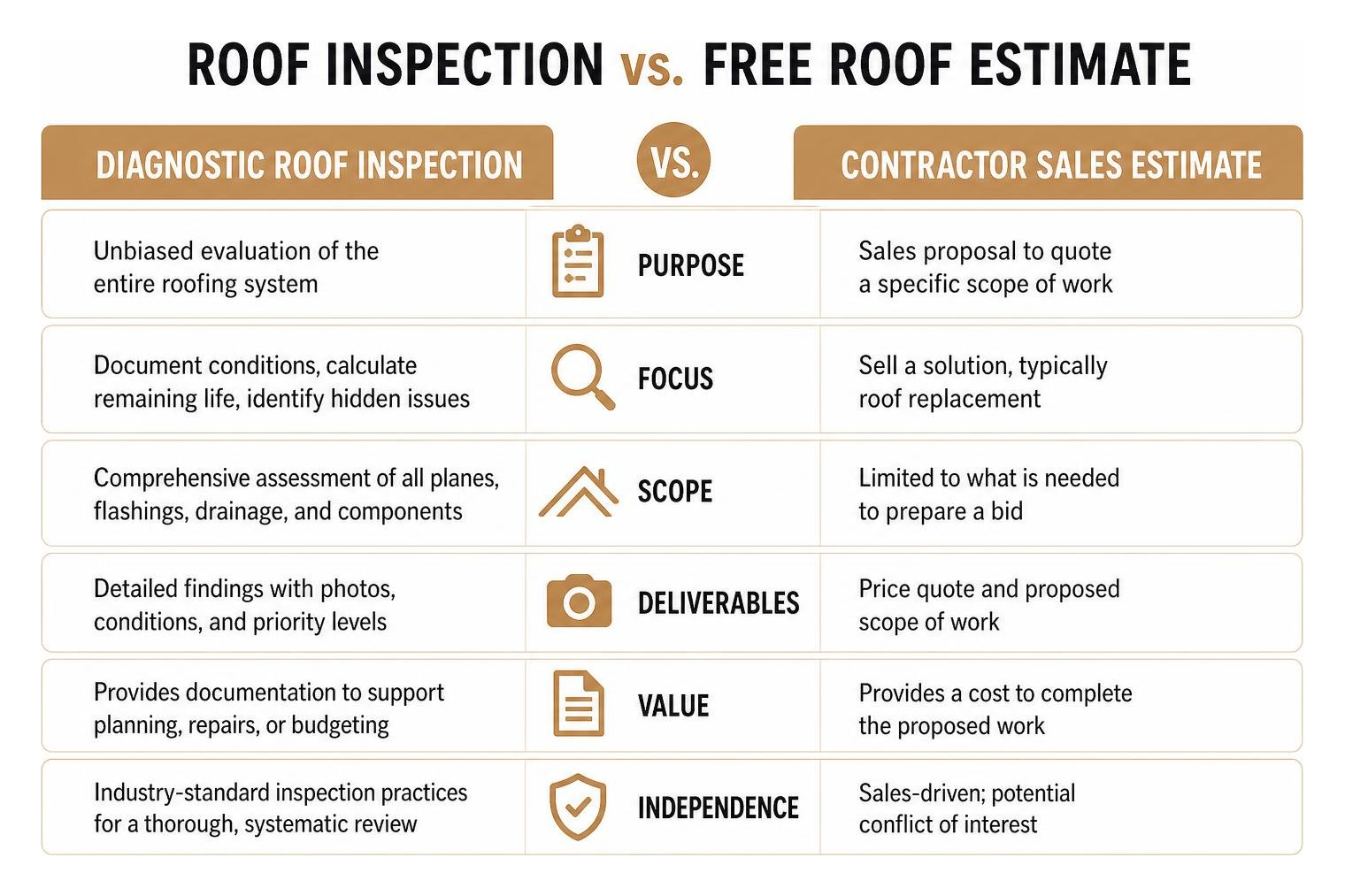
A diagnostic inspection provides an unbiased, comprehensive evaluation of your entire roofing system. The goal is to document exact conditions, calculate remaining service life, and identify hidden issues without immediate sales pressure. In contrast, a free estimate is typically a sales proposal designed to quote a specific scope of work, such as a roof replacement. To avoid common sales pitfalls, it helps to review the catch with free roof estimates before making your decision.
Evaluating Contractor Credentials and Standards
When hiring someone to inspect your home, verify their credentials and local track record. A qualified inspector provides clear photo documentation, itemized findings, and realistic priority levels for necessary repairs.
To ensure your home is in capable hands, verify that any contractor meets strict licensing, insurance, and experience standards. Taking time to follow proven tips for finding a reputable local roofer protects you from storm chasers and unlicensed operators who often overlook hidden structural damage.
What a Thorough Residential Roofing Assessment Includes
A complete evaluation examines how all components of your roofing system work together to keep moisture out of your living space.
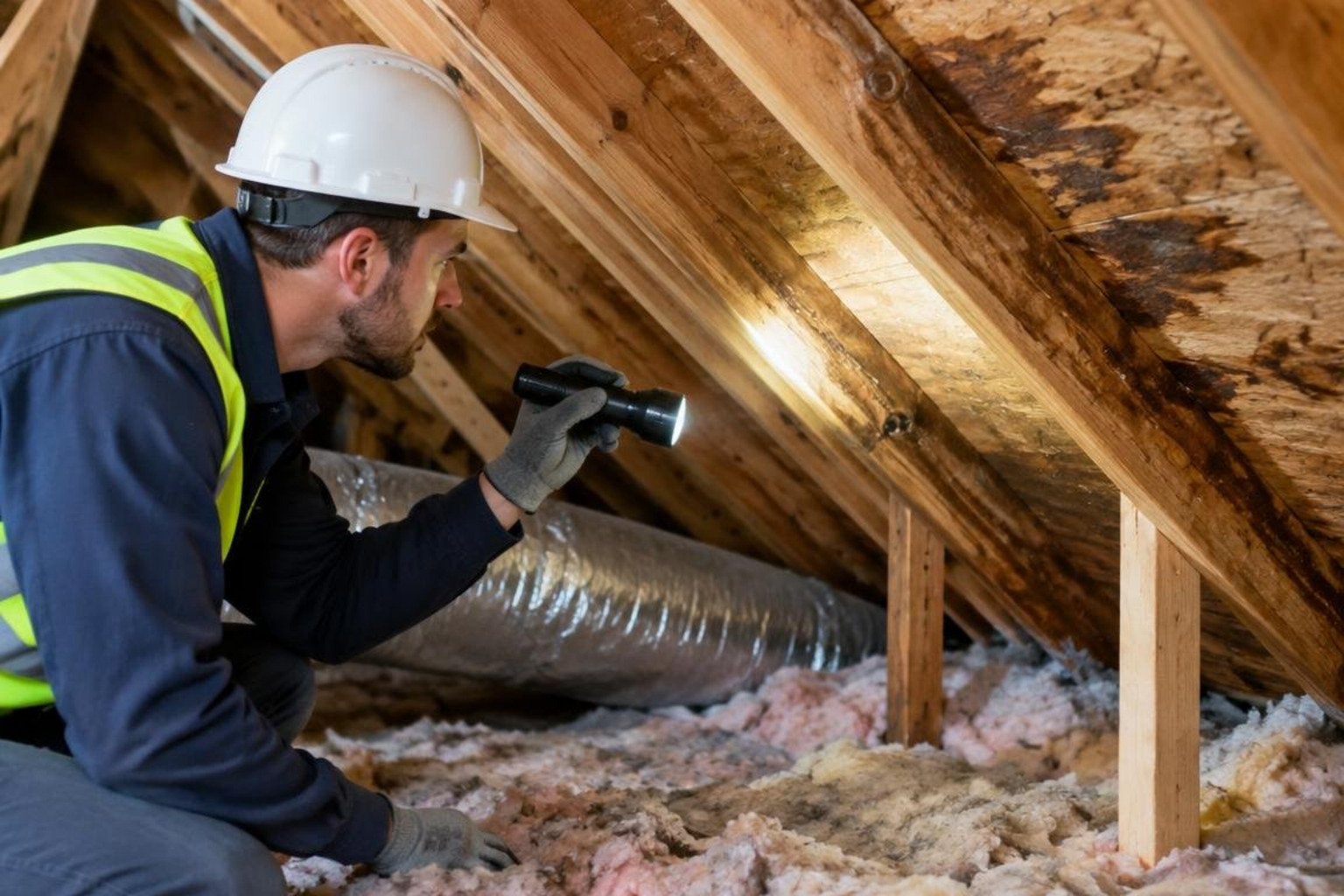
Inspectors reference established frameworks like the NSPIRE roof assembly standards to identify hazards, compromised substrates, or drainage failures. A complete assessment acts as your frontline defense, helping you locate underlying issues early so you can take action on stopping roof leaks before water damages insulation or finished drywall.
Comprehensive Roof Inspection Checklist and Procedures
A standard residential evaluation covers all major external components:
- Surface Covering: Checking for missing, cracked, curling, or blistered shingles, granule loss, and wind-lifted edges.
- Flashing Transitions: Inspecting step flashing along sidewalls, metal valley liners, chimney counter-flashing, and rubber plumbing pipe boots.
- Gutters and Drainage Systems: Checking gutter slopes (a minimum of 1/16-inch drop per linear foot), joint seals, downspout clearing, and drainage capacity. Downspouts must be sized correctly—a standard 2×3-inch downspout handles up to 600 square feet of roof area, while a 3×4-inch downspout handles up to 1,200 square feet.
- Perimeter and Ventilation Components: Inspecting drip edges, soffits, fascia boards, intake vents, and ridge vents for proper airflow and pest entry points.
Attic and Interior Moisture Evaluation
A roof assessment is incomplete without checking the attic. Moisture often penetrates outer coverings long before dripping through a ceiling.
Inspectors enter the attic space to look for:
- Water stains, dark streaks, or active leaks along roof sheathing and rafters.
- Rusted roof nails, indicating chronic condensation and poor airflow.
- Saturated or compressed insulation that has lost its thermal resistance.
- Structural issues, such as sagging decking or dry rot.
Catching elevated humidity and hidden leaks early is critical for preventing structural rot and deterioration in your structural framing.
When to Schedule an Assessment and Common Issues Found
Proactive homeowners schedule evaluations before minor wear turns into an expensive emergency. Regular checkups are an easy way to handle maintaining your roof affordably throughout its operational lifespan.
When unexpected weather hits, knowing the right steps for managing severe storm damage makes the recovery process smooth and predictable.
Why Schedule a Pre-Purchase Roof Inspection Before Buying?
A general home inspection provides a high-level overview of a property, but general inspectors rarely walk steep roofs or carry specialized roofing equipment.
A dedicated pre-purchase roof inspection offers several key advantages:
- Uncovers hidden defects, such as compromised underlayment or improperly flashed valleys.
- Provides an objective estimate of the roof’s remaining service life.
- Gives buyers leverage to negotiate repair credits or price adjustments before closing.
- Protects buyers from unexpected repair bills right after moving in.
Insurance Claim Documentation After Severe Weather
Severe weather can leave subtle impact marks and wind lift that compromise your roof without causing immediate, obvious leaks.
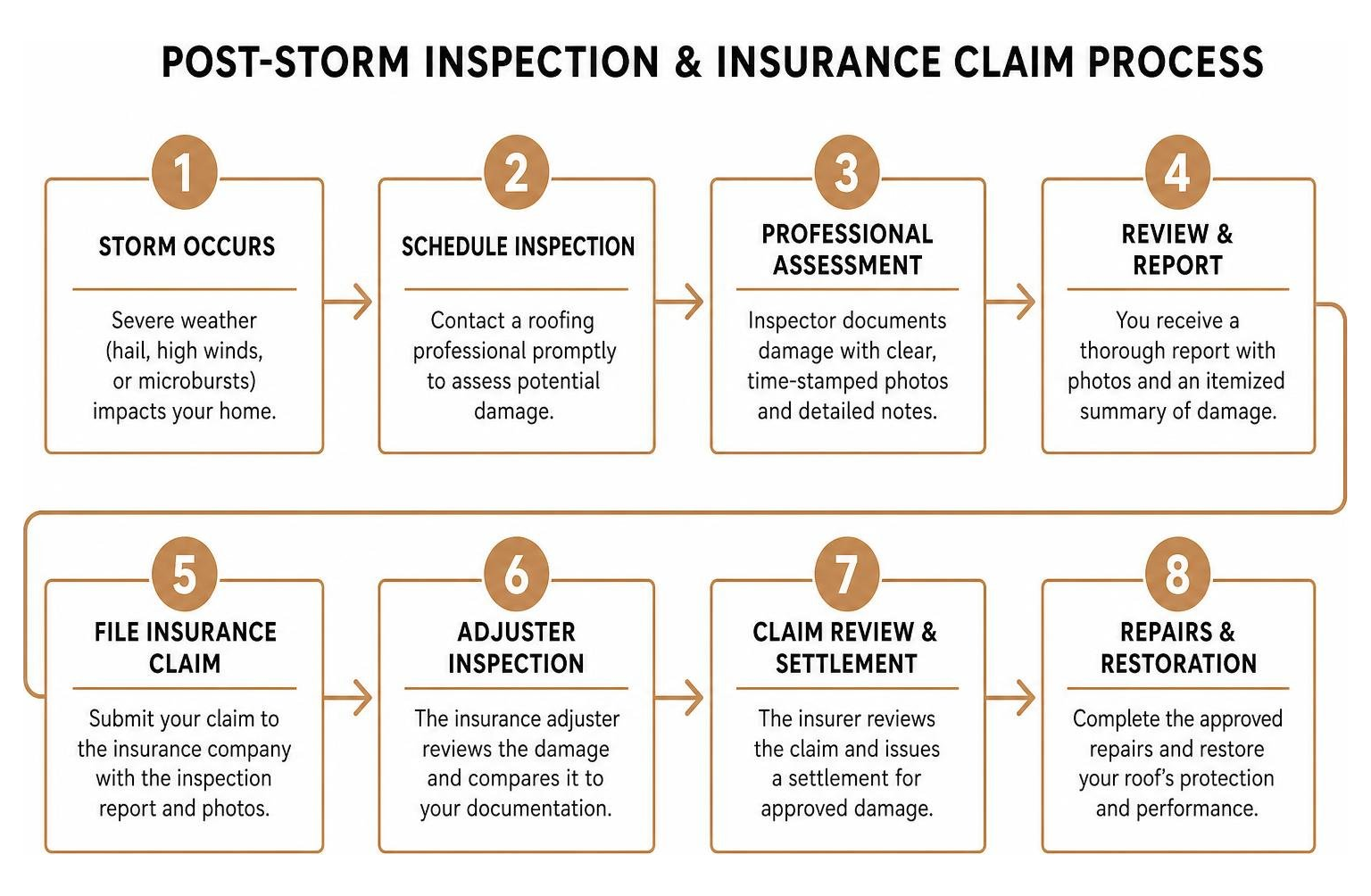
A professional assessment delivers clear, time-stamped photo evidence of hail strikes, dislodged shingles, and lifted flashings. This detailed paperwork is invaluable when navigating insurance claims and damages. Having an itemized breakdown also makes calculating roofing repair cost estimates straightforward when settling your claim with an adjuster.
Frequently Asked Questions About Roof Assessments
How long does an inspection take and do I need to be home?
Most residential evaluations take between 45 minutes and two hours, depending on roof size, pitch complexity, and whether attic access is included. You do not always need to be home for the exterior evaluation, provided access gates are unlocked and pets are secured. However, being present is helpful so the inspector can check the attic and discuss their findings with you in person.
Can an inspector detect damage not visible from the ground?
Yes. Ground-level visual checks miss small hail bruising, cracked shingle tabs, hairline flashing gaps, degraded pipe boots, and deteriorated underlayment beneath intact surface shingles. Using close-up manual techniques and high-resolution aerial drone photography reveals subtle defects long before they cause interior leaks.
How often should a residential roof be evaluated?
We recommend having your roof professionally evaluated at least once a year. In addition to regular annual maintenance, schedule a quick checkup after severe wind or hail storms, or whenever your roof passes the 10-to-15-year mark.
Conclusion
A professional roof evaluation is one of the most cost-effective investments you can make to protect your home. By identifying localized shingle wear, failing sealants, and minor flashing gaps early, you prevent costly water damage and extend the working life of your roof.
At Heaton Bros. Roofing, our 4th-generation, family-owned team brings more than 65 years of hands-on experience to every home we serve. We provide clear, dependable guidance so you can make informed decisions about your property. To review detailed pricing ranges and plan your maintenance budget, explore our roof inspection cost breakdown and price estimates or contact our team to schedule an evaluation today.