

What a Roof Replacement Expert Actually Does — and Why It Matters in Utah
A roof replacement expert is a licensed, experienced contractor who assesses roof damage, recommends repair or full replacement, manages the installation process, and helps homeowners navigate insurance claims — all while meeting local building codes and manufacturer standards.
Here’s what to look for when hiring one:
- Licensing and insurance — valid state contractor’s license and liability coverage
- Manufacturer certifications — designations like GAF Master Elite or CertainTeed 5-Star Premier (fewer than 2% of contractors qualify)
- Local climate knowledge — experience with Utah’s snow loads, UV exposure, hail, and freeze-thaw cycles
- Transparent pricing — written, line-item estimates with no hidden fees
- Warranty coverage — both manufacturer material warranties and workmanship guarantees
- Insurance claim experience — ability to document damage, work with adjusters, and advocate for your claim
Your roof is your home’s first line of defense. In Utah, that means standing up to punishing summer UV rays, heavy winter snow loads, sudden hailstorms, and freeze-thaw cycles that can quietly destroy shingles from the inside out. When something goes wrong — a leak, missing shingles, or storm damage — the decision between a quick repair and a full replacement isn’t always obvious. Getting it wrong can cost thousands.
That’s where the right expertise makes all the difference.
At Heaton Bros. Roofing, we’ve built our reputation in the Salt Lake City area on honest assessments, quality installations, and dependable service — making us the roof replacement expert that local homeowners turn to when the stakes are high. Whether you’re dealing with hail damage or an aging asphalt system, we’re here to walk you through every step.
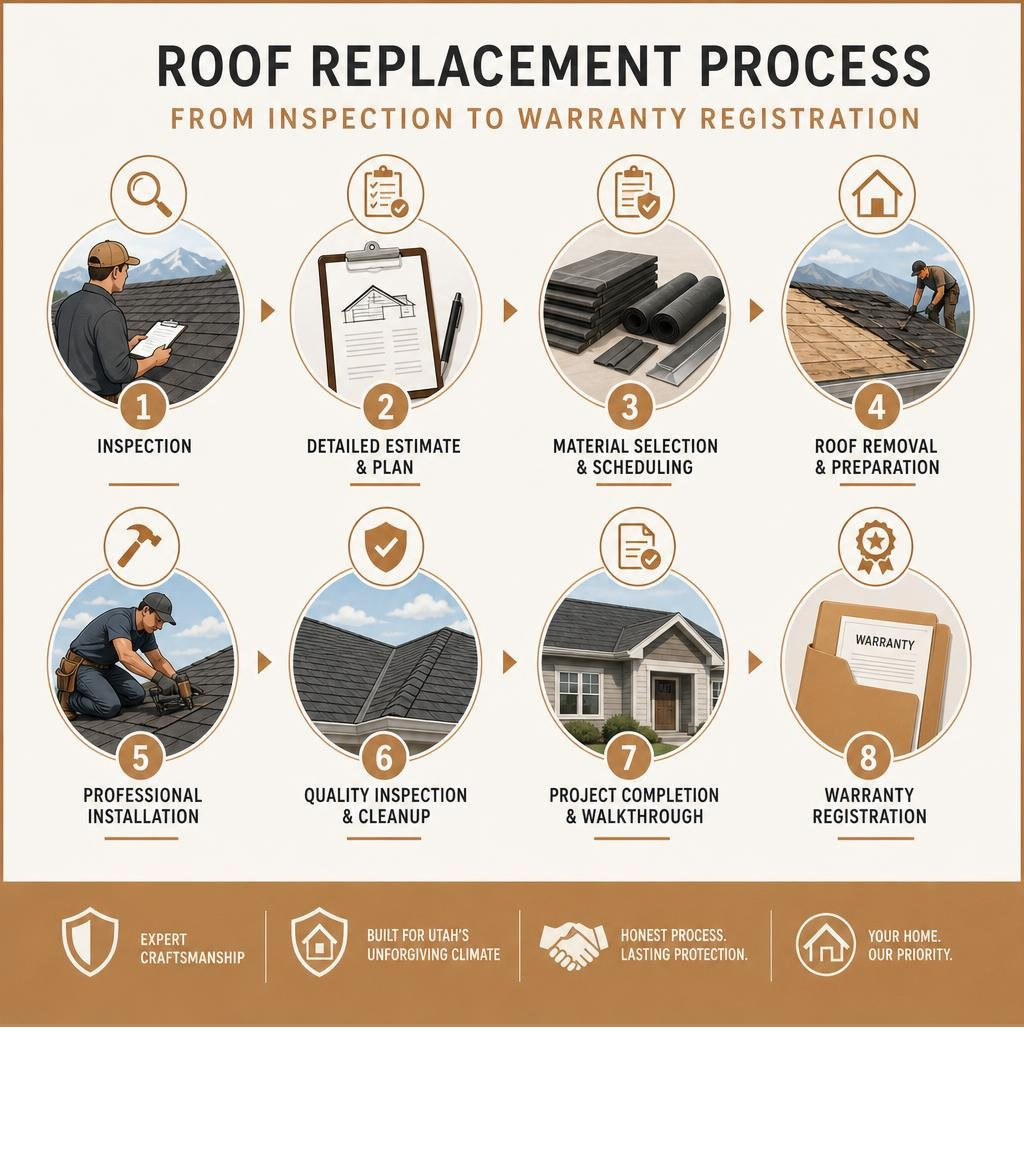
Roof replacement expert terms to remember:
Signs You Need a Roof Replacement Expert
Many homeowners don’t think about their roof until water is actively dripping into their living room. However, your roof usually drops plenty of hints before a catastrophic failure occurs. Knowing what to look for can save you from severe structural damage.
- Roof Age: Most traditional asphalt shingle roofs have a lifespan of 15 to 30 years. If your roof is approaching or has surpassed the 20-year mark, it is living on borrowed time. Even if it looks fine from the ground, the underlying materials are likely deteriorating.
- Widespread Shingle Damage: Keep an eye out for shingles that are curling, buckling, cracking, or completely missing. This is a clear sign that the shingles have reached the end of their functional life.
- Recurring Leaks: A single leak can often be patched. But if you are dealing with multiple leaks across different areas of your home, or if the same leak keeps returning after being fixed, the system has failed.
- Sagging Areas: This is a major red flag. Sagging indicates trapped moisture has rotted the decking sheathing or weakened the structural rafters underneath. If you notice sagging, you must contact a professional immediately.
- Granule Loss: Have you noticed a heavy accumulation of dark, sand-like granules in your gutters or at the base of your downspouts? Granules protect shingles from harmful UV rays. Once they slough off, the asphalt underneath bakes, becomes brittle, and fails rapidly.
If you are noticing these warning signs, it is time to ask: Is your home ready for an upgrade? Understanding what your home needs is the first step toward long-term protection, and deciding between repair and replacement is much easier with a professional inspection.
When to Repair vs. Replace Your Roof
How do you know when a patch job will suffice, or when it is time to bite the bullet and invest in a brand-new roof?
A widely accepted industry guideline is the 25% rule. If storm damage or wear and tear affects more than 25% of your total roof area, it is generally more cost-effective to proceed with a complete replacement rather than attempting extensive, piecemeal repairs.
Minor leaks around a single vent pipe or a few missing shingles after a windy afternoon can usually be resolved with targeted repairs. A professional can easily replace damaged flashing or install a few new shingles. However, if the shingles are old and brittle, nailing down new ones can crack the surrounding materials, creating more problems than it solves. If you are unsure of where your roof stands, consult our guide: Are you in need of a roof replacement?
Why You Need a Roof Replacement Expert for Utah Weather
Utah’s climate is spectacularly beautiful, but it is incredibly harsh on building materials. The Wasatch Front experiences extreme weather shifts that demand specialized roofing techniques.
- High-Altitude UV Rays: Because of our elevation, Utah homes are subjected to intense ultraviolet radiation. UV rays accelerate the breakdown of the oils within asphalt shingles, making them dry, stiff, and prone to cracking.
- Heavy Snow Loads: From Park City down to the Salt Lake valley, winter brings substantial snow. A compromised roof structure can fail under the immense weight of accumulated snow.
- Freeze-Thaw Cycles: This is perhaps the quietest roof killer in Utah. During winter, snow melts during the day and runs down the roof. At night, temperatures plummet, and that water freezes. This cycle causes water to expand under shingles and behind flashing, widening small gaps into major leaks and forming dangerous ice dams.
- High Winds: Mountain canyon winds can easily peel back poorly secured shingles.
Because of these unique regional demands, choosing a local roof replacement expert who understands Utah-specific installation techniques—such as enhanced fastening patterns and ice and water shield barriers—is essential. This is why a new roof is a crucial investment for protecting your property value and ensuring your family’s safety.
Navigating Storm Damage and Insurance Claims in Utah
When a severe windstorm or hailstorm sweeps through the Wasatch Front, it can leave a trail of property damage in its wake. Navigating the aftermath of a storm can feel overwhelming, especially when dealing with insurance companies.

Hail damage on asphalt shingles often looks like dark spots or “bruises” where the protective granules have been knocked away, exposing the fragile fiberglass mat underneath. Wind damage, on the other hand, typically manifests as creased, folded, or entirely missing shingles.
To ensure your home is properly restored, it is vital to work with a contractor who understands local storm restoration guidelines and has a proven track record. Regional teams along the Wasatch Front must be well-versed in handling storm damage to ensure your roof is returned to its pre-storm condition safely and efficiently.
How to File a Successful Roof Insurance Claim
Filing an insurance claim doesn’t have to be a nightmare if you follow a structured approach:
- Document the Damage: Immediately after a storm, take photos of any visible damage from the ground. Note the date and time of the storm. Inside your home, take pictures of any active leaks or water stains on your ceilings.
- Get a Professional Inspection: Before calling your insurance company, have a trusted roofing contractor perform a thorough inspection. They will provide a detailed digital report documenting the damage.
- File the Claim: Contact your insurance provider and present the documentation. They will assign an insurance adjuster to evaluate your roof.
- Meet the Adjuster: Have your roofing contractor present during the adjuster’s visit. A professional contractor can point out subtle damage that the adjuster might overlook, ensuring you receive a fair assessment.
Working with a Certified Roof Replacement Expert
When hiring a contractor to replace your roof, credentials matter. You should always look for manufacturer-certified professionals. For example, GAF Master Elite contractors represent less than 2% of all roofing contractors in the United States, signifying rigorous standards of training, licensing, and insurance compliance.
Whether you are looking at top-tier standards nationwide or comparing local options along the Wasatch Front, verifying credentials is key. Elite standards are applied across different communities to ensure homeowners receive the highest quality of service. The best contractors always emphasize proper licensing, extensive liability insurance, and manufacturer-backed warranties.
Planning Your Roof Replacement: Materials, Costs, and Process
A roof replacement is a significant home improvement project. Planning ahead—understanding your material options, budgeting correctly, and knowing what to expect during the installation—will make the entire process smooth and stress-free.
Roofing Materials Comparison
Choosing the right material involves balancing aesthetics, durability, and budget. Here is how the most popular options compare for Utah homes:
| Material Type | Average Lifespan | Pros | Cons |
|---|---|---|---|
| Architectural Asphalt Shingles | 20–30 Years | Affordable, wide variety of styles, easy to install and repair. | Susceptible to wind uplift and UV degradation over time. |
| Metal Roofing | 40–70 Years | Extremely durable, sheds snow easily, highly wind-resistant, energy-efficient. | Higher upfront cost, can be noisy during heavy rain if not insulated well. |
| Composite / Synthetic Shingles | 50+ Years | Mimics wood shake or slate, lightweight, highly durable, low maintenance. | Expensive upfront investment. |
Understanding these differences is crucial when determining How much does a new roof cost? and when you are Budgeting for your Utah roof replacement.
Cost Factors, Financing, and Warranties
The cost of a new roof is determined by several key variables:
- Roof Size: Roofing is priced by the “square” (a 10×10 foot area).
- Pitch and Complexity: Steep roofs or those with multiple valleys, dormers, and chimneys require more labor and safety equipment, driving up the cost.
- Accessibility: If your home is close to neighbors or has tight access, getting materials on and off the roof takes longer.
- Tear-off Layers: If your home has multiple layers of old shingles, removing and disposing of them adds to the labor cost.
To protect your budget, it is smart to research ways of Avoiding high re-roofing prices and to ask your contractor about flexible financing options.
Additionally, pay close attention to warranties. A standard roof replacement should come with a manufacturer’s material warranty (often 20 to 50 years) and a workmanship warranty from the contractor (ranging from 2 to 10+ years) to protect you against installation errors.
Timeline, Preparation, and Post-Installation Care

A typical asphalt shingle roof replacement on a standard single-family home is often completed in just 1 to 2 days, assuming cooperative weather.
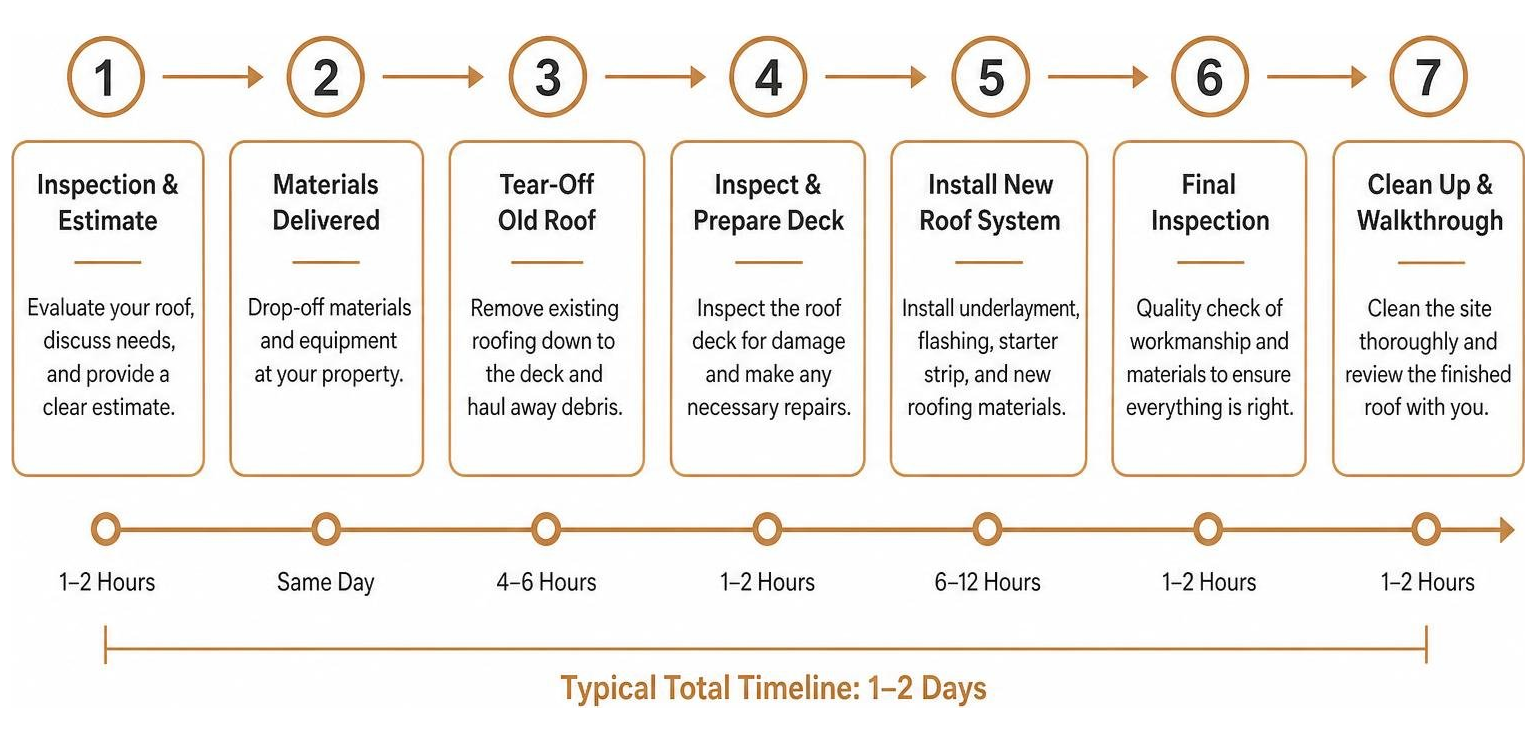
Before the crew arrives, you can prepare your property by:
- Clearing vehicles from the driveway.
- Moving patio furniture, grills, and potted plants away from the house.
- Removing fragile items from interior walls and shelves (the hammering can cause vibrations).
- Keeping pets and children safely indoors.
After the installation is complete, our crew performs a meticulous cleanup, including a magnetic nail sweep to catch stray fasteners. To make sure you are fully prepared, take a look at our Ultimate guide to planning your replacement and read our Guide to re-roofing your home to ensure a seamless experience.
Frequently Asked Questions about Utah Roof Replacements
How long does a typical roof replacement take?
For most residential homes along the Wasatch Front, an asphalt shingle roof replacement takes 1 to 2 days. If you choose a metal roofing system or have a highly complex roof structure, the project can take 3 to 5 days. Unfavorable weather, like rain or heavy snow, will delay the timeline, as we will never uncover your roof when precipitation is active.
Will my homeowners insurance cover the entire replacement cost?
If your roof is damaged by a covered peril—such as hail, high winds, or a fallen tree limb—your insurance policy should cover the replacement cost, minus your deductible. However, insurance does not cover roofs that have simply reached the end of their natural lifespan due to normal wear and tear.
What is the best time of year to replace a roof in Salt Lake City?
Late spring, summer, and autumn are the ideal times for roof replacements in Utah. The dry weather and warm temperatures allow asphalt shingles to seal and bond properly. While we can install roofs during the winter, cold temperatures require extra care, specialized hand-nailing techniques, and manual sealing. For more details on local rules, permits, and seasonal tips, check out the Salt Lake City re-roofing lowdown.
Conclusion
A roof replacement is one of the most important investments you will ever make for your home. When you are ready to take the next step, you need a local partner you can trust to deliver honest advice, exceptional craftsmanship, and dependable warranties.
As a 4th-generation, family-owned roofing company with over 65 years of experience serving Salt Lake City and the Wasatch Front, Heaton Bros. Roofing is dedicated to keeping your home safe and secure.
Don’t wait for the next major storm to test your roof. Contact us today to Schedule a professional consultation and let our family protect yours.