

Understanding What You’ll Really Pay for a New Roof
Roofing installation cost is one of the biggest expenses homeowners face, but understanding what drives those numbers can save you thousands of dollars and a lot of stress.
Quick Answer: What Does a New Roof Cost?
- National Average: $9,117 for a typical residential roof
- Typical Range: $5,755 to $12,498 for most homes
- Per Square Foot: $4.35 to $11.00 installed
- Common 1,700 sq. ft. Asphalt Roof: $6,000 to $9,000
- Common 2,000 sq. ft. Asphalt Roof: $8,927 average
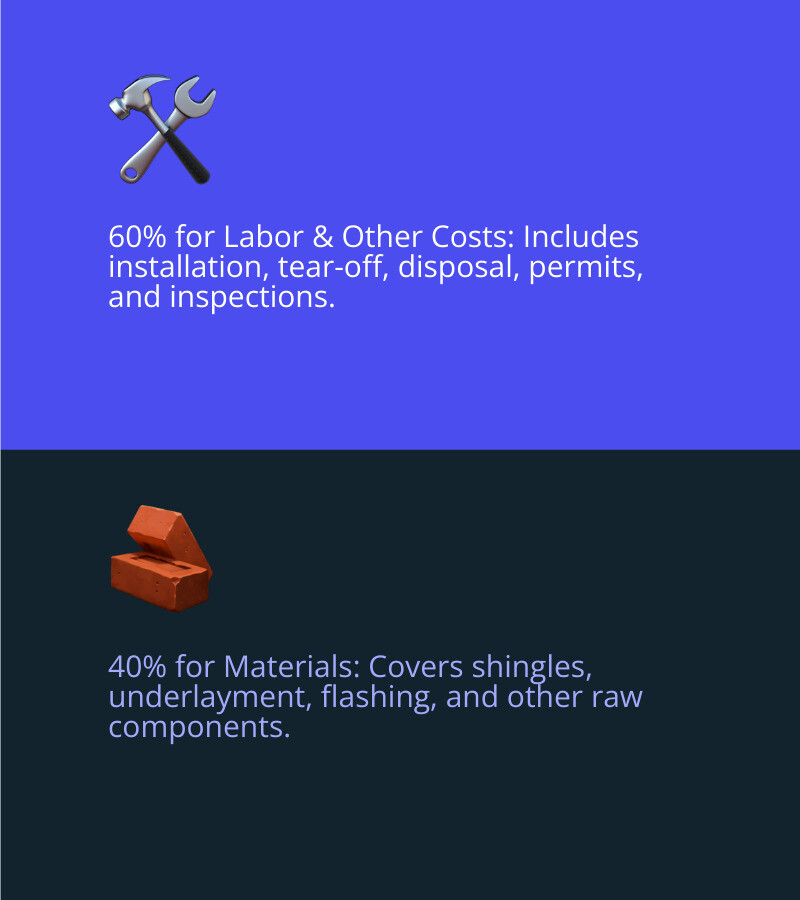
Your actual cost depends on your material choice, roof size, complexity, and location. Labor typically makes up 60% of your total bill, with materials accounting for the remaining 40%.
If you’re a Utah homeowner staring up at missing shingles or water stains on your ceiling, you’re probably feeling that familiar mix of concern and dread. How much is this going to cost me?
The good news? While a new roof is a significant investment, it doesn’t have to be a financial mystery wrapped in contractor jargon and hidden fees.
Most homeowners spend between $6,000 and $16,000 on a roof replacement, but that range is so wide it’s almost useless without context. The real question isn’t just “how much?” — it’s “what am I actually paying for, and where can I make smart choices without compromising quality?”
This guide breaks down every component of roofing installation cost in plain language. You’ll learn what drives prices up or down, where contractors sometimes hide extra charges, and how to balance your budget against Utah’s climate demands.
Whether your roof is 20 years old and showing its age, or storm damage has forced your hand, understanding these costs puts you in control of the conversation when estimates start rolling in.
Breaking Down the Average Roof Replacement Cost
When we talk about the average roofing installation cost, it’s important to know that “average” can be a tricky word. What’s average in Salt Lake City might be different from Provo, and what’s average for a small ranch house is certainly not average for a sprawling two-story home in Draper. However, national averages give us a good starting point to understand the scope of this investment.
The average U.S. homeowner spends about $9,117 on a new roof, with typical ranges falling between $5,755 and $12,498. When we break it down further, you can estimate paying anywhere from $4.35 to $11.00 per square foot for a full replacement.
To make sense of these figures, roofers often talk in “squares.” One roofing square is equal to 100 square feet of roof surface. So, if your home has a 1,700 square foot roof, that’s 17 squares.
For a typical 1,700 square foot asphalt shingle roof, you might expect to pay between $6,000 and $9,000. For a slightly larger 2,000 square foot asphalt shingle roof, the average cost hovers around $8,927. These figures generally include both materials and labor.
It’s clear that asphalt shingles tend to be the most common and often most affordable option, but what if you’re considering other materials? The table below provides a general idea of average installed costs for different roofing materials on a 2,000 square foot roof. These are averages, and your specific project in Utah could vary.
| Roofing Material | Average Cost for 2,000 sq. ft. Roof |
|---|---|
| Asphalt Shingles | $8,927 |
| Metal Roofing | $17,522 |
| Cedar Wood Shingles | $21,769 |
| Glazed Red Mission Tile | $29,417 |
| Slate Shingles | $29,564 |
Understanding these baseline costs is the first step. For more insights into budgeting for your new roof, check out our guide on Don’t Get Soaked: Understanding the Average Cost to Roof Your Home.
Key Factors That Influence Your Total Roofing Installation Cost
The final price tag on your new roof isn’t just pulled from thin air. It’s a careful calculation based on several intertwined factors. Think of it like a recipe – change one ingredient, and the whole dish changes.
Roofing Materials: From Asphalt to Metal
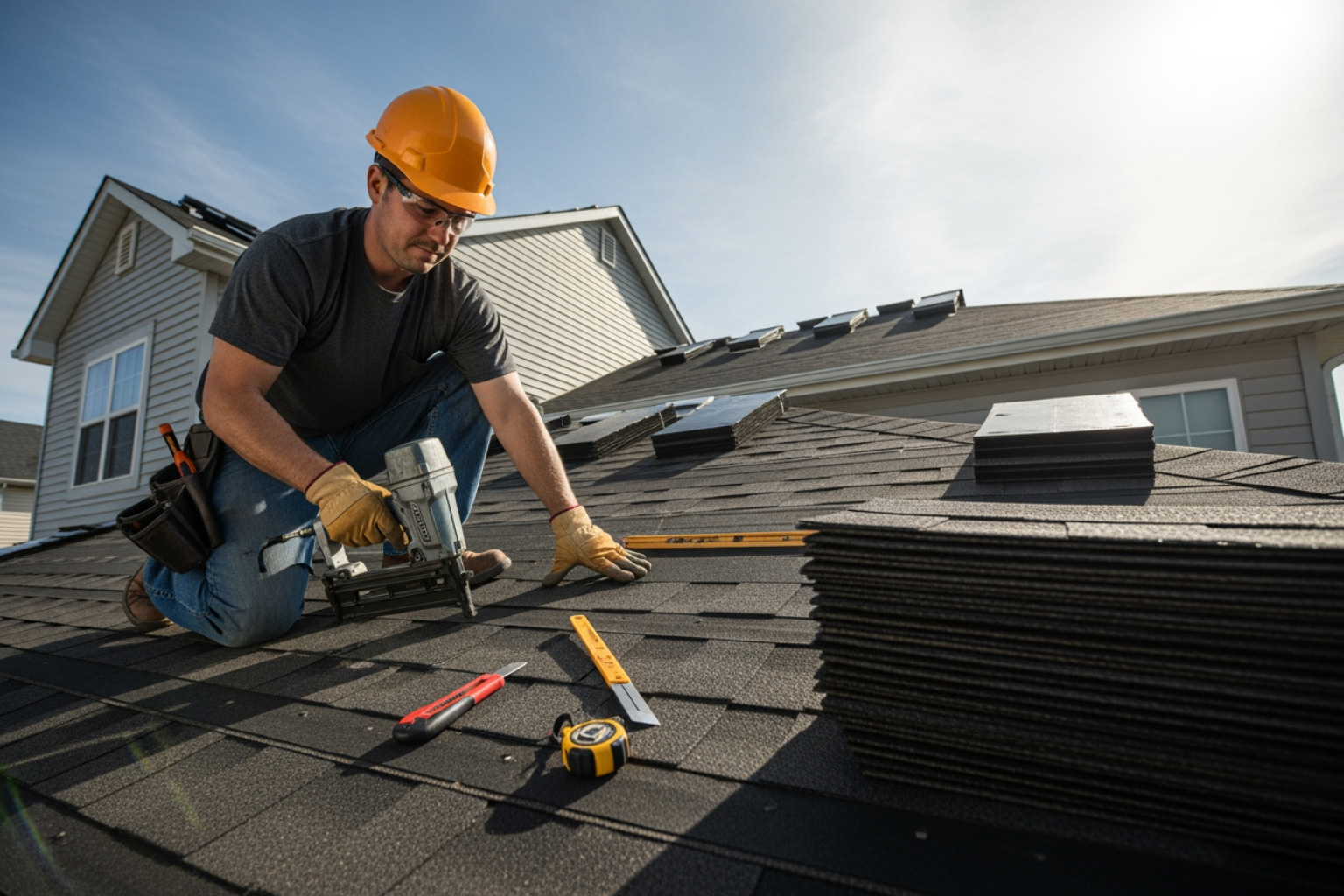
The type of material you choose is arguably the biggest driver of your roofing installation cost. It’s not just about aesthetics; each material comes with its own price point, installation requirements, and lifespan.
-
Asphalt Shingles: The reigning champion of affordability and popularity, especially in areas like Salt Lake City.
- 3-Tab Shingles: The most basic and economical, typically costing $3.43 to $4.65 per square foot. They offer a simple, flat appearance and a lifespan of about 15-20 years.
- Architectural (Dimensional) Shingles: These offer a more textured, multi-dimensional look, often mimicking wood shakes or natural slate. They’re more durable and popular, ranging from $4.11 to $5.57 per square foot, with premium options going up to $5.95 per square foot. Their lifespan is generally 25-30 years.
- Luxury Asphalt Shingles: These are the top-tier asphalt options, designed to replicate the appearance of natural slate or cedar shakes with improved durability. They come at a higher price, typically $7.00 to $16.00 per square foot, and offer extended warranties.
-
Metal Roofing: Increasingly popular in Utah for its durability and longevity, metal roofs can withstand our harsh winters and intense sun. While the national average is $6.00 to $24.50 per square foot, for homes in Salt Lake City and surrounding areas, you might see aluminum ranging from $6.50 to $21 per square foot, and stainless steel from $7 to $20 per square foot. Copper, a premium option, can be $20 to $40 per square foot. Metal roofs boast an impressive lifespan of 50-75 years.
-
Tile Roofing: While less common for residential homes in our specific service areas like Layton or Lehi, tile roofing (like concrete or clay) is known for its distinctive look and extreme longevity. Tile costs range from $6.30 to $12.30 per square foot, with concrete tiles at $6.27 to $8.49 and clay tiles at $9.09 to $12.29 per square foot. Some tile roofs can last over 100 years.
-
Wood Shakes and Shingles: Offering a rustic, natural aesthetic, wood shakes and shingles range from $6.00 to $9.15 per square foot. Wooden shakes are typically $6.47 to $9.12 per square foot, and wooden shingles are $6.02 to $8.14 per square foot. Their lifespan is around 20-25 years.
-
Slate Roofing: The crème de la crème of roofing materials, slate is incredibly durable and beautiful, with a lifespan that can exceed 125-200 years. This comes with a premium price tag, often $23.49 to $31.77 per square foot.
The choice you make here will significantly impact your initial outlay and your long-term maintenance. For a deeper dive into material comparisons, explore our insights on How to Compare Different Roofing Options.
Labor: The Biggest Slice of Your Roofing Installation Cost
It might surprise you, but labor often accounts for about 60% of the total roofing installation cost. That’s right, the skilled hands and hard work of our crews are the largest component of your bill, with materials making up the other 40%.
In Utah, roofer hourly rates can range from $30 to $100 per hour, with experienced roofers earning around $130 per hour. General laborers typically work for about $35 per hour.
When we talk about labor costs per square (100 square feet), here’s a general breakdown:
- Asphalt Shingles: $200 – $350 per square
- Metal Roofing: $400 – $800 per square
- Tile Roofing: $500 – $1,700 per square
- Wood Shakes: $400 – $800 per square
- Slate/Stone Roofing: $400 – $1,400 per square
- Flat/Rolled Roofing: $200 – $450 per square
Why such a range? The complexity of the material, the difficulty of the installation, and the time it takes all play a role. Installing delicate slate tiles, for instance, requires specialized skills and more time than laying asphalt shingles.
While it might be tempting to cut corners on labor, this is where professional installation truly shines. A properly installed roof ensures your material warranties are valid and that your roof performs as it should for its full lifespan. Skimping on labor can lead to costly repairs down the road, making us say, “We told you so!” but we’d rather just see you get it right the first time. Learn more about why this expertise is worth every penny in our article, Why Professional Roof Installation Saves You Money in the Long Run.
Roof Characteristics: Size, Pitch, and Complexity

Your roof isn’t just a flat surface; it has a unique personality! And just like people, some personalities are more complex (and costly) than others. The size, pitch (steepness), and overall complexity of your roof significantly impact the roofing installation cost.
-
Size: This one’s straightforward. A larger roof requires more materials and more labor hours. While your home’s footprint might be 1,500 square feet, the actual surface area of your roof, accounting for slope and overhangs, is typically 15% to 40% greater. We’ll get precise measurements to give you an accurate estimate.
-
Pitch (Steepness): Imagine trying to work on a flat surface versus a steep hill. That’s the difference roof pitch makes. Steeper roofs (those with a slope of 9 inches or more per 12 inches) are more challenging and dangerous to work on. They require more safety equipment, specialized techniques, and extra time, which translates to higher labor costs – potentially adding $1,000 to $3,000 to the total expense. Hipped roofs, with their multiple slopes, can also be more costly than simple gable roofs.
-
Complexity: Does your roof have multiple dormers, skylights, chimneys, valleys, or intricate angles? Each of these features adds complexity. They require extra cutting, flashing, and sealing, demanding more skilled labor and materials. For example, installing a new skylight can add $1,600 to $4,200 to your project. These details aren’t just aesthetic; they’re functional elements that protect your home, and their careful installation is crucial.
Our 4th-generation team at Heaton Bros. Roofing has seen every roof configuration imaginable across Salt Lake City, Wasatch Front, and our other Utah service areas. We understand how these characteristics affect your project and will factor them into your transparent estimate.
Beyond the Shingles: Uncovering Hidden & Additional Costs
You might think of a new roof as just shingles and nails, but there’s a lot more going on beneath the surface. Many homeowners are surprised by additional costs that pop up, but we believe in full transparency. Here are some common “extra” expenses that contribute to the overall roofing installation cost:
-
Roof Tear-Off and Debris Disposal: Unless you’re building a brand-new home, your old roof needs to go. Removing and disposing of existing roofing material can cost anywhere from $0.40 to $2.00 per square foot, or $1 to $5 per square foot for labor alone. Heavier materials like tile or slate will be on the higher end of that range. This includes labor, cleanup, and often dumpster rental.
-
Underlayment: This vital layer sits between your roof deck and your shingles, providing an extra barrier against moisture. New underlayment costs between $1.50 and $2.10 per square foot installed. We always recommend replacing it for maximum protection.
-
Roof Decking Repair or Replacement: Sometimes, once the old roof is off, we find damaged or rotted plywood or sheathing underneath. Replacing or repairing roof decking will add $2.20 to $3.00 per square foot. If the structural integrity of your trusses or rafters is compromised, that can add $5 to $14 per square foot for repairs.
-
Flashing Replacement: Flashing protects vulnerable areas around chimneys, skylights, and vents. Replacing it ensures water-tight seals and costs between $9.00 and $11.00 per foot. Don’t forget pipe boots, which are crucial for vent pipes and typically cost $63.00 to $85.00 each.
-
Drip Edge Installation: This metal strip runs along the edges of your roof, directing water away from your fascia and preventing water damage. Installing a drip edge costs $1.50 to $3.00 per linear foot.
-
Soffit and Fascia Repair/Replacement: These components protect your eaves and provide ventilation. Replacing fascia boards costs $4.25 to $8.62 per linear foot, while soffit replacement is $2.80 to $5.28 per linear foot.
-
Building Permits: Almost all roof replacements require a permit from your local municipality in Utah. These costs vary widely by city (e.g., Salt Lake City, Provo, West Jordan) but typically range from $100 to $500. We’ll handle the permitting process for you.
-
Post-Installation Inspections: While we ensure every job is done to the highest standards, some homeowners opt for an independent roof inspection after installation for peace of mind. These typically cost $100 to $400.
Understanding these potential additions upfront helps you budget realistically and avoids any nasty surprises. For more details on what goes into a comprehensive quote, read our guide on What to Expect from a Roofing Estimate.
Smart Strategies to Save Money on Your New Roof
A new roof is a big financial commitment, but that doesn’t mean you can’t be smart about how you spend your money. Here are some strategies to help reduce your roofing installation cost without compromising quality.
Choosing the Right Materials for Your Budget and Climate
We’ve discussed the vast price differences between materials, but the cheapest upfront isn’t always the cheapest in the long run.
-
Affordable Options: Asphalt shingles remain the most budget-friendly option, with 3-tab shingles being the least expensive. If your budget is tight, these are a solid choice, especially with modern improvements in quality.
-
Long-Term Value vs. Upfront Cost: Consider metal roofing. While more expensive than asphalt initially, metal roofs can last two to five times longer. Over 50-75 years, you might replace an asphalt roof three or four times, making the “expensive” metal roof a better long-term investment. This long-term thinking is crucial for your return on investment (ROI). A new asphalt shingle roof provides about a 59% ROI, while a metal roof offers around 48%.
-
Cool Roofs and Energy Efficiency: In Utah’s sunny climate, an energy-efficient roof can save you money on utility bills. “Cool roofs” are designed to reflect more sunlight, reducing heat absorption and lowering your home’s cooling costs by up to 15%. White roofs are best, reflecting 60-90% of sunlight. Even darker “cool colored” roofs can reflect 30-60%. This isn’t just good for your wallet; it’s good for the environment too. For advice on buying cool roofs, you can Check the DOE’s Energy Saver page for advice on buying cool roofs.
By carefully considering your material choices, you can balance your budget with your desire for durability and energy savings. Explore more options in our article, Top 5 Affordable Roofing Options That Don’t Skimp on Quality.
The DIY vs. Professional Roofing Installation Cost Dilemma
The thought of saving thousands on labor by doing it yourself can be mighty tempting. We get it. But when it comes to roofing, DIY can quickly turn into “Don’t Injure Yourself” or “Destroy Your Investment.”
-
DIY Risks: Roofing work is inherently dangerous. Falls from roofs are a leading cause of construction-related injuries. Beyond safety, improper installation can lead to severe problems: leaks, missing shingles, poor ventilation, and even structural issues. Many manufacturer warranties are voided if the roof isn’t installed by a certified professional. What initially seems like savings can become significantly higher costs down the line for repairs or an early replacement.
-
Professional Benefits: Our 4th-generation team brings over 65 years of experience to every job. We have the expertise, the right tools, and the safety equipment to do the job efficiently and correctly. While a homeowner might take a week or more, our professional crews can often complete a shingle roof installation in just one to two days, minimizing disruption to your life. We ensure the installation meets all local building codes in Salt Lake City, Provo, and beyond, and we back our work with solid warranties.
For most homeowners, especially those without extensive roofing experience, hiring a professional is the safer, more reliable, and ultimately more cost-effective choice in the long run. Don’t underestimate the complexity of a roof replacement. For more on this topic, read What You Need to Know About DIY Roof Repairs.
Repair or Replace? Making the Most Cost-Effective Decision
One of the most crucial decisions you’ll face is whether to repair your existing roof or opt for a full replacement. This choice directly impacts your roofing installation cost in the short and long term.
-
Roof Age: The age of your roof is a primary factor. If your asphalt shingle roof is nearing the end of its 15-30 year lifespan, even minor damage might be a sign that a full replacement is more prudent than pouring money into repairs.
-
Extent of Damage: Is the damage isolated to a small area, or are there widespread issues like widespread curling, cracking, granule loss, or rust? If only a few shingles are missing after a storm, a repair might suffice. However, if you see multiple signs of wear across the entire roof, or if water damage is evident in your attic, a replacement is likely necessary.
-
Cost of Multiple Repairs vs. One Replacement: While a roof repair averages around $1,064 (ranging from $379 to $1,763), repeated repairs can quickly add up. If you’re constantly patching leaks or replacing sections, the cumulative cost might soon exceed that of a new roof. Plus, a new roof offers a fresh start with updated materials and a comprehensive warranty.
Our experts at Heaton Bros. Roofing can conduct a thorough inspection to help you assess your roof’s condition. We’ll give you an honest recommendation on whether a targeted repair or a full replacement makes the most sense for your home and budget. For a detailed guide, see Roof Replacement vs. Repair: How to Decide.
Frequently Asked Questions about Roofing Costs and Warranties
We understand you have questions, and we’re here to provide clear answers. Here are some of the most common inquiries we receive about roofing installation cost and the assurances that come with your investment.
What is the lifespan of different shingle roofs?
The lifespan of your roof is a significant factor in its overall value and your long-term roofing installation cost. Here’s a general overview:
- Composite Shingles: Typically last 12-20 years.
- Asphalt Shingles: The most common, offering 15-30 years of service. 3-tab shingles are on the lower end, while architectural and luxury shingles can last 25-30 years.
- Wood Shingles (Cedar): Expect 20-25 years from a well-maintained wood shingle roof.
- Rubber Roofs: These durable options can last 30-50 years.
- Metal Roofs: Known for their exceptional longevity, metal roofs often last 50-75 years.
- Slate Shingles: The champions of durability, slate roofs can last an incredible 125-200 years, often outliving the homes they cover!
Several factors influence these lifespans, including the quality of the material, the expertise of the installation, the local climate (Utah’s intense sun and snow can be tough!), and proper roof maintenance.
What kind of warranty should I expect from a roofing contractor?
A strong warranty is your peace of mind and an essential part of your roofing installation cost investment. You should expect two main types:
-
Material Warranty: Provided by the shingle manufacturer, this covers defects in the roofing materials themselves. These typically range from 25 to 50 years, with some manufacturers offering lifetime warranties. For instance, some certified warranties can cover defects or premature wear for 50 years, including the cost of material and labor for a new roof.
-
Workmanship Warranty: This warranty is provided by your roofing contractor and covers the quality of the installation. It ensures that if there are issues due to faulty installation, the contractor will correct them. Our workmanship warranties typically offer a longer duration and are often backed by the manufacturer for added security.
When comparing estimates, always ask about both types of warranties. Ensure that your contractor is certified by the manufacturer, as this often open ups the best material warranties. Be aware that some actions, like attaching Christmas lights directly to shingles or allowing trees to touch the roof, could potentially void your warranty. To understand your coverage better, read The Truth About Roofing Warranties.
When is the best time of year to replace a roof?
Timing can subtly affect your roofing installation cost and the overall project experience.
-
Peak Season (Spring/Summer): For many roofers in Utah, spring and summer are the busiest times. Demand is high, so contractors might charge peak prices and have longer wait times. If you need your roof done quickly, this might not be the ideal time to find a discount.
-
Off-Season (Fall/Winter): Fall and winter, particularly the colder months, can sometimes offer advantages. With lower demand, you might find contractors more willing to offer discounts or more flexible scheduling. While winter installation is possible, cold weather can make shingles brittle, requiring careful handling and specific techniques to ensure proper sealing. Our crews are trained for year-round installation, but milder conditions are generally preferred.
The “best” time to replace your roof is when it needs it. Delaying a necessary replacement can lead to more severe damage and higher costs down the road. If you’re flexible, asking about off-season rates could save you a few dollars, but don’t let the pursuit of a discount compromise the urgency of a failing roof.
Get a Clear and Honest Roofing Estimate
Understanding your roofing installation cost can feel like navigating a maze, but armed with this knowledge, you’re now better prepared to make informed decisions. We’ve covered the average costs, the impact of materials and labor, the role of your roof’s unique characteristics, and those often-overlooked additional expenses.
A new roof is more than just an expense; it’s a critical investment in your home’s protection, energy efficiency, and overall value. According to the 2024 Journal of Light Construction Cost Vs. Value report, a new asphalt shingle roof can provide a return on investment of 59%. That’s not just money, that’s peace of mind and improved curb appeal.
When you’re ready to get a clear, honest estimate for your home in Salt Lake City, Wasatch Front, or any of our Utah service areas, choose a reliable, local contractor with a proven track record. As a 4th-generation, family-owned business with over 65 years of experience, Heaton Bros. Roofing prides itself on quality, affordability, and customer satisfaction. We’ll walk you through every line item, ensuring you understand exactly what you’re paying for.
Don’t let the thought of roofing installation cost keep you from protecting your biggest asset. Learn more about our comprehensive roofing services and let us help you get a roof that will last for decades to come.