
Why Your Roof Is Your Home’s First Line of Defense Against Fire
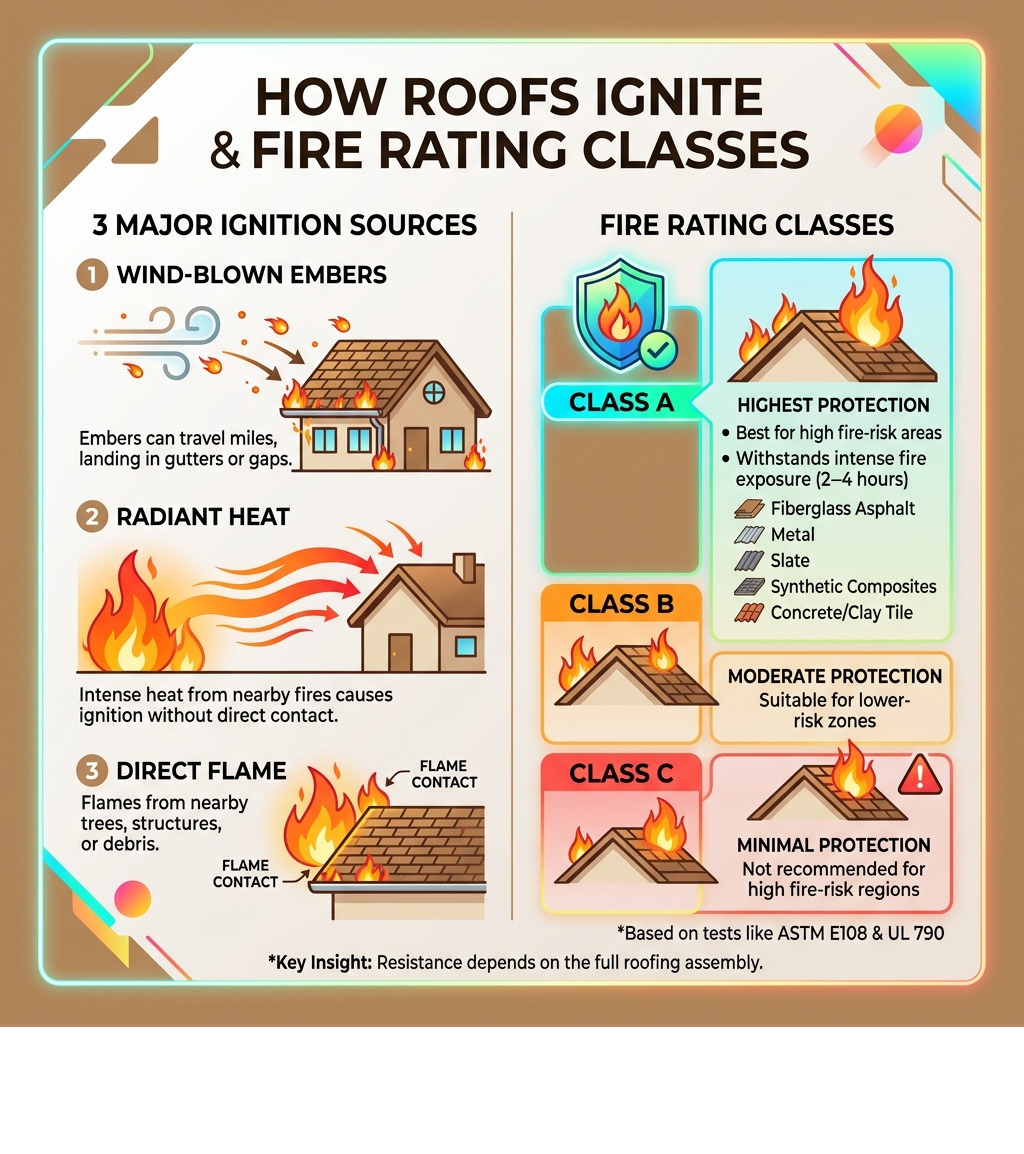
Fire-resistant roofing shingles are roofing materials engineered to slow or stop the spread of fire — rated Class A, B, or C based on how well they hold up against flames, heat, and wind-blown embers.
Here’s a quick overview of what matters most:
- Class A — Highest protection; withstands 2–4 hours of fire exposure; best for wildfire-prone areas
- Class B — Moderate protection; suitable for lower-risk zones
- Class C — Minimal protection; not recommended for high fire-risk regions
- Top materials — Fiberglass asphalt shingles, metal, slate, synthetic composites, and concrete/clay tile
- Key insight — Fire resistance depends on the full roofing assembly, not just the shingle
Nearly 65,000 wildfires burned across the U.S. in 2024, destroying over 8 million acres and thousands of homes. According to the National Interagency Fire Center, these statistics highlight the growing threat to residential properties. And here’s the part most homeowners don’t know: homes typically don’t ignite from the main fire front. They ignite from wind-blown embers that land on the roof, settle into gutters, or slip through gaps — sometimes long before flames ever get close.
That makes your roof choice one of the most important decisions you can make for your home’s safety.
At Heaton Bros. Roofing, we’ve spent years helping Salt Lake City homeowners choose and install fire-resistant roofing shingles that meet both local building codes and real-world protection needs. In this guide, we’ll walk you through everything you need to know — from fire ratings to the best materials to how to keep your roof performing at its best.
Understanding Fire Ratings for Roofing Materials
When we talk about how a roof handles heat, we aren’t just guessing. There is a rigorous scientific process behind every “Class A” sticker you see on a bundle of shingles. In the United States, the gold standards for testing are ASTM E108 and UL 790. These tests, which are critical for meeting National Fire Protection Association (NFPA) safety standards, subject roofing materials to three specific types of torture to see if they’ll crumble or stand tall:
- The Burning Brand Test: A “brand” is essentially a wooden block set on fire. Testers place it directly on the roofing material to see if the fire eats through to the wooden deck underneath.
- Spread of Flame Test: This measures how far a fire can travel across the surface of the roof within a 10-minute window.
- Intermittent Flame Test: This simulates a “stop-and-go” fire scenario, checking if the material will ignite after repeated exposure to a gas flame.
By the end of these tests, a material is assigned a rating. If a shingle can’t pass even the lowest bar, it is considered “unrated”—and in many parts of the Wasatch Front, an unrated roof is a major safety violation.
Class A: The Gold Standard
A Class A rating is the highest level of fire protection available. To earn this, the roofing material must withstand a 12″ x 12″ burning brand weighing 4.4 pounds without the fire penetrating the roof deck. It must also resist flame spread of no more than 6 feet.
In practical terms, a Class A roof can typically withstand 2 to 4 hours of severe fire exposure before igniting. This is the standard we recommend for almost every home in Salt Lake City, especially those near the foothills or in “Wildland-Urban Interface” (WUI) zones. Materials like concrete tile, slate, and high-quality fiberglass asphalt shingles usually fall into this category.
Class B and C Limitations
Class B and Class C ratings offer significantly less protection. A Class B material is tested with a smaller 6″ x 6″ brand and only needs to withstand an hour of fire exposure. Interestingly, research shows that Class B materials allow a fire to spread two feet further in a 10-minute window than a Class A material.
Class C is the bare minimum. It is tested with a tiny 1.5″ x 1.5″ brand (weighing only 5 grams) and only guarantees 20 minutes of protection. While these might meet basic residential codes in some low-risk urban areas, they offer very little peace of mind if a neighbor’s house catches fire or a wildfire ember storm rolls through your neighborhood.
Top Types of Fire-Resistant Roofing Shingles
Choosing the right material is a balance of aesthetics, budget, and safety. In Utah, we have a wide variety of climates—from the dry heat of the valley to the heavy snows of Park City—and your roof needs to handle it all.
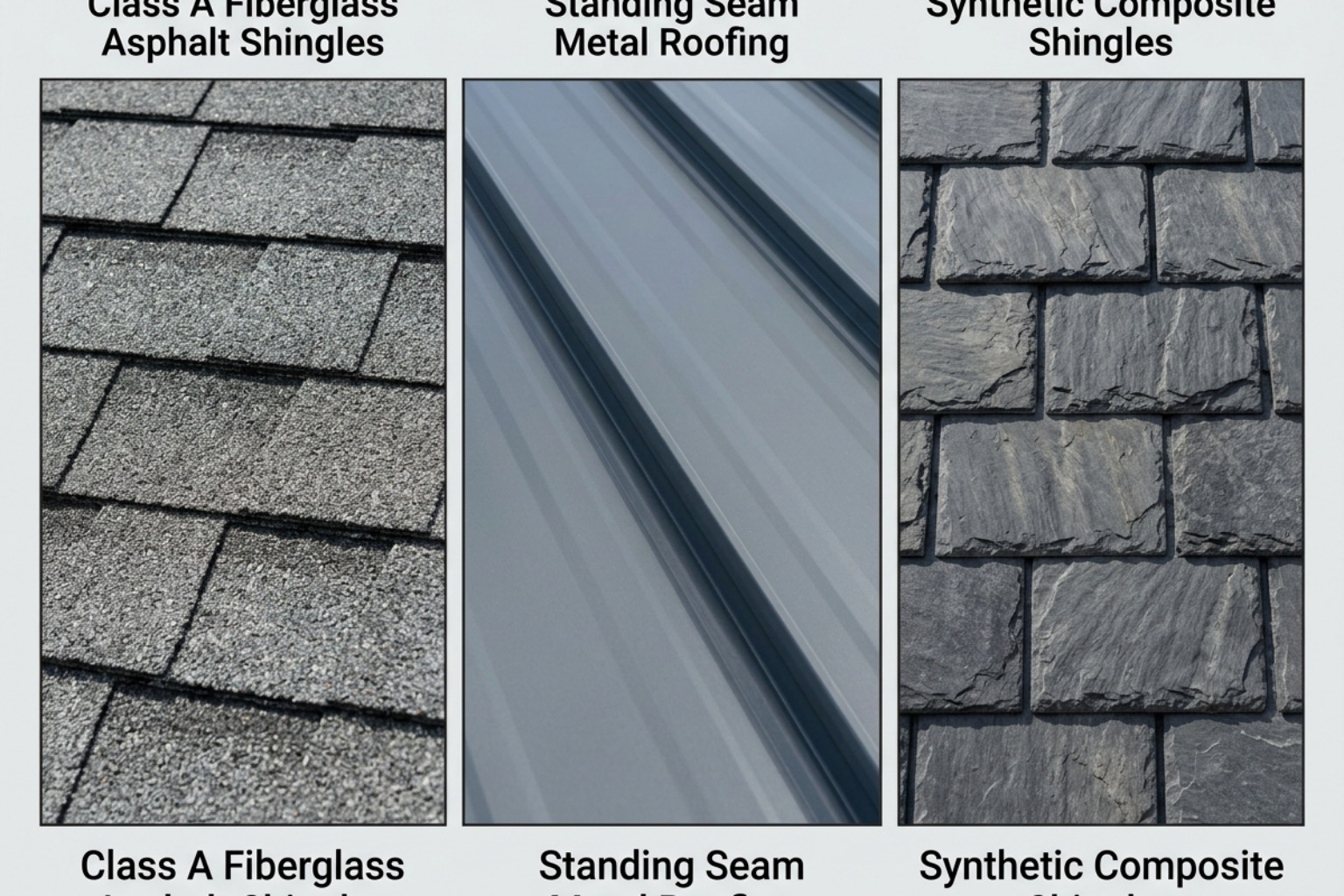
| Material Type | Fire Rating | Average Lifespan | Maintenance Level |
|---|---|---|---|
| Fiberglass Asphalt | Class A | 20–30 Years | Low |
| Metal (Steel/Aluminum) | Class A | 40–70 Years | Low |
| Synthetic Composite | Class A | 50+ Years | Very Low |
| Concrete/Clay Tile | Class A | 50+ Years | Moderate (check for cracks) |
| Slate | Class A | 75–100 Years | Moderate (heavy weight) |
Benefits of Synthetic Fire-Resistant Roofing Shingles
Synthetic or composite shingles are becoming incredibly popular along the Wasatch Front. These are often made from recycled plastics and specialized resins, engineered to look exactly like natural slate or hand-split cedar shakes.
The biggest draw? You get the luxury look of wood without the terrifying fire risk. Brands like Brava offer products that achieve a Class A fire rating while also boasting Class 4 impact resistance—meaning they can survive a Utah hailstorm just as well as they can survive a fire. If you want to dive deeper into these options, you can understand the different types of fire resistant roofing materials to see which fits your home’s style.
Natural Stone and Metal Fire-Resistant Roofing Shingles
Metal roofing is often considered the “ultimate” fire-resistant choice because it is non-combustible. Whether it’s standing-seam steel or aluminum shingles, metal won’t ignite. It’s also fantastic for high-snow areas like Alta or Brighton because snow slides right off, preventing heavy ice dams.
Slate is another natural powerhouse. It is literally stone, so it doesn’t burn. However, slate is incredibly heavy and requires a reinforced roof structure. For many Utah homeowners, metal or high-end synthetic composites provide that same “forever roof” durability without the extreme weight and cost of real slate.
How Fiberglass Asphalt Shingles Achieve Class A Protection
You might be wondering: “Isn’t asphalt made of oil? How can it be fire-resistant?” It’s a fair question! The secret lies in the anatomy of the shingle. Modern fire-resistant roofing shingles aren’t just a slab of tar; they are a sophisticated sandwich of materials.
The Role of the Fiberglass Mat
At the core of every Class A asphalt shingle is a fiberglass mat. This mat acts as a structural skeleton. When a fire hits the shingle, the asphalt might melt or char, but the fiberglass mat stays intact. This prevents the flames from reaching the wooden roof deck underneath.
A high-quality fiberglass-based shingle can withstand a couple of hours of direct flames before the fire manages to break through. This is why we often point our customers toward premium lines like CertainTeed Landmark or TAMKO StormFighter IR. These products use reinforced mats and ceramic-coated granules that reflect heat and resist ignition.
Why Untreated Wood Shakes are Dangerous
Standard, untreated wood shakes are essentially kindling for your home. They are highly combustible and, as they age, they tend to warp and curl. This creates “ember traps”—perfect little pockets where a wind-blown ember can nestle in and start a fire.
In many high-risk areas, insurance companies are now refusing to cover homes with wood shake roofs. If you love the look of wood, we strongly recommend switching to synthetic shakes. You can read more about testing the heat with fire resistant composite roofing to see how these alternatives provide a much safer environment for your family.
Critical Factors in Roof Fire Performance
A fire-resistant shingle is only as good as the roof it’s attached to. Think of it like a bulletproof vest; if the vest is strong but the sides are open, you aren’t fully protected.
The Importance of Proper Underlayment
Sometimes, a shingle only achieves a Class A rating when it is part of a specific “assembly.” This means you need a fire-resistant underlayment (the layer between the shingles and the wood deck) to act as a secondary thermal barrier. Synthetic felts and specialized fire-shield underlayments can prevent the plywood underneath from reaching its ignition temperature, even if the shingles above are scorching hot.
Vulnerable Areas: Gutters and Vents
Your roof’s design can actually work against you. Complex roofs with many valleys and “horizontal-to-vertical” intersections (where a roof meets a wall) are notorious for collecting dry leaves and pine needles. If an ember lands in that pile of debris, it doesn’t matter how fire-resistant your shingles are—the debris will ignite and the fire can spread into the walls or attic.
Vents are another weak point. We recommend installing non-combustible metal mesh over all attic vents to keep embers from being sucked into your home. Also, keep an eye on your gutters. While vinyl gutters are common, they have low melting points. When they melt, they can drop burning debris onto your siding, potentially igniting the rest of the house.
Maintenance Tips for a Fire-Secure Home
Maintaining your fire-resistant roofing shingles is just as important as the installation itself. A “fireproof” roof covered in six inches of dry pine needles is no longer fireproof.
- Clean the Gutters: Do this at least twice a year. If you live in a wooded area like Bountiful or Draper, you might need to do it more often.
- Remove Debris from Valleys: Use a leaf blower or a soft broom to clear out any “litter” that has accumulated in the nooks and crannies of your roof.
- Bird Stopping: If you have a tile roof, ensure the “bird stops” (the inserts at the end of the tiles) are intact. Birds love to build nests in the gaps under tiles, and those nests are highly flammable.
- Defensible Space: Trim overhanging branches. You want at least a 10-foot clearance between your roof and any tree limbs to prevent direct flame contact.
- Inspect for Cracks: If you have clay or concrete tiles, check for cracks. Embers can slip through a cracked tile and ignite the underlayment or the wood deck below.
Frequently Asked Questions about Fire-Resistant Roofing
Do fire-resistant roofs qualify for insurance discounts?
In many cases, yes! Especially in Utah’s high-risk wildfire zones, insurance companies often provide discounts for homes that switch from wood shakes to Class A rated materials like metal or synthetic composites. It’s always worth a call to your agent to see if a roof upgrade could lower your premiums.
How long do Class A fire-rated shingles last?
It depends on the material. Standard fiberglass asphalt shingles typically last 20 to 30 years. However, premium options like the CertainTeed Landmark PRO Solaris or TAMKO StormFighter IR often come with much longer warranties and can last 30+ years. Metal and synthetic roofs can easily last 50 years or more with proper care.
Can I make my existing wood roof fire-resistant?
There are fire-retardant pressure treatments and sprays available for cedar shakes, but they aren’t a permanent “fix.” These treatments can wear off over time due to Utah’s harsh weather and UV exposure. The safest and most cost-effective long-term solution is usually a full replacement with a naturally fire-resistant material.
Conclusion
Your roof is more than just a decorative cap on your house; it is a shield. In a state like Utah, where wildfire risks are a reality every summer, investing in high-quality fire-resistant roofing shingles is one of the smartest moves you can make as a homeowner.
At Heaton Bros. Roofing, we are a 4th-generation, family-owned business with over 65 years of experience serving the Salt Lake City area and the entire Wasatch Front. We understand the local building codes, the unique weather challenges of our desert climate, and the importance of keeping your family safe. Whether you’re in South Jordan, Park City, or Bountiful, we’re here to provide reliable, affordable, and expert roofing solutions.
Don’t wait until the smoke is on the horizon to think about your roof’s fire rating. Protect your home with expert roofing services and give yourself the peace of mind that comes with a Class A rated roof. Give us a call today, and let’s make sure your home is ready for whatever the season brings.