Why Commercial Roof Repair Matters for Your Business
Commercial roof repair is essential maintenance that protects your building, inventory, employees, and daily operations from costly water damage and structural failure. Whether you’re dealing with an active leak, ponding water, or visible membrane damage, understanding your repair options helps you make smart decisions that keep your business running smoothly.
Quick Answer: When You Need Commercial Roof Repair
- Visible signs: Leaks, water stains on ceilings, bubbling or cracked membrane, damaged flashing
- High UV intensity and local climate impacts: Intense Utah sun can accelerate membrane degradation
- Typical costs: $500 to $5,000 depending on damage extent, roof type, and location
- Response time: Emergency repairs within 2-4 hours for active leaks
- Inspection schedule: At least twice yearly (spring and fall) plus after major storms
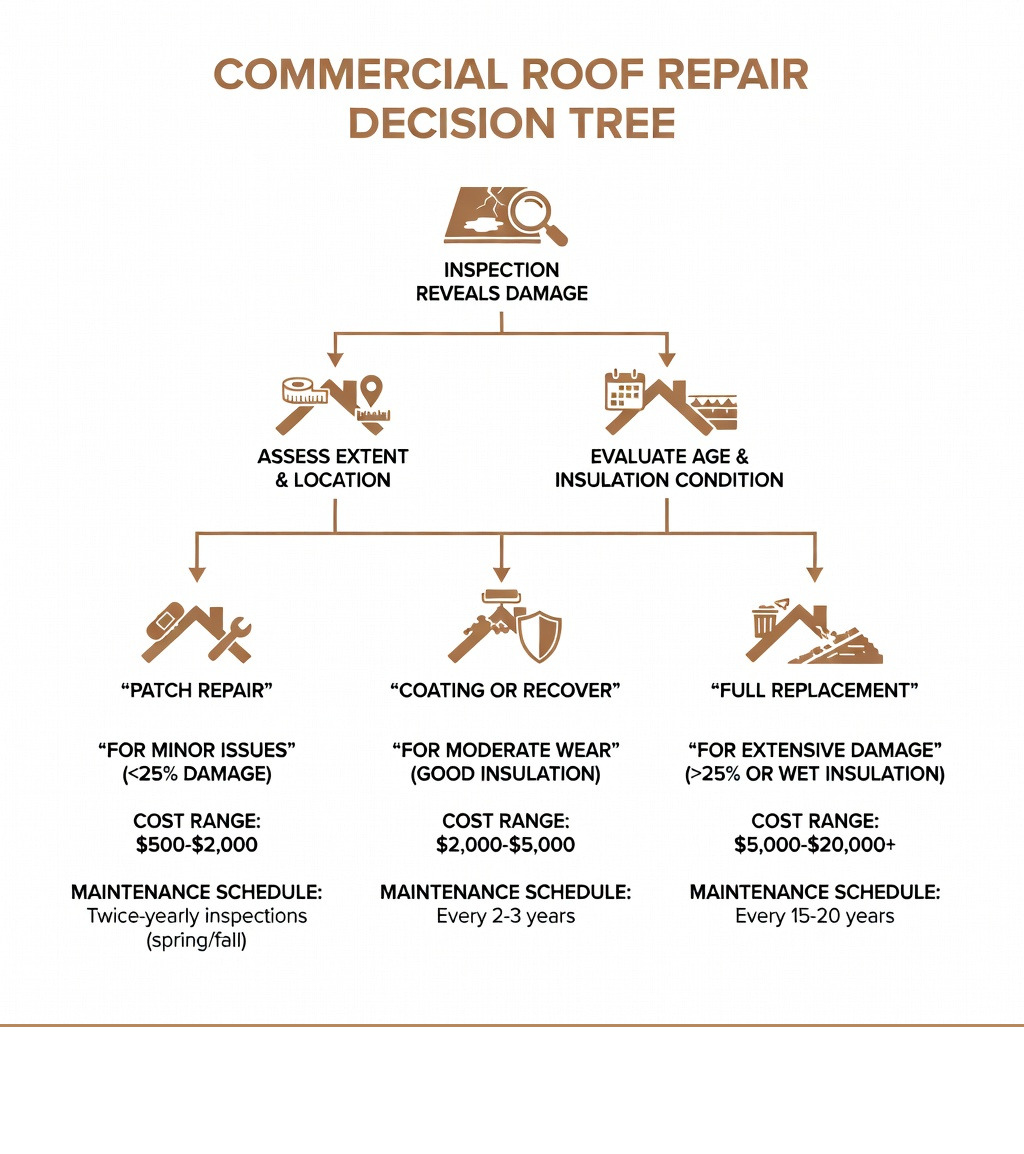
- Decision point: Repair if under 25% damage; consider replacement if over 25% or insulation is wet
For any business owner in Utah, your commercial roof is more than just a structure overhead. It’s the first line of defense protecting your assets, your people, and your ability to serve customers. When roof problems go unaddressed, they quickly escalate from minor leaks into major business disruptions—damaged inventory, safety violations, mold growth, and even temporary closures.
The good news? Most commercial roof issues are fixable when caught early. Regular inspections help spot problems like ponding water, membrane blistering, or flashing separation before they become emergencies. And when repairs are needed, working with experienced professionals ensures the job is done right the first time, protecting both your immediate operations and long-term property value.
Identifying the Need for Commercial Roof Repair
In the high-altitude environment of the Wasatch Front, our roofs take a beating. From the heavy snow loads in Layton and Park City to the scorching summer sun in St. George or Nephi, your roof is constantly expanding and contracting. Identifying the need for commercial roof repair early is the difference between a quick patch and a massive capital expense.
The Warning Signs
Keep an eye out for these “red flags” during your monthly walkthrough:
- Ponding Water: If you see standing water 48 hours after a storm, your drainage is failing. This adds immense weight and accelerates membrane rot.
- Interior Stains and Odors: Water stains on ceiling tiles or a persistent musty smell often indicate a slow leak that has already breached the insulation.
- Bubbling or Blistering: This happens when moisture gets trapped under the membrane and expands as it heats up in the sun.
- Flashing Separation: Most leaks occur at the edges or around penetrations (like HVAC units and vents). If the metal flashing is pulling away, water has an open invitation.
The UV intensity and local climate impacts in Utah are particularly harsh. High UV radiation can make roofing membranes brittle over time, leading to cracks that are hard to see from the ground. If you notice your energy bills rising unexpectedly, it might be because your roof insulation is wet and no longer providing a thermal barrier.
Common Mistakes Property Owners Make
We’ve seen it all in our 65 years of service. Often, the biggest damage comes from how an owner reacts to a problem.
- Ignoring Minor Punctures: A small hole from a dropped tool or wind-blown debris might not cause a drip today, but it will saturate your insulation by next month.
- Choosing Cheap Materials: Using residential-grade caulk on a TPO commercial roof is like putting a band-aid on a broken leg.
- Neglecting Drainage: Clogged drains are the #1 cause of premature roof failure.
For a deeper dive into what to look for, check out our detailed guide on roof repairs.
Repair vs. Replacement: Making the Right Investment
One of the most common questions we get from business owners in Salt Lake City and South Jordan is: “Do I just patch it, or is it time for a new one?” Making the right investment requires looking at the “big picture” of your building’s health.
The 25% Rule
As a general industry benchmark, if more than 25% of your roof surface is damaged or failing, a full replacement is usually more cost-effective than a repair. Why? Because at that point, you’re likely chasing leaks every few months, and the cumulative cost of those service calls will soon exceed the price of a new roof.
Factors to Consider:
- Wet Insulation: If an infrared scan shows that large sections of your insulation are saturated, a repair won’t help. Trapped moisture will rot your deck from the inside out.
- Roof Age: Most commercial roofs (TPO, EPDM, Modified Bitumen) have a lifespan of 20 to 30 years. If your roof is 25 years old, putting $5,000 into a repair is often “throwing good money after bad.”
- Energy Efficiency: Modern roofing systems offer incredible energy-efficient workspace benefits. A new, reflective roof can lower your cooling costs by up to 30% during those hot Utah summers.
- Building Value and Warranties: Frequent repairs can sometimes void manufacturer warranties if not done to spec. Conversely, a well-maintained or newly repaired roof maintains the building’s appraisal value.
If you manage a smaller facility, you might have unique needs. We specialize in small commercial roofing considerations to ensure even boutique businesses get the protection they deserve.
Estimating the Cost of Commercial Roof Repair
While every job is different, most commercial roof repair projects fall within the $500 to $5,000 range.
Several factors influence where you’ll land on that scale:
- Material Type: Repairing a complex metal roof or a built-up multi-ply system is generally more labor-intensive than patching a single-ply TPO membrane.
- Accessibility: Is your building two stories or twenty? Can we get a crane close, or do we need specialized equipment to reach the damage?
- Permit Fees: Depending on the municipality (like Salt Lake City vs. Provo), permit requirements and costs can vary.
- Labor and Timing: Emergency repairs on a holiday weekend will naturally cost more than a scheduled maintenance visit.
The Professional Commercial Roof Repair Process
When you call us for a commercial roof repair, we don’t just show up with a bucket of tar. We follow a rigorous 6-step diagnostic process to ensure the root cause is addressed.

Our Diagnostic Steps:
- Interior Inspection: We look for signs of moisture inside the building to trace the leak’s path.
- Exterior Walkthrough: We check all seams, flashings, and penetrations.
- Infrared Moisture Scanning: This is our “secret weapon.” We use thermal imaging to find trapped water under the membrane that the naked eye can’t see.
- Temporary Watertight Fixes: If a storm is active, we’ll apply emergency sealants or tarping to stop the damage immediately.
- Permanent Repair: We follow manufacturer-specific guidelines to restore the membrane’s integrity.
- Final Cleanup and Documentation: We ensure your property is spotless and provide you with a report for your records.
For a step-by-step breakdown of how we handle these projects, read our article on How to Fix Commercial Roof Problems in 6 Steps.
We take safety seriously. All our teams are fully compliant with OSHA regulations, utilizing proper fall protection and safety systems. For buildings with drainage issues, we can even install custom tapered insulation to create a slight slope, ensuring water flows toward the drains instead of sitting on your roof.
Common Techniques for Commercial Roof Repair
Different roofs require different “surgeries.” Here is how we handle the most common systems found along the Wasatch Front:
- TPO, EPDM, and PVC: These single-ply membranes are usually repaired using modified bitumen and single-ply (TPO, EPDM, PVC) patches. For TPO and PVC, we use heat-welding to fuse a new piece of membrane to the old one. For EPDM (rubber), we use specialized adhesive cover strips.
- Metal Roofs: These are common in industrial areas like West Jordan and Ogden. Repairs often involve replacing loose screws, applying butyl tape under panel laps, or using liquid-applied coatings to stop rust.
- Built-Up Roofing (BUR): We may need to cut out damaged felts and embed a new ply sheet in a gravel-surfaced flood coat.
Emergency Response and Business Continuity
When a pipe bursts or a windstorm rips a seam in Bountiful, you can’t wait three days for a quote. We offer a 2-4 hour response time for emergency calls. Our service vehicles are fully stocked with materials for TPO, EPDM, and metal roofs, allowing us to perform active leak mitigation on the first visit. This rapid response is critical for inventory protection and minimizing downtime for your business.
Maximizing Lifespan Through Preventative Maintenance
The most expensive roof is the one that is ignored. We always tell our clients in Draper and Lehi that a maintenance program is an investment, not an expense.
The Maintenance Schedule
We recommend inspections at least twice a year:
- Spring: To assess damage from winter ice dams and snow removal.
- Fall: To clear leaves and debris before the first snow hits.
- Post-Storm: After high-wind events or heavy hail.
Actionable Maintenance Steps:
- Clear Gutters and Drains: Even a handful of leaves can cause a backup that leads to a major leak.
- Trim Branches: Overhanging trees can scrape the membrane or drop heavy limbs during a storm.
- Documentation Logs: Keep a digital record of every inspection and repair. This is vital for insurance claims and warranty preservation.
- Staff Training: Train your maintenance staff to recognize the signs of a leak so they can report it before it reaches the “emergency” stage.
Implementing these steps can extend your roof’s lifespan by years. You can learn more about our approach here: roof-repair-made-easy-how-a-local-roofer-ensures-long-lasting-results/.
Choosing a Reliable Contractor in Salt Lake City
Choosing a roofer in Utah can feel overwhelming—there are a lot of guys with trucks out there. But for commercial roof repair, you need more than just a guy with a ladder; you need a partner who understands the complexities of industrial systems.
As a 4th-generation, family-owned company, Heaton Bros. Roofing has been serving the Salt Lake City area for over 65 years. We know the local codes in Orem and the specific weather patterns of the Wasatch Front.
What to Look For:
- Licensing and Insurance: Never hire a contractor who can’t provide current workers’ compensation and liability insurance certificates.
- Manufacturer Certifications: This ensures the contractor is trained to install and repair specific systems (like TPO or EPDM) without voiding your warranty.
- Transparent Estimates: You should receive a line-by-line breakdown of labor, materials, and permit fees.
- Local Experience: A company that has survived 60+ Utah winters knows how to build a roof that lasts.
We’ve completed everything from successful TPO installations on large warehouses to complex industrial parkade repairs. Our team includes specialized technicians who focus solely on the building envelope, ensuring every detail is watertight.
Frequently Asked Questions about Commercial Roof Repair
How long do commercial roof repairs usually take?
Minor repairs, such as patching a small puncture or resealing a vent pipe, usually take just a few hours. More complex projects, like addressing multiple leaks or replacing a section of saturated insulation, can take several days. The timeline is always dependent on the weather—we can’t heat-weld in a rainstorm! For larger jobs, we can scale our team size (from 5 to 20+ workers) to ensure we finish as quickly as possible.
Can regular maintenance reduce commercial roof repair costs?
Absolutely. Early detection is the key to cost-efficiency. A $200 maintenance visit that catches a loose flashing can prevent a $2,000 interior repair later. Regular maintenance also ensures you stay in compliance with your manufacturer’s warranty, which often requires proof of annual inspections to stay valid.
What are the biggest risks of delaying roof repairs?
Delaying a repair is a gamble where the house always wins. The biggest risks include:
- Structural Damage: Water eventually rots the wood or rusts the metal decking.
- Mold Growth: Once mold enters your HVAC system, it becomes a major health liability for your employees.
- Insulation Failure: Wet insulation loses its R-value, sending your heating and cooling bills through the roof.
- Total Roof Collapse: In extreme cases, the weight of ponding water on a weakened structure can lead to a catastrophic failure.
Conclusion
At Heaton Bros. Roofing, we take pride in “Keeping Your Business Covered.” With over 65 years of experience and 4th-generation expertise, we understand that your commercial roof is the most important asset protecting your investment. From Salt Lake City to Saratoga Springs and up to Logan, we provide the reliability and craftsmanship that Utah businesses have trusted for decades.
Don’t wait for a drip to turn into a flood. Whether you need a minor patch or a comprehensive maintenance plan, our team is ready to help.
Schedule your professional commercial roofing services today and let us give you the peace of mind that comes with a job well done.