Why Verifying Your Roofing Contractor’s Credentials Protects Your Home

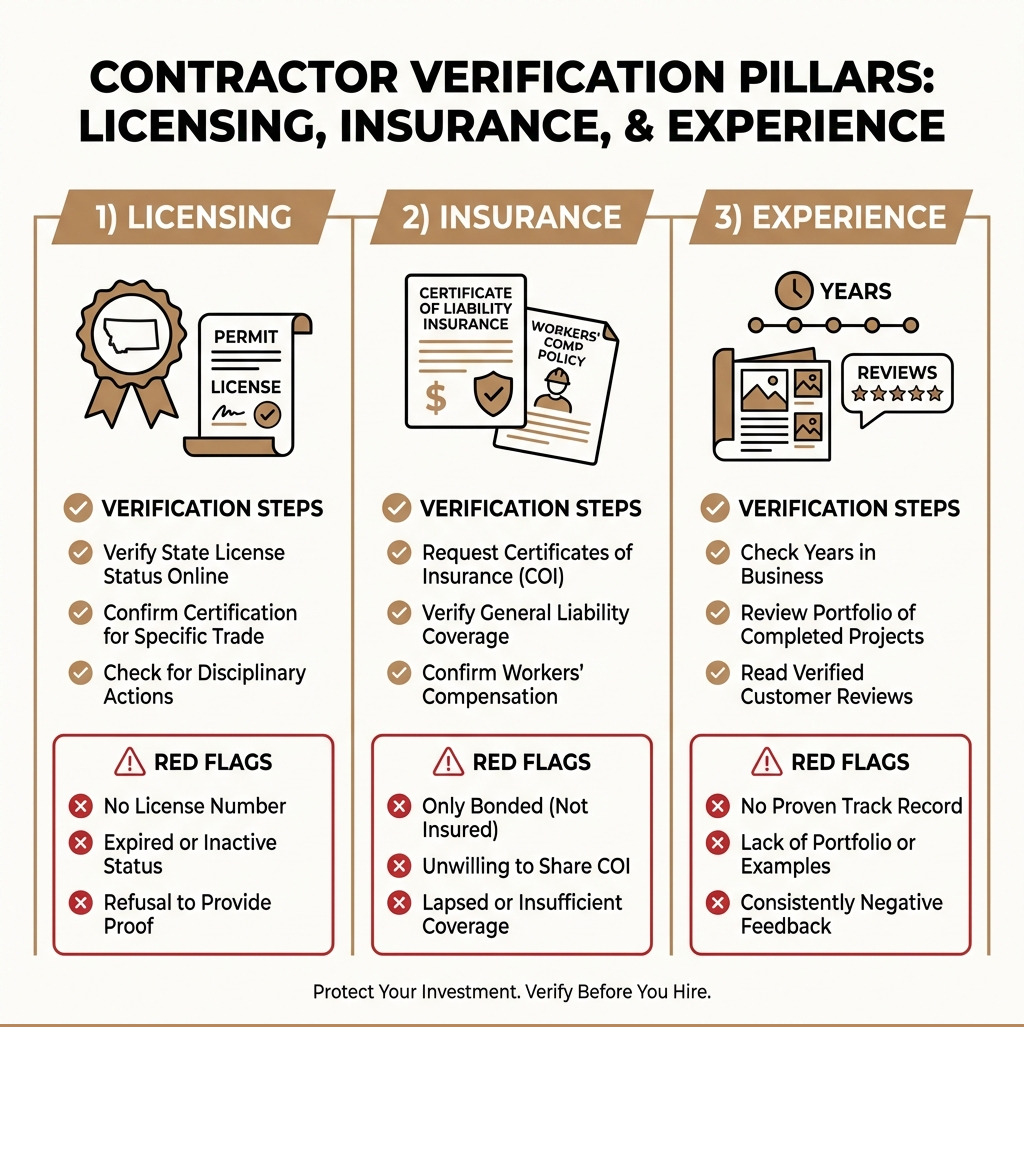
A licensed roofing contractor is a professional who has met state-specific requirements for permits, insurance, and qualifications to legally perform roofing work. Hiring an unlicensed or uninsured roofer can put your home, finances, and family at risk, but verifying a contractor’s credentials is a straightforward way to protect your investment.
Quick Credential Checklist:
- State License or Certification – Confirms legal authority to work
- General Liability Insurance – Protects your property (minimum $250,000 recommended)
- Workers’ Compensation – Covers injuries on your property
- Surety Bond – Provides financial recourse if work isn’t completed
- Active License Status – Verify through state lookup tools
This guide breaks down the three essential elements of a trustworthy roofing professional—licensing, insurance, and experience—so you can make an informed decision. While requirements vary by state, from Wisconsin’s Dwelling Contractor Certification to Florida’s dual-license system, understanding these core components will help you separate qualified professionals from fly-by-night operators.
Why Licensing Matters: The Foundation of a Trustworthy Roofer
When we talk about a licensed roofing contractor, we’re discussing the bedrock of accountability and consumer protection in the roofing industry. Licensing isn’t just a piece of paper; it’s a commitment to professional standards, adherence to building codes, and a promise of legal recourse should anything go awry. In states like Utah, obtaining the proper licensing ensures that a contractor has met specific criteria, often including experience, financial stability, and knowledge of local regulations. This protects you, the homeowner, from shoddy workmanship and potential legal headaches.
Imagine hiring someone who isn’t licensed. If they cut corners, use substandard materials, or simply disappear halfway through the job, what are your options? Limited, at best. An unlicensed contractor often operates outside the legal framework, meaning you have little to no recourse if things go wrong. This is why we always advocate for hiring a local, licensed professional, as highlighted in our guide, Why hiring a local roofer is the best choice. It’s not just about getting the job done; it’s about getting it done right, with the peace of mind that comes from knowing your contractor is accountable.
The risks of hiring unlicensed contractors extend beyond poor quality. They might not carry the necessary insurance, leaving you liable for accidents or damages. They might not understand or follow local building codes, which could lead to permit issues, failed inspections, and even larger problems down the road. These aren’t just minor inconveniences; they can translate into significant financial burdens and safety hazards for your home.
The Benefits of Hiring a Licensed Professional
Choosing a licensed roofing contractor brings a wealth of benefits that directly impact the quality, safety, and longevity of your roofing project. First and foremost, licensing often indicates a certain level of validated skills and expertise. Contractors typically need to demonstrate competence through examinations or years of experience to obtain their license. This means they’re more likely to deliver high-quality work that meets industry standards.
Furthermore, licensed contractors are bound by safety compliance. They understand and follow regulations designed to protect their workers and your property during the project. This minimizes the risk of accidents, which is crucial when dealing with a high-risk activity like roofing.
A properly installed roof by a licensed professional also contributes to your property’s value. It ensures that the work is up to code and will pass inspections, which is essential if you ever decide to sell your home. Licensed contractors also typically offer robust warranties for their workmanship and the materials they use. As we explain in The truth about roofing warranties, these warranties provide an important layer of protection for your investment.
Many reputable manufacturers, like GAF, offer certifications to contractors who meet their high standards. These manufacturer certifications often come with improved warranty options and ensure that the contractor is trained in the proper installation of their products. Finally, only licensed contractors can typically access and pull the necessary permits for your roofing project. Permits ensure that the work is inspected and approved by local authorities, adding another layer of quality assurance.
Understanding Insurance and Bonding Requirements
Beyond licensing, a reputable licensed roofing contractor must carry adequate insurance and, in some cases, be bonded. These are critical layers of financial protection for both the contractor and, more importantly, for you, the homeowner.

Let’s break down the essentials:
-
General Liability Insurance: This is perhaps the most crucial type of insurance. It protects you in case the contractor or their crew accidentally causes damage to your property (e.g., a ladder falls through a window, or materials damage your landscaping) or causes injury to a third party (e.g., a passerby is hit by falling debris). We recommend ensuring your contractor has at least $250,000 in general liability coverage. The average cost of general liability insurance for a small business can be around $504 per year, illustrating the commitment a legitimate contractor makes.
-
Workers’ Compensation: If a contractor’s employee gets injured on your property, workers’ compensation insurance covers their medical expenses and lost wages. Without it, you, the homeowner, could potentially be held liable for these costs. This insurance is vital for protecting you from expensive lawsuits. For example, the average cost of workers’ compensation insurance in Wisconsin is $1.33 per $100 of payroll. While this is a Wisconsin statistic, it gives you an idea of the costs legitimate businesses incur to protect their employees and, by extension, you.
-
Surety Bonds: A surety bond provides a financial guarantee that the contractor will complete the work as agreed upon in the contract and according to local regulations. If the contractor fails to fulfill their obligations, you can make a claim against the bond to recover losses. This offers an extra layer of financial protection, especially for larger projects.
When we provide a roofing estimate, as detailed in What to expect from a roofing estimate, it includes not just the cost of materials and labor, but also implicitly covers the assurance that we are fully insured and bonded. These protections are non-negotiable for any professional roofing company.
How to Verify a Contractor’s Credentials Before You Hire
Verifying a contractor’s credentials might seem daunting, but it’s a straightforward process that can save you a world of trouble. Think of it as your detective work to ensure your home is in safe hands. Here’s a simple list of steps you can take:
- Ask for their license number and insurance certificates upfront. A reputable licensed roofing contractor will provide this information readily and without hesitation.
- Use online lookup tools provided by state licensing boards. Many states have online databases where you can search for contractors by name or license number.
- Contact your local building department. They can confirm if a contractor is registered to work in your area and if they have a history of permit violations.
- Check with the Better Business Bureau (BBB). The BBB can provide information on a contractor’s accreditation, customer reviews, and any complaints filed against them.
- Call their insurance provider directly. Don’t just take their word for it; verify the policy is active and covers the scope of work.
These steps are your shield against potential fraud and substandard work. Don’t feel awkward asking for this information; it’s your right as a homeowner to ensure you’re hiring a legitimate professional.
Using State-Run Verification Tools
Many states offer online portals to verify the licenses and certifications of contractors. These tools are invaluable for confirming that the licensed roofing contractor you’re considering is indeed legitimate and in good standing.
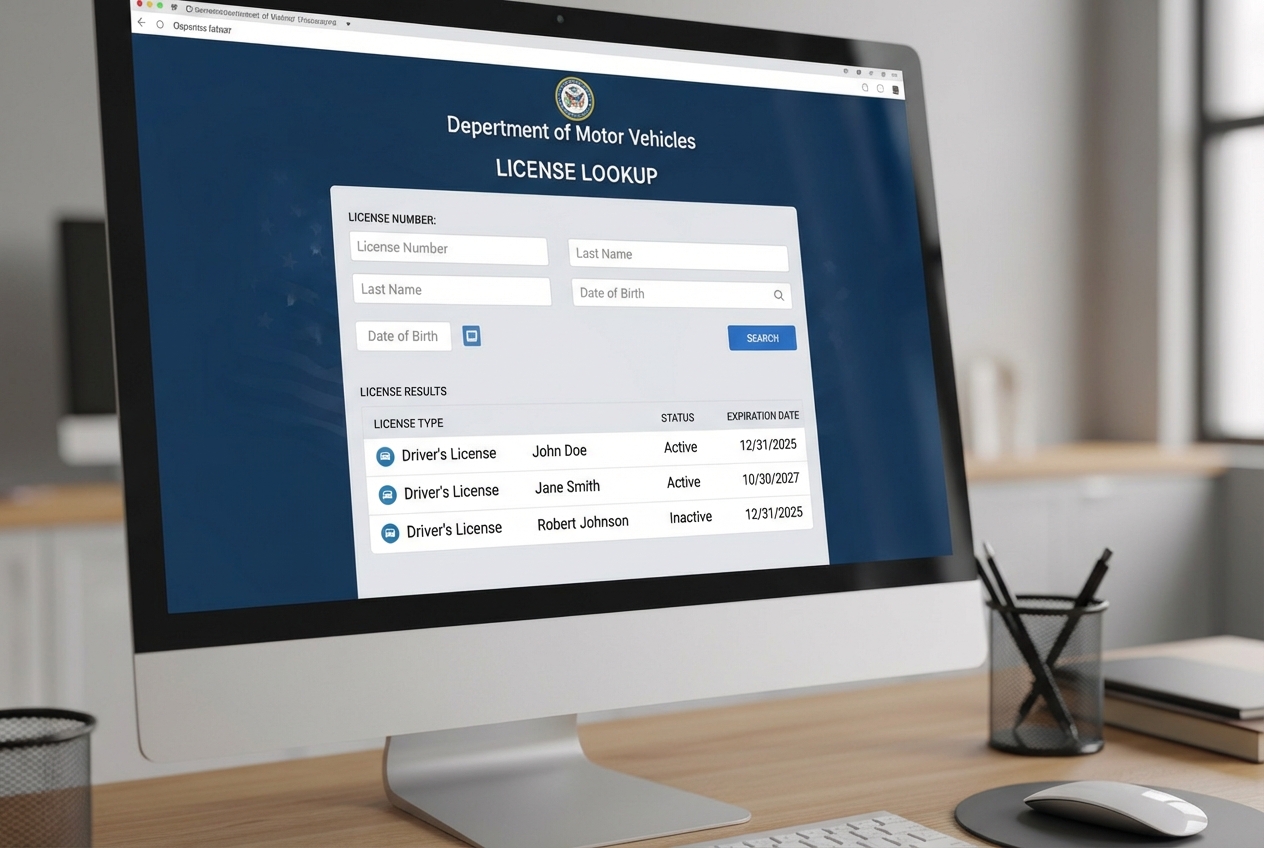
For instance, in Wisconsin, you can use Wisconsin’s LicensE License Lookup or the Electronic Safety and Licensing Application (eSLA) Public Lookup to check the status of credentials and permits across various trades. These systems allow you to search for health, business, and trades credentials. Similarly, in Florida, the Department of Business & Professional Regulation (DBPR) provides a comprehensive portal where you can verify licenses, check application status, and find exam information. These state licensing boards are the authoritative source for verifying active status. Our advice is always to steer to these official government websites to perform your due diligence. It takes just a few minutes, but that peace of mind is priceless.
Questions to Ask a Potential Licensed Roofing Contractor
Once you’ve done your initial verification, it’s time for a conversation. Asking the right questions can reveal a lot about a contractor’s professionalism, experience, and reliability. We’ve compiled some crucial questions, drawing from our experience and resources like 5 questions to ask before hiring a roofing contractor and The top 8 questions to ask your roofing contractor before hiring:
- “Can you provide your license number and proof of insurance (general liability and workers’ compensation)?” — This is your starting point. Any reputable licensed roofing contractor will have this on hand.
- “Are you bonded, and can you provide proof?” — This is especially important for financial protection.
- “How long have you been in business under this name?” — Longevity often correlates with stability and experience.
- “Can you provide a list of recent project references, ideally in my neighborhood?” — Speaking to past clients is invaluable.
- “Will you provide a written contract that details the scope of work, materials, timeline, and payment schedule?” — A professional contract protects both parties.
- “What is your warranty on both materials and workmanship?” — Understand what’s covered and for how long.
- “Who will be supervising the project, and what is their experience?” — You want an experienced hand overseeing the work.
- “How do you handle unforeseen issues or changes during the project?” — A good contractor has a clear communication plan.
Don’t hesitate to ask follow-up questions until you feel completely comfortable. You’re making a significant investment in your home, and an honest contractor will appreciate your thoroughness.
Understanding the Credentials of a Licensed Roofing Contractor: A State-by-State Look
It’s a common misconception that a roofing license is a universal credential, but in reality, there’s no national standard for roofing contractor licensing. This means that requirements for a licensed roofing contractor can vary significantly from one state to another, and even from one city or county to the next. The importance of local knowledge cannot be overstated here; what flies in one state might be illegal in another.
Many states do not have reciprocity agreements for roofing licenses, meaning a license obtained in Utah, for example, typically won’t be valid for work in Arizona without obtaining a separate license there. This highlights the need for contractors to be diligent in understanding and adhering to the specific regulations of each area they operate in. For homeowners, this means verifying credentials against the laws of your specific location. Our guide on How to find a reliable roofing contractor in your area emphasizes this local focus.
Case Study: Wisconsin’s Certification Model
Wisconsin offers a fascinating example of how states approach contractor regulation without a specific “roofing license.” In Wisconsin, the State of Wisconsin Department of Safety and Professional Services (DSPS) is the agency responsible. Instead of a dedicated roofing license, Wisconsin requires individuals or businesses involved in residential construction to obtain a Dwelling Contractor Certification and a Dwelling Contractor Qualifier Certification.
Here’s how it works:
- Dwelling Contractor Certification: This certification is for the business entity itself. It signifies that the company is registered and authorized to perform residential construction work, which includes roofing.
- Dwelling Contractor Qualifier Certification: This is for an individual within the company (often the owner, partner, or a key employee) who is responsible for the construction activities and obtaining building permits. To get this, the individual must complete at least 12 hours in an approved initial qualifier course in dwelling construction within one year before submitting the application. These courses cover essential topics like construction laws, codes, contracts, liability, and risk management.
Both certifications have continuing education requirements. The qualifier certification, for instance, must be renewed every two years and requires additional continuing education training. This model ensures that a knowledgeable individual is responsible for the technical aspects and legal compliance of residential projects, including roofing. Furthermore, local municipalities in Wisconsin, such as Madison, Appleton, and Milwaukee, may have additional city-specific rules or permitting requirements that contractors must adhere to, making local knowledge indispensable.
Case Study: Florida’s Dual-License System
Florida presents another distinct model with its dual-license system for roofing contractors, distinguishing between “Registered” and “Certified” contractors. This system, overseen by the Florida Department of Business & Professional Regulation (DBPR), offers different scopes of work and requirements.
Here’s a comparison:
| Feature | Registered Roofing Contractor (CILB 2) We know that it can be a challenge to find a trustworthy and reliable professional when you’### Case Study: Florida’s Dual-License System
Florida, a state with significant construction activity, employs a different licensing framework for its roofing contractors, known as a dual-license system. This system distinguishes between “Registered” and “Certified” contractors, with distinct requirements and scopes of operation. The Florida Department of Business & Professional Regulation (DBPR) oversees these licenses.
| Feature | Registered Roofing Contractor (Local) “`
Why Verifying Your Roofing Contractor’s Credentials Protects Your Home
A licensed roofing contractor is a professional who has met state-specific requirements for permits, insurance, and qualifications to legally perform roofing work. Here’s what you need to verify before hiring:
Quick Credential Checklist:
- State License or Certification – Confirms legal authority to work
- General Liability Insurance – Protects your property (minimum $250,000 recommended)
- Workers’ Compensation – Covers injuries on your property
- Surety Bond – Provides financial recourse if work isn’t completed
- Active License Status – Verify through state lookup tools
Your roof represents one of the biggest investments in your home. When it fails or shows signs of wear, the urgency to fix it can make you vulnerable to unlicensed contractors who promise quick, cheap solutions.
But here’s the reality: hiring an unlicensed or uninsured roofer puts your home, your finances, and your family at risk.
The good news? Verifying a contractor’s credentials is straightforward when you know what to look for. This guide breaks down the three essential elements of a trustworthy roofing professional—licensing, insurance, and experience—so you can make an informed decision.
Whether you’re in Wisconsin, where contractors need a Dwelling Contractor Certification and Qualifier, or in Florida, which has a dual-license system, understanding your state’s requirements helps you separate qualified professionals from fly-by-night operators.
Why Licensing Matters: The Foundation of a Trustworthy Roofer
When we talk about a licensed roofing contractor, we’re discussing the bedrock of accountability and consumer protection. A license isn’t just a piece of paper; it’s proof that a contractor has met state-mandated requirements for experience, financial stability, and knowledge of local building codes. This protects you from shoddy workmanship and provides legal recourse if something goes wrong.
Hiring an unlicensed contractor is a gamble. They often operate outside the legal framework, leaving you with limited options if they use substandard materials, perform poor-quality work, or abandon the job. This is why we always advocate for hiring a local, licensed professional.
The Benefits of Hiring a Licensed Professional
Choosing a licensed roofer offers significant advantages for the quality and safety of your project. Licensed contractors are required to follow safety regulations, minimizing the risk of on-site accidents. Their work must meet building codes, which is crucial for passing inspections and maintaining your property’s value.
Furthermore, licensed professionals often provide robust warranties for both labor and materials, giving you an extra layer of security. As we explain in The truth about roofing warranties, these guarantees are a vital part of your investment. Many reputable manufacturers also offer improved warranties through certified installers, ensuring your roof is installed to the highest standards. Finally, only licensed contractors can pull the necessary permits for your project, which guarantees that the work is reviewed and approved by local authorities.
Understanding Insurance and Bonding Requirements
Beyond licensing, a reputable licensed roofing contractor must carry adequate insurance and, in some cases, be bonded. These are critical layers of financial protection for you and your property.
Here’s what to look for:
-
General Liability Insurance: This protects your property from accidental damage caused by the contractor or their crew. We recommend ensuring your contractor has at least $250,000 in general liability coverage.
-
Workers’ Compensation: This insurance covers medical expenses and lost wages for any workers injured on your property. Without it, you could be held liable for those costs. For example, the average cost of workers’ compensation insurance in a state like Wisconsin is around $1.33 per $100 of payroll, showing the investment legitimate companies make in safety and compliance.
-
Surety Bonds: A surety bond is a financial guarantee that the contractor will complete the job as agreed upon in your contract. If they fail to do so, you can make a claim against the bond to recover your losses.
When we provide a roofing estimate, as detailed in What to expect from a roofing estimate, the price reflects not just materials and labor, but also the assurance that we are fully insured and bonded for your protection.
How to Verify a Contractor’s Credentials Before You Hire
Verifying a contractor’s credentials is a straightforward process that protects you from potential issues. Here’s a simple checklist to follow:
- Ask for their license number and insurance certificates upfront. A reputable licensed roofing contractor will provide this information without hesitation.
- Use online lookup tools provided by state licensing boards. Most states have online databases to verify a contractor’s license status.
- Contact your local building department. They can confirm if a contractor is registered to work in your area.
- Check with the Better Business Bureau (BBB) for their rating, customer reviews, and any filed complaints.
- Call their insurance provider directly to verify that their policy is active and provides adequate coverage for your project.
Taking these steps is your right as a homeowner and ensures you’re hiring a legitimate professional.
Using State-Run Verification Tools
Many states offer online portals to verify a contractor’s license. These tools are the most reliable way to confirm that a licensed roofing contractor is in good standing. For instance, Wisconsin has the Wisconsin’s LicensE License Lookup and Electronic Safety and Licensing Application (eSLA) Public Lookup for checking credentials. Similarly, Florida’s Department of Business & Professional Regulation (DBPR) provides a comprehensive portal for license verification. Always use these official government websites for your due diligence—it only takes a few minutes and provides invaluable peace of mind.
Questions to Ask a Potential Licensed Roofing Contractor
Once you’ve verified their credentials, it’s time for a conversation. Asking the right questions can reveal a lot about a contractor’s professionalism and experience. We’ve compiled some crucial questions, drawing from our experience and resources like 5 questions to ask before hiring a roofing contractor and The top 8 questions to ask your roofing contractor before hiring:
- “Can you provide your license number and proof of insurance (general liability and workers’ compensation)?” — This is your starting point. Any reputable licensed roofing contractor will have this on hand.
- “Are you bonded, and can you provide proof?” — This is especially important for financial protection.
- “How long have you been in business under this name?” — Longevity often correlates with stability and experience.
- “Can you provide a list of recent project references, ideally in my neighborhood?” — Speaking to past clients is invaluable.
- “Will you provide a written contract that details the scope of work, materials, timeline, and payment schedule?” — A professional contract protects both parties.
- “What is your warranty on both materials and workmanship?” — Understand what’s covered and for how long.
- “Who will be supervising the project, and what is their experience?” — You want an experienced hand overseeing the work.
- “How do you handle unforeseen issues or changes during the project?” — A good contractor has a clear communication plan.
An honest contractor will welcome your questions and provide clear answers. Don’t hesitate to ask for any information you need to feel confident in your decision.
Understanding the Credentials of a Licensed Roofing Contractor: A State-by-State Look
It’s a common misconception that a roofing license is a universal credential, but in reality, there’s no national standard. Requirements for a licensed roofing contractor can vary significantly from one state to another, and even from one city or county to the next. What’s required in Utah might be different from regulations in a neighboring state.
Furthermore, most states do not have reciprocity agreements, meaning a license from one state isn’t valid in another. This makes it crucial for homeowners to verify credentials against the laws of your specific location. Our guide on how to find a reliable roofing contractor in your area emphasizes this local focus.
Case Study: Wisconsin’s Certification Model
Wisconsin offers a great example of how states can regulate contractors without a specific “roofing license.” The State of Wisconsin Department of Safety and Professional Services (DSPS) requires residential construction companies to hold a Dwelling Contractor Certification. Additionally, an individual within the company must have a Dwelling Contractor Qualifier Certification, which requires passing an exam and completing continuing education. This model ensures that a knowledgeable person is responsible for the technical and legal aspects of all residential projects, including roofing. You can learn more on the Dwelling Contractor Certification page.
Case Study: Florida’s Dual-License System
Florida uses a different approach with its dual-license system, overseen by the Florida Department of Business & Professional Regulation (DBPR). This system distinguishes between “Registered” and “Certified” contractors.
- Registered Roofing Contractor: This license is local, allowing a contractor to work only in the specific cities or counties where they have proven their competency.
- Certified Roofing Contractor: This is a statewide license. To obtain it, a contractor must pass a comprehensive state exam, provide proof of financial stability, and undergo a background check. This more rigorous process allows them to work anywhere in Florida.
These examples from Wisconsin and Florida show why it’s so important to understand your local requirements when hiring a roofing contractor. You can find more details on Florida’s requirements on the Florida DBPR application requirements page.