

Roofing Repair Cost: A Quick 2026 Estimate
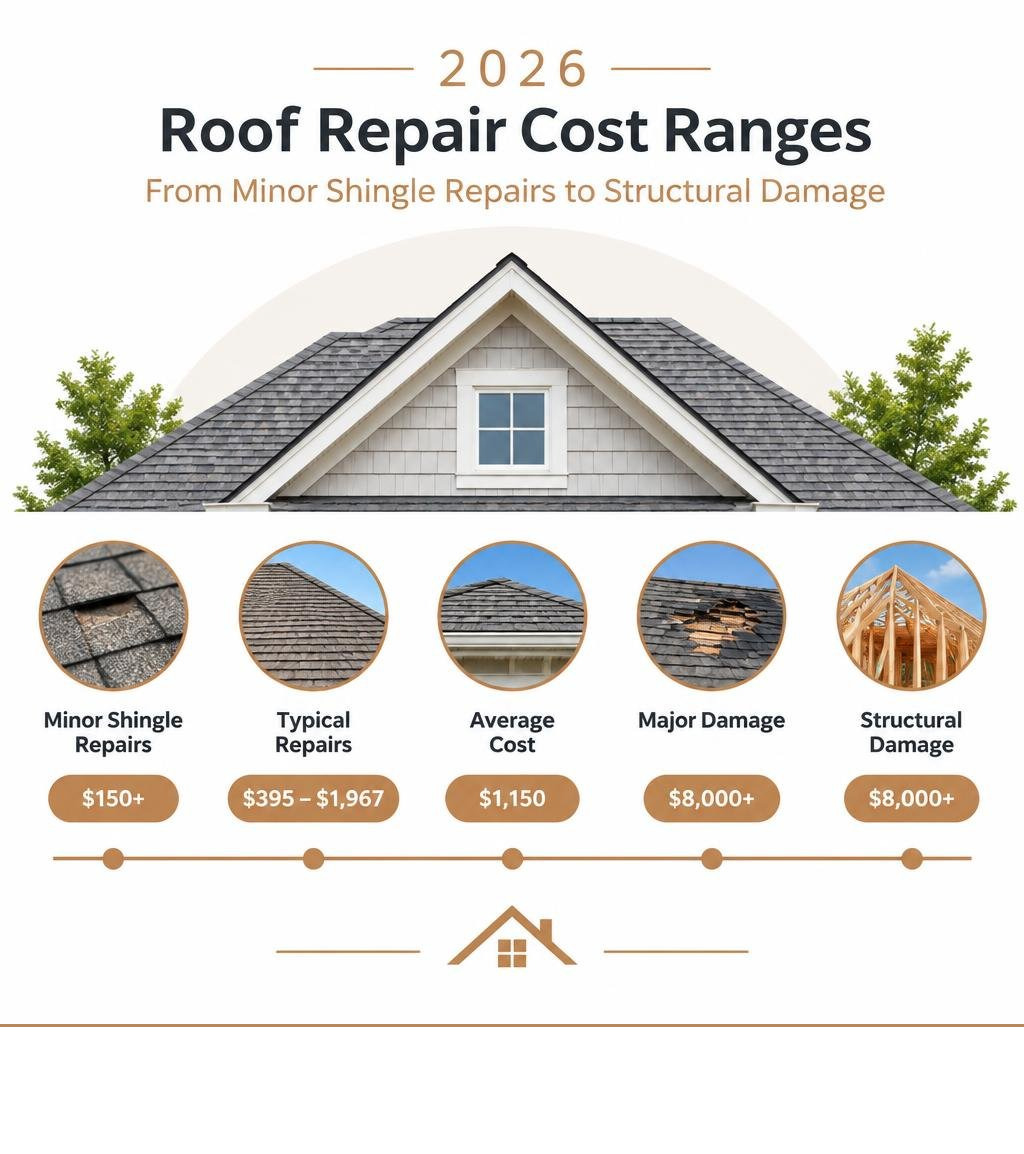
Most homeowners pay about $1,150 for a roof repair in 2026. Typical roofing repair cost ranges from $395 to $1,967, though a few damaged shingles may cost as little as $150 and major structural damage can reach $8,000 or more.
Your price depends most on the repair needed, roofing material, roof height and pitch, access, and whether water has damaged the decking beneath the shingles. A professional inspection is the best way to find the source of a leak and avoid paying for a patch that does not solve the underlying problem.
At Heaton Bros. Roofing, we have years of hands-on experience repairing aging shingles, storm damage, and leaks for Salt Lake City-area homeowners. We provide clear assessments so you can understand your roofing repair cost and choose the right next step for your home.
Average Roof Repair Costs in 2026: What to Expect
When budgeting for roof maintenance, understanding current industry benchmarks helps prevent surprises. National data, such as HomeAdvisor roof repair cost benchmark data, indicates that the average homeowner pays approximately $1,152 to repair a residential roof. Most standard projects fall comfortably between $392 and $1,930, though the complete pricing spectrum ranges from $150 for minor shingle replacements up to $8,000 for complex structural framing restoration.
The total price of a roof repair depends on the type of material, the extent of the damage, and the labor required to complete the fix safely.
| Roofing Material / Repair Item | Average Cost Range | Typical Project Scope |
|---|---|---|
| Asphalt Shingle Repair | $350 – $1,500 | Replacing torn shingles, resealing tabs, localized storm patching |
| Metal Roof Repair | $800 – $2,500 | Tightening fasteners, patching seams, panel replacement |
| Tile Roof Repair | $600 – $1,800 | Replacing cracked concrete tiles, underlayment repairs |
| Slate Roof Repair | $900 – $2,800 | Sourcing matching natural slate, specialized copper nailing |
| Flat Membrane (TPO/EPDM) | $300 – $1,200 | Sealing punctures, heat-welding patches, drain clearing |
| Roof Leak Fix | $360 – $1,550 | Leak tracing, shingle removal, underlayment patching |
| Flashing Repair / Replace | $200 – $500 | Resealing or installing step, counter, or chimney flashing |
| Fascia & Soffit Repair | $600 – $6,000 | Replacing rotted trim boards, repainting, venting repair |
| Roof Truss / Structural Frame | $500 – $5,000 | Sistering broken rafters, reinforcing sagging trusses |
Average Roofing Repair Cost by Material Type
Roofing materials behave differently in diverse weather conditions, requiring specialized skills, tools, and labor to repair:
- Asphalt Shingles: Averaging roughly $975 per repair, asphalt shingles are standard across the Salt Lake Valley and Utah County. Replacing missing tabs or resealing lifting shingles is straightforward, making labor relatively quick.
- Metal Roofing: Repairs average around $1,700. Metal requires specialized knowledge to address thermal expansion issues, failing neoprene washers, loose fasteners, and damaged standing seams without compromising the watertight finish.
- Tile Roofing: Repairing tile roofs averages $1,000. Concrete tiles are durable, but walking on them during repairs requires care to prevent cracking sound tiles while fixing underlayment leaks.
- Slate Roofing: Natural slate averages $1,800 per repair. Slate is heavy, long-lasting, and requires specialty copper fasteners and experienced craftsmen.
- Flat / Single-Ply Membranes: Flat roofs, such as TPO or modified bitumen systems, average about $400 for routine patch repairs and seam resealing.
Common Repair Jobs: Leaks, Flashing, and Fascia
The type of repair directly influences the overall scope of labor and materials:
- Active Leaks: Fixing a persistent leak averages between $360 and $1,550. Finding where water enters is often the most time-consuming part, as water travels along rafters before emerging inside the home. Our guide to fixing emergency roof leaks outlines why tracing leaks immediately is vital to preventing drywall damage.
- Flashing & Penetrations: Flashing protects critical roof intersections around chimneys, dormers, and valleys. Typical flashing repairs cost between $200 and $500. Rubber vent pipe boots crack over time under UV exposure and typically cost $150 to $500 to replace.
- Fascia and Soffit: Repairing damaged fascia boards or rotting soffits ranges from $600 to $6,000 depending on the linear footage. Ice dams and overflowing gutters often rot these structural elements first.
- Gutters: Routine gutter fixes, re-pitching, or joint resealing generally cost between $240 and $480.

Key Factors That Influence Your Roofing Repair Cost
Roof repair pricing is driven by materials, local building codes, and safety requirements. Professional roofers charge an average labor rate between $45 and $75 per hour, though specialized master tradesmen or steep-slope teams may charge more depending on the complexity of the job.
How Damage Severity Shapes Your Total Roofing Repair Cost
The scale of roof damage falls into three primary tiers:
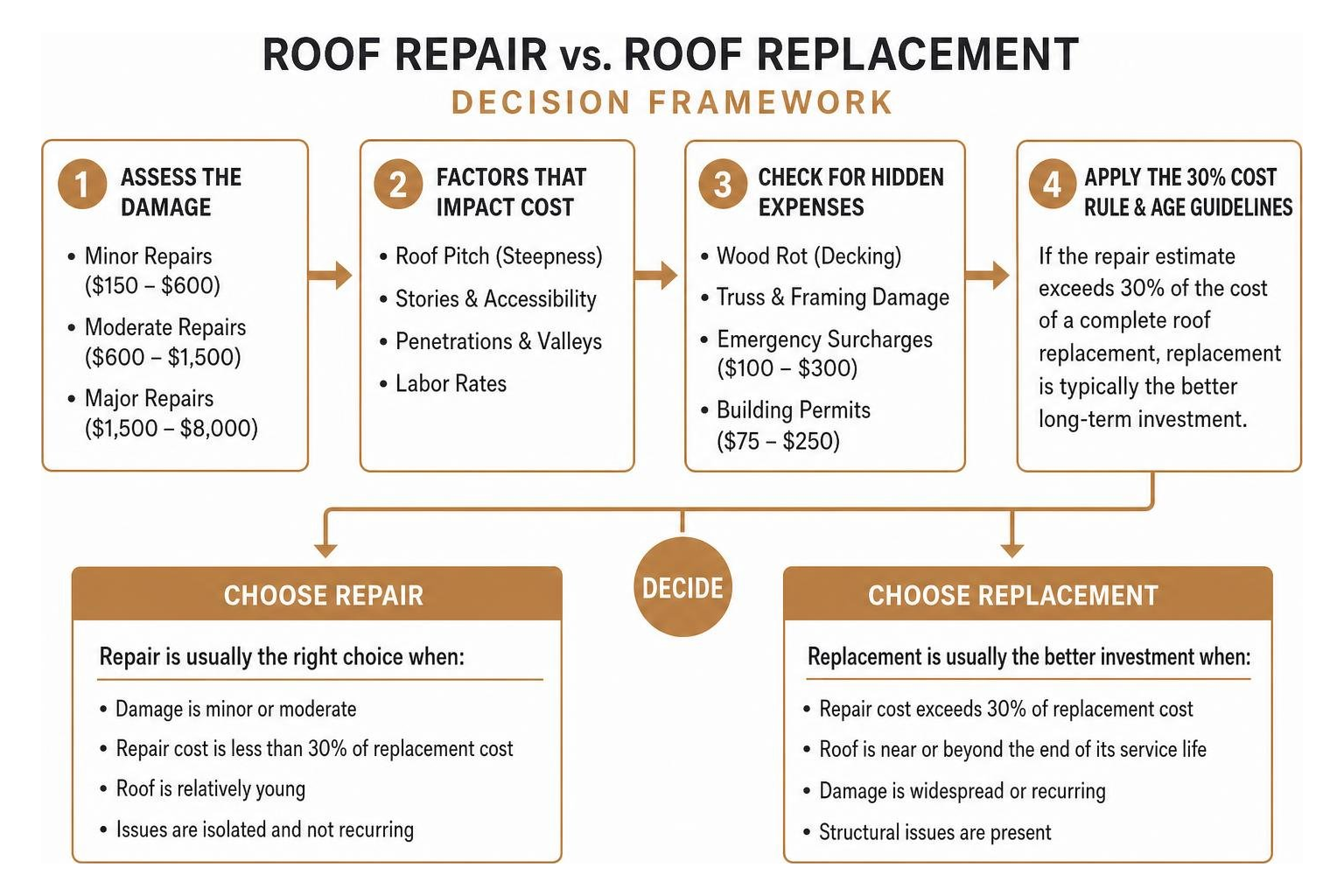
- Minor Repairs ($150 – $600): Involves replacing several windblown asphalt shingles, resealing small plumbing boot collars, or applying localized sealant around chimney flashing.
- Moderate Repairs ($600 – $1,500): Covers tracing and repairing active leaks across a roof valley, replacing sections of compromised underlayment, or patching small sections of rotted decking.
- Major Repairs ($1,500 – $8,000): Involves addressing widespread storm damage, sagging roof ridges, or structural truss deterioration. Understanding when it’s time for roof repair allows you to catch minor issues before they escalate into major repairs.
Roof Pitch, Accessibility, and Labor Rates
Roof geometry directly impacts job safety and project timelines:
- Roof Pitch (Steepness): Roofs with a low pitch (4:12 to 6:12) allow roofers to walk freely without specialized equipment. Steep slopes (8:12 to 12:12 or greater) require safety harnesses, roof jacks, and staging planks, increasing labor costs by 15% to 40%.
- Stories and Accessibility: Multi-story homes in neighborhoods like Draper, Alpine, or Park City require longer ladder sets, safety rigging, and more time for material transport.
- Penetrations and Valleys: Multiple intersecting ridges, dormers, and skylights require extra detail work during flashing and tear-off.
Hidden Expenses: Wood Rot, Decking, and Emergency Fees
Until old shingles or underlayment are lifted, some underlying conditions remain hidden:
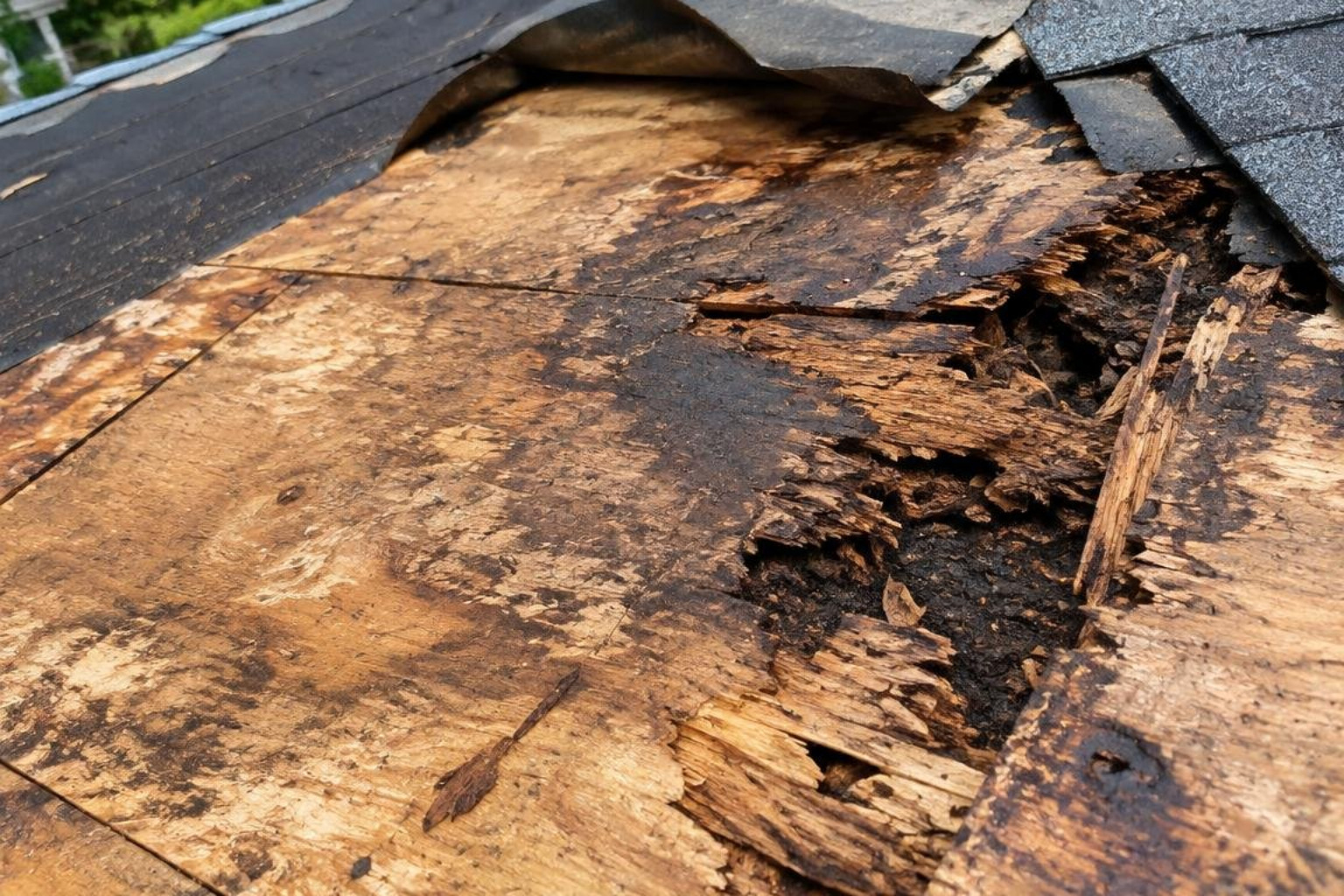
- Rotted Plywood Decking: If moisture penetrates past the underlayment, the OSB or plywood sheathing can rot, adding $2.20 to $3.00 per square foot for material and replacement.
- Truss and Framing Damage: Winter ice loads or long-term untreated leaks can weaken framing members. Reviewing the costs associated with repairing roof frame and truss damage shows that structural sistering or rafter rebuilds can range from $500 to $5,000.
- Emergency Service Surcharges: Active leaks during major rain or snowstorms requiring tarping often incur a $100 to $300 emergency surcharge.
- Building Permits: If a repair involves structural framing modifications, city permits generally range from $75 to $250.
Roof Repair vs. Roof Replacement: How to Decide
Every homeowner eventually faces the choice between making another localized repair or investing in a full replacement. When evaluating deciding between repair and replacement, reviewing an independent analysis of roof repair vs replacement criteria can clarify long-term cost benefits.
The 30% Cost Rule and Roof Age Guidelines
To determine whether a repair is practical, consider these primary rules:
- The 30% Cost Rule: If a comprehensive repair estimate exceeds 30% of the cost of a complete roof replacement, replacement is typically the better long-term investment.
- The 75% Lifespan Threshold: Standard 3-tab shingles last about 20 years, while architectural shingles last 25 to 30 years. If your roof has reached more than 75% of its expected life (for example, 18+ years on a 25-year roof) and develops leaks, patching will only provide short-term protection.
- Damage Area: If wind, hail, or wear damages more than 25% to 30% of the entire roof surface, building codes often require a full re-roof rather than piecemeal patching.
When Structural Damage Demands Full Replacement
Certain indicators point toward complete replacement over spot repairs:
- Visible Sagging: A sagging roofline usually indicates compromised rafters, saturated structural decking, or failing load-bearing trusses.
- Granule Loss: Bald spots across large sections of shingles indicate the protective asphalt layer has degraded from sun exposure.
- Multiple Existing Layers: Under building codes, homes cannot carry more than two layers of roofing. If a leak develops on a two-layer roof, patching is often unreliable, necessitating a complete tear-off.
- Repeated Leaks: If you have paid for multiple leak repairs over a 36-month period, the underlying underlayment has likely deteriorated throughout the system.
Smart Ways to Save Money on Roof Repairs
Maintaining your roof does not require overspending. Exploring affordable local roof repair options helps you preserve your home without cutting corners on quality.
- Obtain Line-Item Estimates: Ask for quotes that clearly separate labor, materials, permit fees, and disposal costs to compare bids accurately.
- Bundle Repairs: If you need chimney flashing fixed, have your contractor inspect plumbing vent boots, clean valley debris, and secure loose gutters during the same visit to avoid multiple service fees.
- Check Insurance for Storm Events: Severe mountain winds or hail may be covered under your homeowner’s insurance policy, reducing your out-of-pocket expense to your deductible.
- Avoid Low-Cost Shortcuts: Selecting an unusually cheap bid can result in mismatched shingles, missing underlayment, or unsealed flashing that fails within months.
Timing Your Repair for Off-Season Savings
Seasonal demand affects contractor scheduling and pricing:
- Slow Seasons: Booking non-emergency roof repairs during late fall or early winter can yield savings of 10% to 15% due to lighter contractor schedules.
- Peak Seasons: Late summer and early autumn are busy times for roofers preparing homes for winter weather, making flexible scheduling key to getting the best rate.
- Winter Emergencies: Repair work during freezing weather or after heavy snow accumulation can double labor costs due to snow removal and safety precautions.
Why Routine Maintenance Beats Emergency Fixes
Catching a failing vent boot or cracked shingle early prevents extensive internal water damage:
- Annual Visual Checks: Inspect your attic space for moisture marks or light leaks after winter snowmelt.
- Clean Gutters: Clear gutters prevent water from backing up beneath your lower eave shingles and rotting your fascia boards.
- Schedule Inspections: Booking a professional roof inspection every few years provides a detailed assessment of your roof’s condition.
Frequently Asked Questions About Roof Repair Costs
How much does it cost to fix a leaking roof?
Repairing a leaking roof averages between $360 and $1,550 for most residential homes. Minor leaks near a pipe vent or single valley typically fall on the lower end ($350–$600). However, if water has traveled along rafters, damaged insulation, or caused ceiling drywall rot, overall restoration costs can increase.
Does homeowners insurance cover roof repair costs?
Homeowners insurance generally covers roof repairs caused by sudden, accidental events, such as windstorms, fallen trees, or hail damage. Standard policies exclude normal wear-and-tear, aging shingles, or leaks caused by neglected maintenance. If filing a claim, your out-of-pocket expense will depend on whether your policy pays Replacement Cost Value (RCV) or Actual Cash Value (ACV), minus your deductible.
Can I repair my own roof to save on labor costs?
While replacing a single asphalt shingle on an easily accessible, low-pitch porch can be a DIY project, working on roofs presents serious safety risks. Falls from roofs account for a high percentage of residential construction injuries. In addition, DIY repairs using improper sealants, mismatched shingles, or incorrect nail placement can void manufacturer warranties and lead to hidden leaks behind siding or masonry. Hiring a licensed, insured roofing contractor ensures proper safety gear, watertight underlayment installation, and warranty-backed workmanship.
Conclusion
Understanding roofing repair costs allows you to make informed decisions that protect your home and your budget. Whether you need a quick shingle replacement, flashing maintenance, or a comprehensive inspection, working with an experienced local contractor ensures long-lasting results.
Heaton Bros. Roofing is a 4th-generation, family-owned roofing company serving Salt Lake City, the Wasatch Front, and surrounding Utah communities for over 65 years. We pride ourselves on reliable assessments, transparent pricing, and quality craftsmanship.
If you are noticing missing shingles, signs of moisture, or attic leaks, take the next step by requesting a free roofing estimate or learning more about budgeting for roof repairs today.