
Understanding Utah Climate Challenges and Roofing Materials
To hire qualified roofing contractors in Utah, homeowners should verify active DOPL licensing (S280 Roofing or B100 General Building), confirm general liability and workers’ compensation insurance, vet local experience along the Wasatch Front, and compare comprehensive, itemized estimates. Because Utah’s severe weather demands resilient installations, partnering with an experienced local contractor ensures your roof stands up to high elevation and heavy snowpack.
Living along the Wasatch Front means enjoying incredible mountain views, but our homes take a beating from the weather. Utah’s climate swings wildly from scorching, high-elevation summer sun to freezing winter storms loaded with heavy, wet snow. If your roof isn’t built to handle these radical shifts, small issues can quickly turn into major indoor leaks.
Our elevation brings intense ultraviolet (UV) exposure that dries out, cracks, and degrades standard roofing materials faster than in many other parts of the country. Add in periodic spring hail storms, gusty canyon winds, and frequent winter freeze-thaw cycles, and your roof has a demanding job. Hiring a company that understands how to engineer a roofing system for our unique microclimates—from Logan down through Provo and Nephi—is essential to keeping your home protected for decades.
Assessing Utah Weather and Snow Loads
Winter in northern and central Utah brings serious snow accumulation. As snow piles up on your roof, it creates significant dead weight that your framing must support. But the weight of the snow is only half the battle; the real trouble starts when that snow begins to melt and refreeze.
During our freeze-thaw cycles, heat escaping from your attic melts the bottom layer of snow on the roof. As the meltwater runs down toward the cold, unheated eaves and gutters, it refreezes into a thick ridge of ice known as an ice dam. This dam blocks subsequent meltwater from draining off the roof, forcing water back up beneath your shingles and directly into your ceilings and exterior walls.
To prevent ice dams and handle heavy snow loads, a roof system needs three things working together:
- Engineered attic ventilation: Balanced intake at the soffits and exhaust at the ridge keep attic temperatures cool and consistent, slowing down uneven snowmelt.
- Adequate insulation: Proper R-value insulation in your attic floor prevents your living space heat from escaping into the roof deck.
- Waterproof membrane barriers: Self-adhering ice and water shield membranes protect vulnerable eaves, valleys, and roof penetrations when standing water backs up behind ice ridges.
Comparing Common Residential Roofing Materials
Choosing the right roofing material involves balancing durability, architectural style, maintenance needs, and budget. Here is a breakdown of the materials most commonly installed on homes across Salt Lake City, South Jordan, Draper, and surrounding areas:
- Architectural Asphalt Shingles: The most popular choice across Utah. Modern laminated architectural shingles offer outstanding wind resistance (often rated up to 130 mph), excellent impact resistance against hail, and an attractive dimensional appearance at an accessible price point.
- Metal Roofing: Standing seam and stone-coated metal roofs excel at shedding snow quickly, making them ideal for high-snow regions like Park City or foothill neighborhoods in Alpine and Highland. While the initial investment is higher, metal offers unmatched longevity and fire resistance. Explore our definitive guide to Utah metal roofing contractors for a deep dive into metal options.
- Concrete Tile: Extremely durable and long-lasting, concrete tiles handle heavy sun and wind with ease. However, they are exceptionally heavy and require an engineered roof structure capable of supporting the dead load, especially when combined with winter snowpack.
- Membrane Roofing (TPO/EPDM): Designed specifically for low-slope or flat roof sections, common on modern architectural designs and mid-century homes across the Salt Lake Valley. Heat-welded TPO provides superior UV reflectivity and leak protection on flat surfaces.
| Roofing Material | Expected Lifespan | Durability in Utah Climate | Cost Level | Best Suited For |
|---|---|---|---|---|
| 3-Tab Asphalt Shingles | 15–20 Years | Moderate (Vulnerable to high wind & heavy hail) | Budget | Rental properties, mild-weather valleys |
| Architectural Shingles | 25–35 Years | High (Excellent wind & impact resistance) | Moderate | Standard residential homes across the Wasatch Front |
| Standing Seam Metal | 50+ Years | Exceptional (Sheds snow rapidly, fireproof) | Premium | Mountain homes, modern builds, high-wind zones |
| Concrete Tile | 50+ Years | High (Heavy, rot-proof, class-A fire rated) | Premium | Custom builds with reinforced roof framing |
| TPO Flat Membrane | 20–30 Years | High (Puddle-resistant, high UV reflection) | Moderate to High | Low-slope roofs, flat additions, modern architecture |
Step-by-Step Process for Hiring Roofing Contractors in Utah
Replacing a roof is one of the most significant investments you will ever make in your home. Rushing the process or picking a name at random out of a search engine can lead to costly delays, poor workmanship, and voided warranties. Following a structured hiring process ensures you partner with a dedicated professional who gets the job done right the first time. To get started on the right foot, take a look at our advice on how to find Utah’s best roofing contractor.
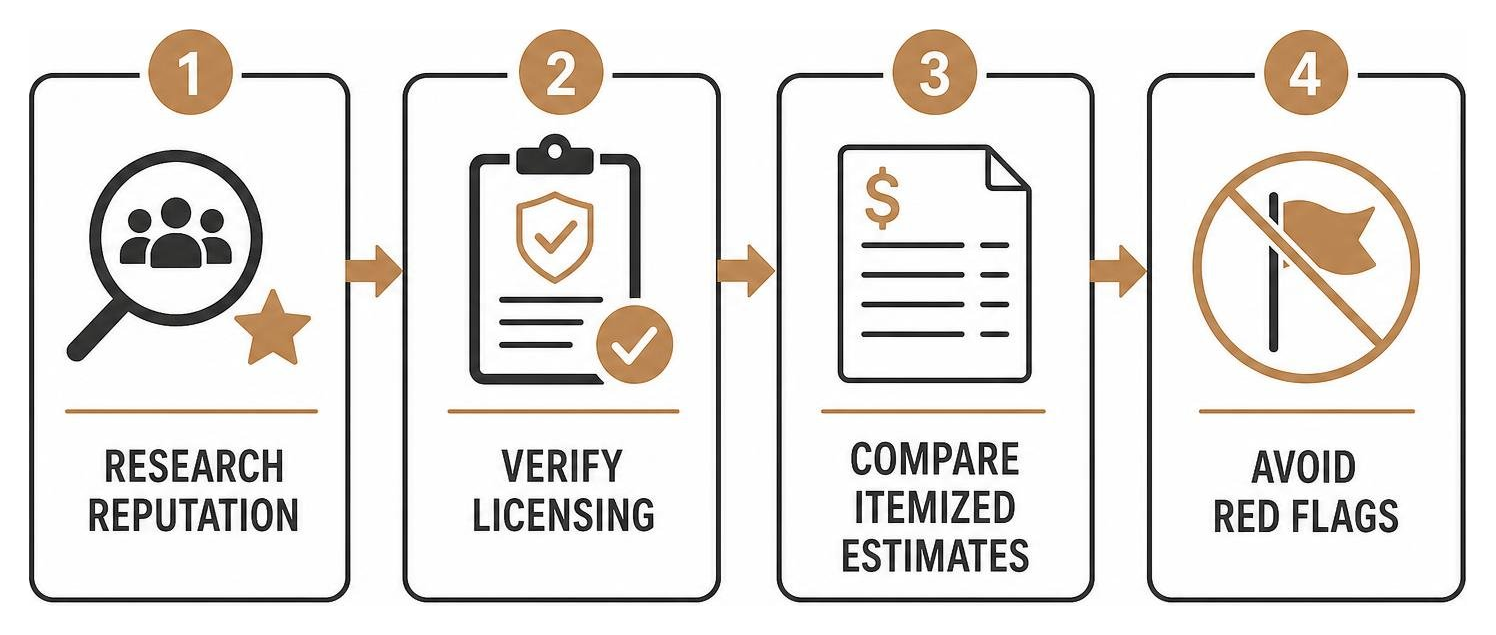
Step 1: Research Local Reputation and Experience
Start by focusing on contractors with deep roots in your local community. A company based in Salt Lake County or Utah County that has operated for decades has a proven track record of surviving local economic shifts and standing behind their warranties.
When gathering recommendations:
- Ask neighbors, family, and local friends who have recently replaced their roofs about their personal experiences.
- Read authentic customer reviews across multiple independent platforms, paying attention to how companies handle unexpected challenges or weather delays.
- Check if the business has a physical shop or office within the communities they serve, from Bountiful and Farmington down to Lehi and Saratoga Springs. A local presence means they won’t disappear when the job is done.
- Consider exploring proven strategies on how to find a reliable roofing contractor in your area and review these top tips for choosing the best roofing contractor in your area.
Step 2: Verify Credentials and Insurance for Roofing Contractors in Utah
Never allow anyone onto your roof without confirming their legal authority and safety coverage. In Utah, all professional roofers must be registered and licensed through the Utah Division of Occupational and Professional Licensing (DOPL).
A legitimate roofing contractor should carry a B100 (General Building Contractor) license or an S280 (Roofing Contractor) specialty license. You can quickly look up any company’s license number online through the official DOPL verification database to ensure their license is active, in good standing, and free of serious disciplinary actions.
In addition to state licensing, insist on proof of two non-negotiable insurance policies:
- General Liability Insurance: Protects your home and property if an accident occurs, such as a dropped bundle of shingles damaging your driveway or an unexpected storm causing water damage while the roof deck is exposed.
- Workers’ Compensation Coverage: Protects the crew members working on your steep roof. If an uninsured worker slips and suffers an injury on your property, you could be held financially liable for their medical bills.
We break down the critical details of these protections in our guide on licensing, insurance, and experience. You should also check for manufacturer certifications, such as status as GAF roofing contractors. Certified contractors undergo rigorous factory training, adhere to strict installation standards, and can provide enhanced manufacturer warranties that uncertified installers cannot offer. Learn why this matters in our guide on certified contractors.
Step 3: Request Detailed Estimates and Review Warranties
Always gather written, itemized estimates from prospective roofers so you can compare scopes of work accurately. A vague quote with a single dollar figure is a recipe for surprise change orders once your old roof has already been torn off.
A comprehensive estimate should clearly specify:
- Full removal and disposal of old layers down to the bare wooden roof deck.
- Plywood decking inspection and per-sheet replacement costs for rotted wood.
- Exact brand, product line, and color of the primary roofing materials being installed.
- Grade of synthetic underlayment and ice and water barrier membranes used.
- New drip edge metal, pipe boots, valley metal, and step flashings around chimneys and walls.
- Attic ventilation upgrades (e.g., ridge vents, box vents) to meet local code requirements.
- Jobsite cleanup protocols, including magnetic sweeping for nails.
Review the differences between our comprehensive services you can expect to understand what goes into a true full-service roof installation. Make sure you understand both the manufacturer material warranty (which covers defects in the shingles or products) and the contractor workmanship warranty (which covers installation mistakes and labor).
Step 4: Watch for Contractor Red Flags and Scams
Unfortunately, roofing is an industry where fly-by-night operators and out-of-state “storm chasers” attempt to take advantage of homeowners after severe weather events. Stay vigilant and watch out for these major red flags:
- Unsolicited door-to-door salesmen: High-pressure salespeople who show up immediately after a hail storm in Herriman or West Jordan claiming they were “just working on your neighbor’s roof.”
- Demands for large cash deposits upfront: While a reasonable deposit for custom materials is standard, reputable companies do not require full payment or massive upfront sums before materials arrive at your curb.
- Unmarked trucks and out-of-state license plates: Storm chasers travel from state to state following weather maps. Once the storm season ends, they pack up and leave, leaving you with zero local warranty recourse if your roof leaks six months later.
- No written contract or proof of insurance: Never accept a handshake deal, a scribbled number on a business card, or verbal promises that aren’t spelled out in black and white.
Critical Questions to Ask Before Signing a Roofing Contract
Before putting your signature on any agreement, sit down with the contractor to clarify project logistics, communication channels, and property protections. A good contractor will happily take the time to walk you through every detail.
Key Questions to Ask Prospective Roofing Contractors in Utah
To ensure there are no surprises midway through the job, arm yourself with these practical questions. For a deeper checklist, review our 5 questions to ask before hiring a roofing contractor along with the top 8 questions to ask your roofing contractor before hiring:
- “Will you have a dedicated project supervisor on-site every day?” Having a consistent point of contact ensures clear communication and quality control throughout the installation.
- “Do you use in-house employees or subcontractors?” If subcontractors are used, confirm that their workers’ compensation and liability insurance policies have been verified by the general contractor.
- “How will you protect my landscaping, driveway, and gutters?” Professional crews lay down tarps, plywood boards, and netting to shield delicate shrubbery, AC units, and concrete driveways from falling debris.
- “What is your plan if sudden inclement weather rolls in during tear-off?” Utah mountain weather changes fast. Your contractor must have heavy-duty tarps and a rapid-response plan ready to keep your home water-tight.
- “How do you handle daily and final cleanup?” A professional team runs rolling magnetic brooms over your grass, flowerbeds, and driveway multiple times to collect stray roofing nails. Discover more about what to expect from your local roofer regarding daily cleanup and project management.
Understanding Building Codes and Utah Permitting Requirements
Roofing installations in Utah are governed by the Utah State Construction Code, which adopts and amends the International Residential Code (IRC Chapter 9). These building codes exist to protect structural integrity and occupant safety.
Key Utah building code requirements include:
- Mandatory Ice Barrier Underlayment: In areas prone to freezing temperatures and snowpack (which includes virtually all of the Wasatch Front, Park City, and Tooele), codes mandate a self-adhering polymer-modified bitumen sheet extending from the lowest roof edge to a point at least 24 inches inside the exterior wall line of the building.
- Ventilation Mandates: Code dictates specific ratios of net free ventilating area per square foot of attic space to prevent heat and moisture accumulation.
- Permit Acquisition: Most Utah municipalities—including Salt Lake City, Sandy, Layton, and Kaysville—require a formal building permit for residential re-roofing projects exceeding a certain size. Reputable contractors pull these permits directly, schedule required municipal inspections, and ensure your new roof fully complies with local city ordinances.
Frequently Asked Questions About Utah Roofing
How can I verify a Utah roofing contractor’s license?
You can verify any contractor’s credentials online using the Utah Division of Occupational and Professional Licensing (DOPL) license verification tool. Simply search by the contractor’s legal business name or individual license number. Ensure the license status reads “Active,” verify they hold an S280 Roofing or B100 General Building classification, and check that there are no pending disciplinary citations or past administrative revocations.
What is the average cost of roof replacement in Utah?
The cost of replacing a residential roof in Utah typically ranges between $8,000 and $20,000+ for an average single-family home. Exact pricing depends on several specific factors:
- Roof size and square footage: Measured in roofing “squares” (100 square feet).
- Pitch and architectural complexity: Steep, multi-gabled roofs require extra safety staging and labor time compared to simple, low-pitch gable roofs.
- Material grade: Premium architectural shingles or standing seam metal carry different material costs than basic shingles.
- Decking repairs: The amount of rotted or damaged plywood underlayment that needs replacement after tear-off.
Because every home is unique, the only way to get an accurate cost calculation is to schedule an on-site inspection with an experienced local estimator.
Do Utah building codes require an ice barrier underlayment?
Yes. Under IRC Section R905.1.2 and Utah state amendments, an ice barrier underlayment is legally required in cold-climate regions where there is a history of ice forming along the eaves. The membrane must consist of a self-adhering polymer-modified bitumen sheet extending from the roof edge up to a point at least 24 inches inside the interior heated wall line of your home. This prevents backup leaks caused by seasonal winter ice dams.
Conclusion
Your roof is your home’s first line of defense against Utah’s harsh mountain climate, heavy snow loads, and scorching summer sun. Choosing the right roofing contractor is just as important as choosing high-quality materials. By verifying licensing through DOPL, insisting on comprehensive insurance coverage, demanding clear itemized estimates, and choosing an experienced team with deep local roots, you protect your family, your home, and your hard-earned investment.
At Heaton Bros. Roofing, we have spent four generations and over 65 years delivering dependable, quality craftsmanship to homeowners across Salt Lake City, Draper, South Jordan, Provo, and the entire Wasatch Front. If your roof is aging, showing signs of storm damage, or ready for a full replacement, turn to our team for honest assessments and exceptional service.
Ready to get started on your home? Explore our full range of professional Utah roofing services and contact us today to schedule your comprehensive on-site roof inspection.