Residential Roof Replacement in Draper: What to Expect
If your Draper roof is aging or has storm damage, start with an on-site inspection. Ask the contractor to check the shingles, flashing, underlayment, and roof deck. Then get a written quote that spells out the materials, repairs, cleanup, timeline, and warranties. That gives you a clear way to compare bids before you hire a residential roof replacement in Draper.
Draper roofs face snow, wind, strong sun, and freeze-thaw cycles. A replacement should address the layers beneath the shingles, not just the surface you can see. According to the National Roofing Contractors Association, a complete roof system includes the deck, underlayment, flashing, and ventilation—not just the visible shingles.
At Heaton Bros. Roofing, we bring years of hands-on Salt Lake City-area experience to every residential roof replacement Draper homeowners entrust to us. We focus on clear communication, quality materials, and careful work from inspection through cleanup.
Understanding Residential Roof Replacement Draper Costs and Factors
Planning a major home renovation requires a realistic budget. A full tear-off and re-roof represents a substantial investment in your home’s structural integrity. Every neighborhood in Draper—from SunCrest perched along Corner Canyon to established properties near Fort Street—presents unique architectural profiles that directly shape your final project estimate.
When calculating the cost of a new roof, professional roofers evaluate several core structural and logistical variables:
- Roof Square Footage and Pitch: Roofing materials are measured in “squares” (one square equals 100 square feet). A steeper roof pitch increases total surface area, requires specialized safety rigging, and slows down installation time compared to a low-slope roof.
- Architectural Complexity: Multiple dormers, hips, valleys, skylights, and intersecting ridges require extensive custom flashing work, additional labor, and careful hand-cutting of materials.
- Tear-Off Labor: Completely removing old, degraded layers down to the bare wooden deck is essential. Hauling away multiple heavy layers of old shingles requires dedicated dumpster space, extra labor hours, and specific municipal disposal fees.
- Decking Inspection and Repair: Once the old roof is removed, we inspect the underlying oriented strand board (OSB) or plywood. Any warped, rotted, or soft decking caused by previous water intrusion must be replaced before installing new underlayment.
- Waste Removal and Property Protection: Safely discarding tons of old materials while shielding your landscaping, siding, and driveways demands specialized tarping and careful site management.
To help you budget accurately, our residential roofing cost breakdown and budgeting guide provides deeper insight into material pricing and structural considerations.
| Roofing Material | Average Cost Range (Installed) | Expected Lifespan | Utah Weather Durability | Best Suited For |
|---|---|---|---|---|
| Architectural Asphalt Shingles | $9,500 – $18,000 | 25 – 30 Years | High (withstands wind up to 130 mph; strong snow shedding) | Most Draper single-family residences and HOAs |
| Standing Seam Metal | $18,000 – $36,000 | 50+ Years | Extreme (sheds heavy snow loads instantly; Class 4 hail rating) | High-elevation homes, modern builds, and mountain slopes |
| Synthetic Slate / Composite | $22,000 – $40,000 | 40 – 50 Years | Superior (impact-resistant; non-porous freeze-thaw protection) | Custom luxury estates and historic architecture |
Best Roofing Materials for Draper Homes and Utah Weather
Draper experiences intense seasonal weather swings. In summer, direct sunlight drives attic temperatures past 130 degrees Fahrenheit, while winter brings heavy mountain snow, ice dams, and gusting canyon winds. Selecting the right roofing system ensures your home remains watertight and comfortable through every season.

Modern architectural laminate shingles remain the most popular choice for Utah homes. Engineered with multiple fiberglass layers bonded together, dimensional shingles resist high winds, block intense UV degradation, and provide rich shadow lines that enhance curb appeal. For a comprehensive overview of modern shingle grades and color profiles, browse our asphalt shingle roofing guide for 2026.
Comparing Asphalt Shingles and Metal for Residential Roof Replacement Draper Homes
When evaluating materials for your replacement, asphalt and metal represent the two leading choices along the Wasatch Front.
For homeowners seeking maximum longevity, standing seam metal systems eliminate exposed fasteners, completely prevent moisture penetration, and reflect summer solar radiation. You can explore styles and profiles in our overview of Utah residential metal roofing options.
If you prefer architectural shingles, choosing an industry-leading manufacturer paired with GAF lifetime warranty protection delivers long-term peace of mind backed by non-prorated material and labor coverage.
Underlayment and Ventilation for Utah Freeze-Thaw Cycles
A roof’s exterior layer is only as good as the protective barrier installed beneath it. In Draper, freeze-thaw cycles present a constant challenge. When warm indoor air escapes into an under-insulated attic, it melts snow on the upper roof. As that runoff reaches the cold eaves, it refreezes, creating ice dams that force water backward under shingles.
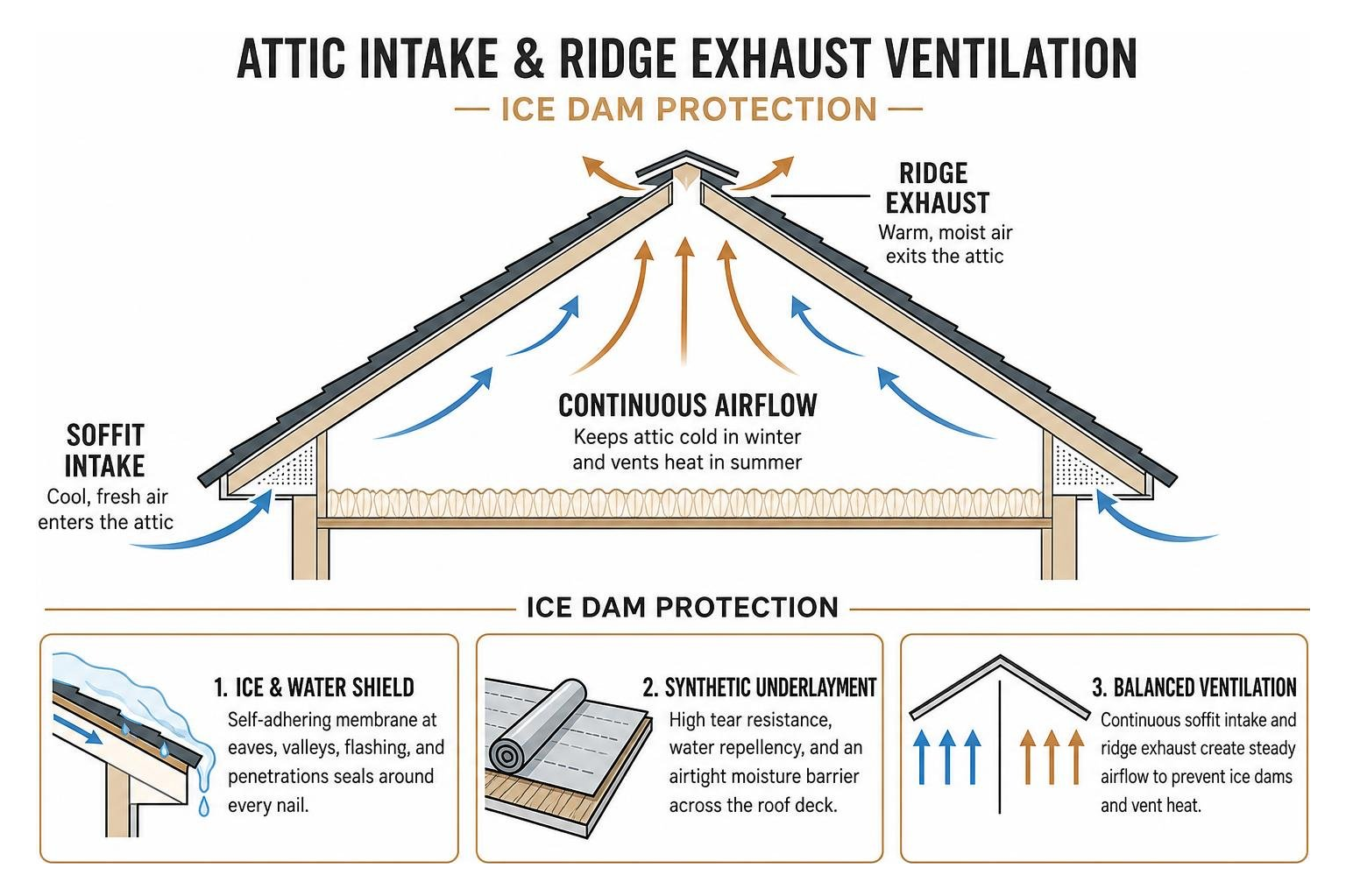
To prevent structural rot and indoor leaks, we install a multi-layered defense system:
- Self-Adhering Ice and Water Shield: A thick, rubberized asphalt membrane installed along all eaves (extending at least 24 inches past interior wall lines), valleys, flashing points, and roof penetrations. This membrane seals tightly around every nail shank.
- Synthetic Underlayment: Replacing traditional organic felt paper, synthetic underlayment provides high tear resistance, water repellency, and an airtight moisture barrier across the remaining roof deck.
- Balanced Intake and Exhaust Ventilation: Continuous soffit vents paired with ridge exhaust vents create steady airflow. This keeps your attic deck cold in winter to prevent ice dams and vents out trapped heat in summer.
Learn more about moisture defense strategies in our guide to preventing roof leaks after snow and wind.
The Step-by-Step Roof Replacement Process from Inspection to Cleanup
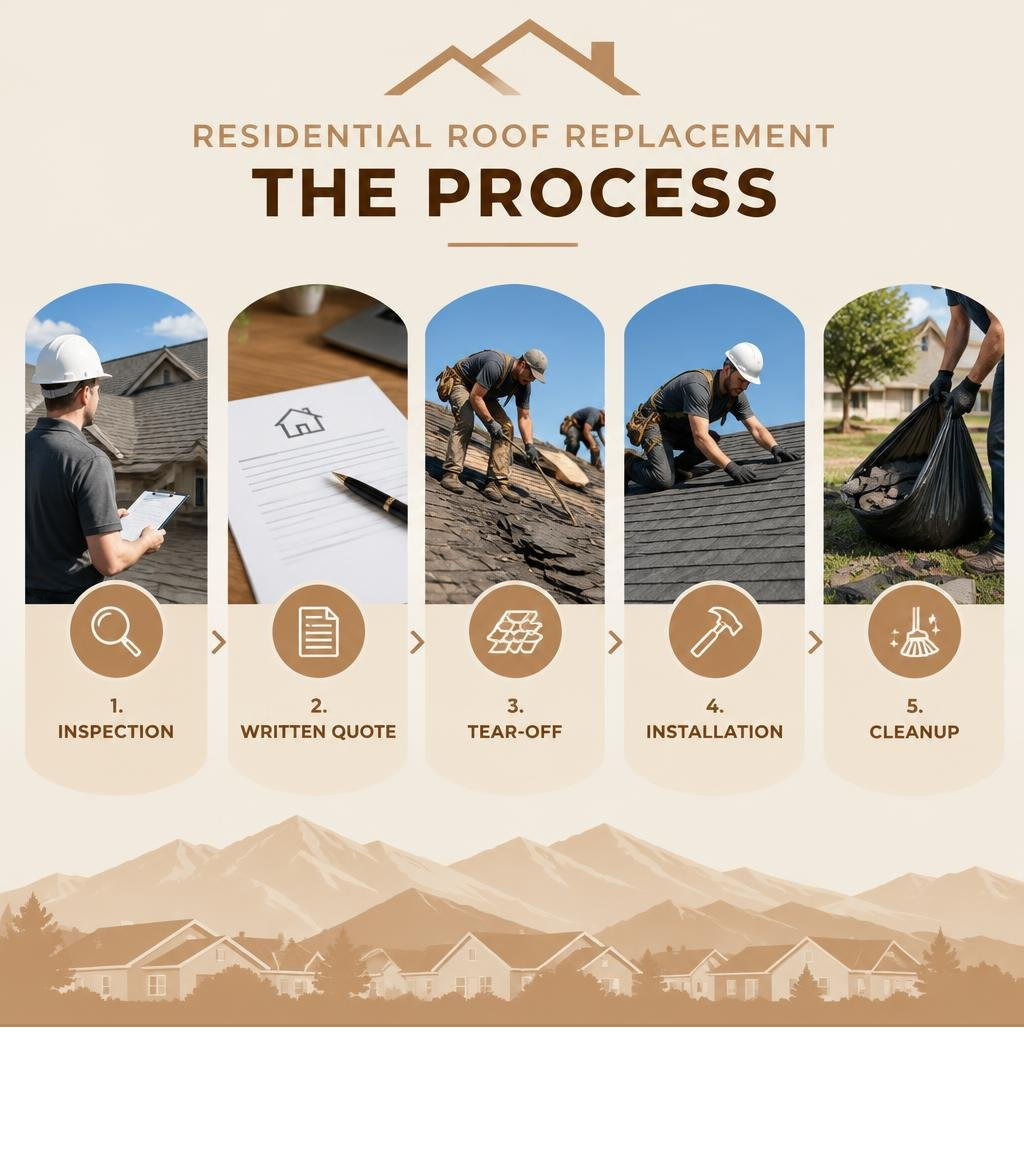
Replacing a roof is a detailed construction project that requires precision, safety protocols, and respect for your home. We complete installations cleanly and efficiently, usually finishing in just 1 to 3 days depending on size and weather.

- On-Site Evaluation and Precise Measurement: We inspect your current roof, attic framing, flashing points, and ventilation balance, providing a clear, line-item quote.
- Property Protection: Before tearing off a single shingle, we position protective tarps over landscaping, decks, air conditioning units, and garage doors.
- Complete Tear-Off: We strip the old roofing system down to the bare wooden sheathing.
- Decking Repair: Damaged or rotted plywood is cut out and replaced with fresh, structural-grade sheathing.
- Underlayment and Metal Installation: We install heavy-duty drip edge metal, ice and water shield along critical zones, synthetic felt across the deck, and new valley metal.
- Shingle or Metal Application: Starter shingles, field courses, step flashing along sidewalls, chimney flashing, and ridge caps are fastened using pneumatic nailers calibrated for proper depth.
- Ventilation Upgrades: We cut and install low-profile ridge vents and exhaust baffles.
- Thorough Cleanup and Magnetic Sweep: Our crew collects all debris, clears the gutters, and sweeps driveways, walkways, and lawn areas multiple times with industrial magnetic rollers to capture stray nails.
- Final Quality Inspection: A supervisor walks the roof to verify straight courses, sealed flashing, and pristine cleanup.
For a deeper look into preparing your home for replacement day, read our comprehensive guide to re-roofing your home.
Navigating Permits, HOA Guidelines, and Insurance Claims
Navigating local paperwork is an essential part of getting a new roof. Draper City requires building permits for complete residential roof replacements to verify that installations meet current seismic and snow-load building codes. We handle the entire permitting and inspection process directly with local municipal offices.
Many Draper communities—including master-planned developments in South Mountain and SunCrest—have strict Homeowners Association (HOA) covenants governing shingle profiles and colors. We provide physical material samples, manufacturer cut sheets, and color boards to streamline your HOA architectural review board approval.
If your replacement stems from severe hail, heavy wind shear, or fallen trees, we assist throughout the insurance claims process. We provide line-item damage documentation, meet on-site with adjusters, and ensure your claim accurately covers required building code upgrades. You can read our detailed advice on navigating insurance claims and storm repairs in Utah to protect your investment.
Choosing the Right Contractor for Residential Roof Replacement Draper Projects
Your roof is your home’s first line of defense, making the contractor you choose just as important as the materials you select. Hiring an unlicensed or inexperienced crew can lead to voided manufacturer warranties, premature leaks, and costly property damage.
When interviewing roofing contractors in the Salt Lake Valley, verify these essential standards:
- Active Utah Contractor License: Always verify that the company holds an active contractor license in good standing with the Utah Division of Occupational and Professional Licensing (DOPL).
- Comprehensive Insurance Coverage: Ensure the contractor carries both general liability insurance (minimum $1,000,000) and full worker’s compensation coverage for all crew members.
- Direct Manufacturer Certification: Factory-certified contractors can offer extended, non-prorated system warranties that uncertified installers cannot provide.
- Clear Workmanship Warranty: Look for a written labor guarantee that covers installation workmanship directly, independent of the manufacturer’s shingle warranty.
- Established Local Roots: Choose a company with deep ties across the Wasatch Front that will be around to stand behind their work for decades to come.
Review our step-by-step guide to hiring Utah roofing contractors for a handy checklist of questions to ask during your consultation.
Frequently Asked Questions About Roof Replacement in Draper
How long does a residential roof replacement take in Draper?
Most residential roof replacements in Draper take 1 to 3 business days to complete. Simple, single-story asphalt shingle projects can often be torn off and installed in a single day, while complex roofs with steep pitches, multiple valleys, or custom metal work may require 2 to 4 days. Unpredictable Utah weather—such as sudden mountain rainstorms or winter freezes—can occasionally pause work to protect your home’s exposed decking.
Do homeowners need to leave their home during roof replacement?
No, you do not need to leave your home during installation. However, you should expect significant noise throughout the day from tear-off tools, footsteps on the roof deck, and pneumatic nail guns. We recommend:
- Moving vehicles out of your garage and driveway before our crew arrives in the morning.
- Removing fragile wall art or delicate items from shelves, as roof hammering causes minor vibrations through interior drywall.
- Keeping indoor pets in a quiet, comfortable room and keeping children away from the perimeter workspace until our magnetic nail sweep is complete.
Can a new roof help lower energy bills in Utah?
Yes. Upgrading to a modern roofing system with properly balanced attic ventilation significantly lowers heating and cooling costs. Balanced intake and exhaust vents allow trapped summer heat to escape naturally, reducing the cooling load on your air conditioning unit. In winter, proper ventilation and moisture barriers keep your attic insulation dry, preserving its thermal resistance (R-value) and lowering heating bills.
Conclusion
A durable roof protects your home from mountain snow, summer heat, and canyon winds. Partnering with a reliable, local contractor ensures your investment delivers lasting protection, safety, and curb appeal.
At Heaton Bros. Roofing, we take pride in serving our neighbors across Draper and the Salt Lake Valley. As a 4th-generation, family-owned roofing company with over 65 years of local Utah experience, we combine time-tested craftsmanship with modern roofing technology. When you are ready to upgrade your home with honest, dependable service, schedule a consultation with Utah’s premier residential roofing experts to protect your property for decades to come.