
How to Find a South Jordan Roofing Contractor You Can Trust
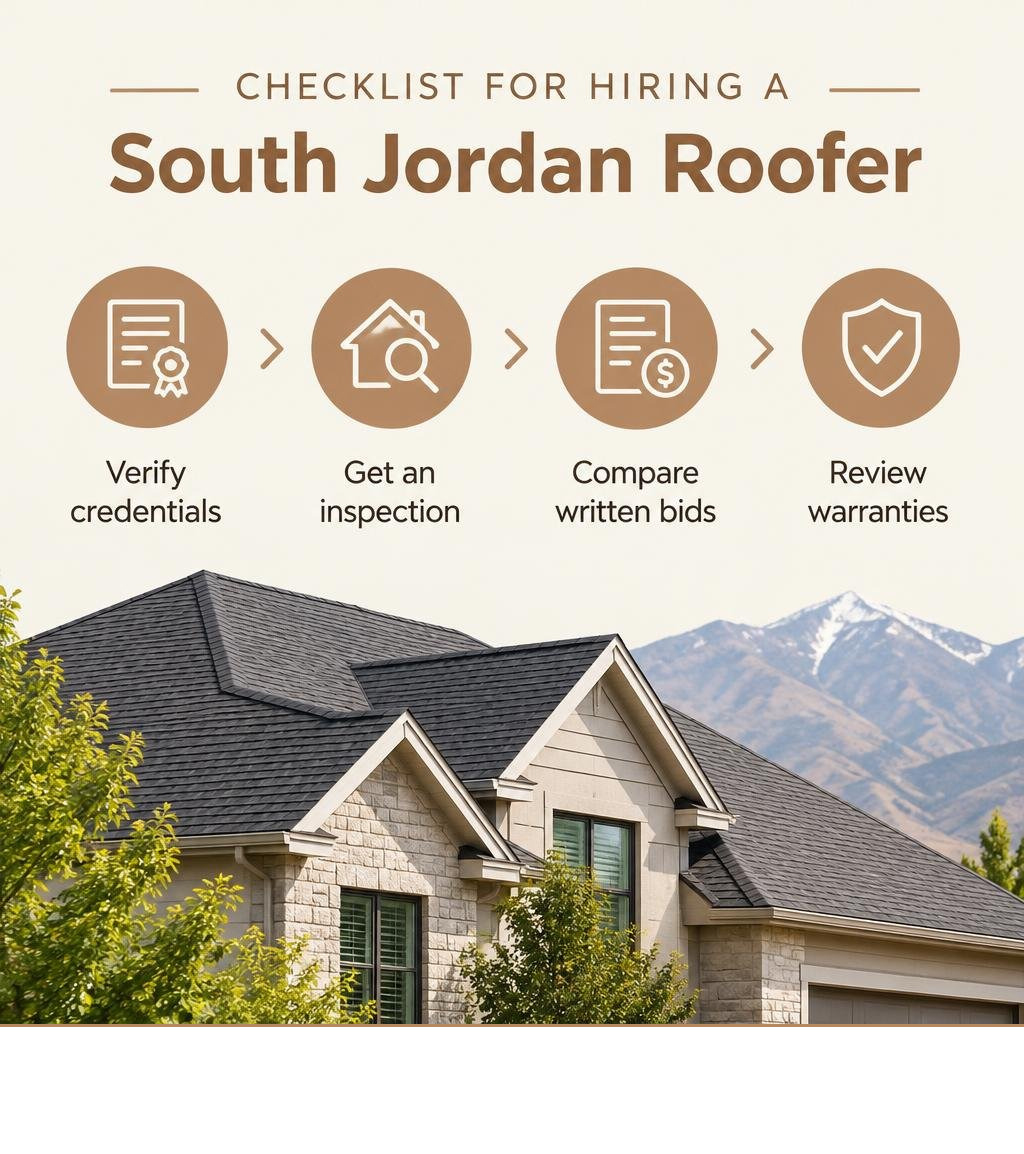
Start with proof, not a sales pitch. Ask each South Jordan roofing contractor for a verifiable Utah license, proof of insurance, and a written estimate. Compare what each bid includes: materials, repairs to damaged decking, cleanup, timing, payment terms, and workmanship warranties.
South Jordan roofs face winter snow and strong summer sun. A good contractor should inspect your roof before recommending a repair or replacement, then explain why that choice fits your home and budget. The Utah Division of Occupational and Professional Licensing maintains a public license lookup tool you can use to confirm a contractor’s active status before you sign anything.
We’re Heaton Bros. Roofing. Our hands-on work with roof repairs, storm damage assessments, and asphalt shingle replacements across the Salt Lake City area informs our approach to South Jordan roofing: clear answers and dependable work.
Essential Criteria for Vetting South Jordan Roofing Contractors
Finding someone to work on your home should never feel like a high-stakes gamble. With over 77,000 residents and more than 24,000 housing units across South Jordan, demand for roofing services stays steady year-round. Unfortunately, high demand invites fly-by-night operators who show up after hailstorms, offer lowball estimates, and disappear the moment their poor workmanship causes an attic leak.
To protect your home and wallet, you need a strict vetting checklist. Before letting anyone climb onto your roof with a nail gun, confirm they meet essential legal and professional baselines. Reviewing licensing, insurance, and experience gives you a clear baseline for what Utah law demands from any legitimate contractor.
- Active Utah Contractor License: Every roofer must hold an active license through the Utah Division of Occupational and Professional Licensing (DOPL). Ask for their license number and verify it online to confirm it is active and free of disciplinary sanctions.
- General Liability Insurance: A legitimate contractor carries at least $1,000,000 in general liability coverage. This protects your home and property if an accidental fire, sudden downpour, or structural accident happens during tear-off.
- Workers’ Compensation Coverage: Roofing is demanding, elevated work. If an uninsured worker slips on your roof, you could face personal liability claims through your homeowner’s insurance. Always demand an active certificate of workers’ compensation sent directly from their insurance broker.
- Manufacturer Certifications: Top-tier shingle manufacturers provide extended material and system warranties only through factory-certified installers. If a roofer cannot offer manufacturer-backed protections, their installation practices may void your coverage down the road.
Verifying Workmanship and Local Reputation
Online review sites make it easy to spot patterns in how contractors treat their clients. When vetting local roofers, look beyond star ratings and read specific comments about project communication, punctuality, and property cleanup.
Check references from neighborhoods right here in the Salt Lake Valley, such as Daybreak, Glenmoor, or River Walk. A contractor who has worked in South Jordan for years understands our specific architectural styles, HOA guidelines, and local wind conditions. Following a solid guide to choosing a roofing company helps ensure you choose a business rooted in our community rather than an out-of-state storm chaser.
Always ask for a detailed, written estimate. A single-page invoice with a vague lump-sum price leaves the door wide open for hidden fees once your old shingles are stripped away.
Understanding Contract Terms and Payment Structures
A professional roofing contract leaves nothing to guesswork. Before signing, ensure the document clearly defines:
- Complete Scope of Work: Specific tear-off steps, underlying wood repairs, underlayment brands, ice and water barrier coverage, flashing replacements, and ventilation upgrades.
- Estimated Timelines: Clear start and target completion dates, along with weather delay contingencies.
- Cleanup and Disposal: Explicit promises regarding daily magnetic sweeps for stray nails, dumpster placement, and hauling fees.
- Lien Waivers: A formal supplier lien waiver upon final payment, ensuring material distributors cannot place a lien on your property if the contractor fails to pay their material invoices.
Never agree to pay 100% upfront. A standard, ethical payment schedule involves a modest deposit to secure materials, an intermediate payment once work begins, and final payment only after the roof passes final city inspection and you sign off on cleanup.
Understanding Climate Challenges and Material Selection in South Jordan
Our corner of the Salt Lake Valley presents unique environmental stressors for residential roofs. South Jordan sits in a high-desert environment where roofs endure intense ultraviolet radiation and 100-degree summer heatwaves, followed swiftly by freezing winter temperatures and heavy snowpack.
This extreme thermal cycling causes building materials to expand and contract constantly. Poorly ventilated attics trap superheated air in July, baking shingles from the underside and curling their edges prematurely. In January, trapped heat melts rooftop snow, sending water trickling toward cold eaves where it refreezes into destructive ice dams. Pairing durable materials with balanced ridge-and-soffit ventilation protects your structural decking from moisture rot and premature aging.
Choosing the Right South Jordan Roofing Materials for Winter Snow
South Jordan receives an average of 58 inches of snowfall each year. That heavy accumulation places sustained weight on your rafters and tests the watertight seal of every roof penetration. When comparing residential roofing materials, consider how well each option sheds heavy, wet Wasatch snow and resists freeze-thaw cracking.
Asphalt shingles protect about 80% of residential roofs in the South Jordan area thanks to their affordability, aesthetic versatility, and proven performance. However, heavier architectural shingles and standing-seam metal roofs offer superior wind and snow defense for homeowners seeking decades of low-maintenance protection.
| Roofing Material | Typical Installed Lifespan | Snow & Ice Resistance | Relative Cost | Best Suited For |
|---|---|---|---|---|
| Traditional 3-Tab Asphalt | 15–20 Years | Moderate (Vulnerable to wind uplift) | Budget-Friendly | Starter homes, rental properties |
| Architectural Asphalt Shingles | 25–30+ Years | High (Multi-layered, excellent wind seals) | Moderate | Standard suburban homes, HOA neighborhoods |
| Standing-Seam Metal | 50+ Years | Superior (Sheds heavy snow immediately) | Premium | Modern builds, low-slope sections, long-term homeowners |
| Synthetic Slate / Composite Tile | 40–50 Years | High (Impact resistant, freeze-thaw immune) | High-End | Custom luxury builds, steep-pitch roofs |
Energy-Efficient and Cool Roof Upgrades for Summer Heat
Summer energy bills in South Jordan can climb quickly when your air conditioner runs non-stop against attic temperatures that exceed 140 degrees. Upgrading to cool-roof asphalt shingles with solar-reflective granules reflects infrared heat away from your home, reducing cooling loads by up to 15%.
During a roof replacement, you have an ideal opportunity to optimize your attic’s thermal envelope. Upgrading from standard box vents to continuous ridge vents, clearing soffit intake pathways, and installing modern synthetic underlayment keeps your living spaces cooler while extending the service life of your new shingles.
Warning Signs That Indicate It Is Time for a Roof Replacement
Catching roof problems early prevents minor leaks from turning into structural wood rot, ruined ceiling drywall, and toxic mold growth. You don’t have to climb a ladder to spot trouble; a quick ground-level walk around your perimeter with a pair of binoculars often reveals telltale signs of failure.
- Granule Loss in Gutters: Finding coarse, sand-like granules clogging your downspouts indicates your shingles have lost their protective UV coating, leaving the asphalt base exposed to brittle cracking.
- Cupping and Curling: Shingle edges that flare upward or bow in the center can no longer shed driven rain or wind-driven snow.
- Exposed Nail Heads: Fasteners that back out through the shingle surface create direct pathways for meltwater leaks.
- Spongy Decking: Uneven dips, sags, or springy spots when walking the roof indicate structural plywood rot beneath the underlayment.
Signs You Need Urgent South Jordan Roofing Repairs
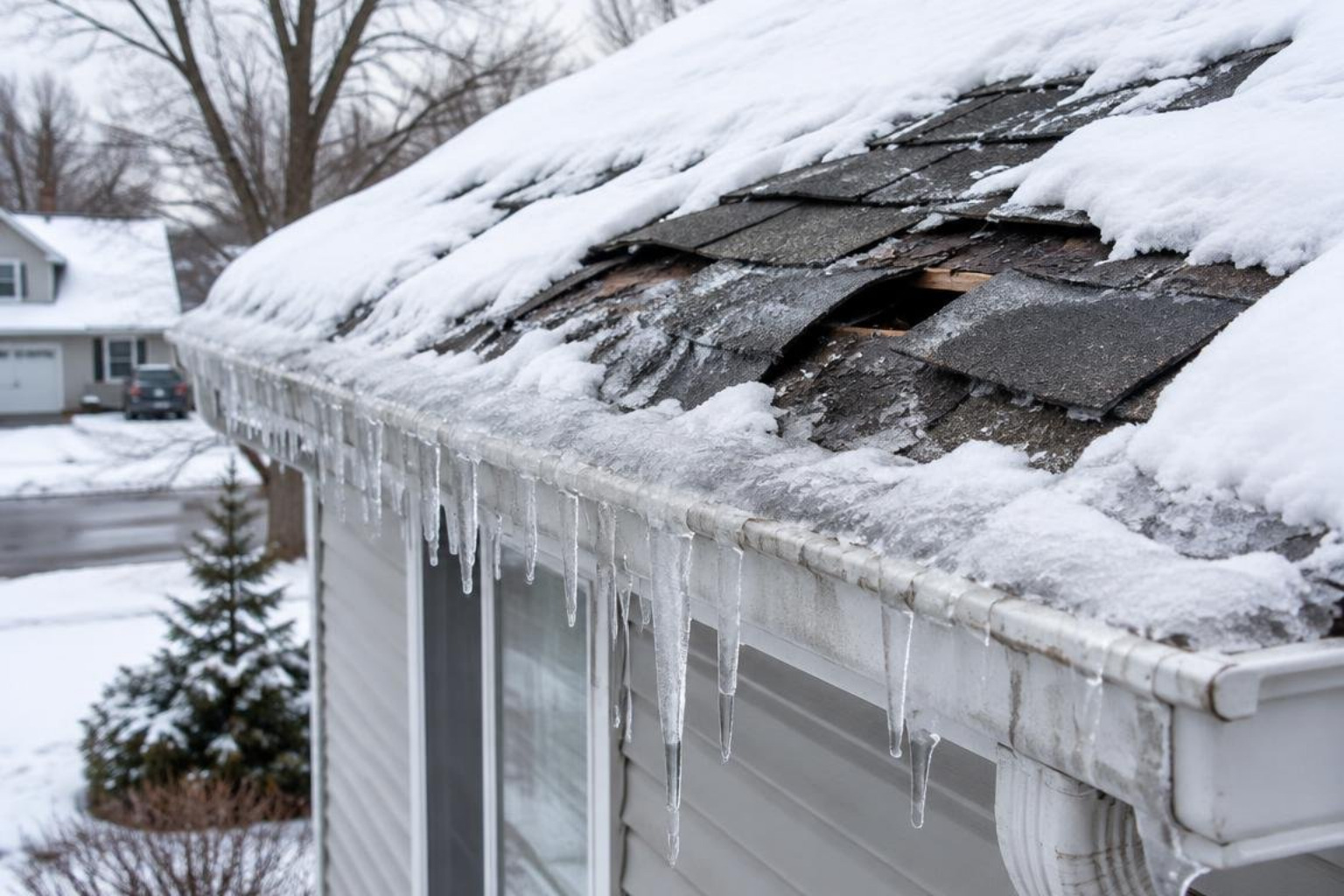
Certain issues demand immediate professional attention before water reaches your finished ceilings. Missing shingles after a canyon windstorm, bent step flashing around chimneys, or water stains spreading across your top-floor drywall require prompt stabilization.
When severe winter freezes create ice dams along your eaves, water can back up beneath lower shingle courses. If heavy storms cause sudden water intrusion, understanding how to handle roof damage and insurance claims can help ensure emergency tarping and repairs are documented properly for your adjuster.
Assessing Aging Roofs on Homes Built After 1990
South Jordan experienced a massive residential construction boom through the 1990s and early 2000s, with roughly 70% of homes built after 1990. Because standard builder-grade shingles installed during that expansion carry an average 20-to-30-year lifespan, thousands of local roofs have reached the end of their reliable service life.
If your home was constructed during this era and still has its original roof, the underlying felt paper has likely dried out and become brittle. Even if the shingles look passable from the curb, aging moisture barriers and deteriorated pipe flashing collars leave your roof decking vulnerable to quiet leaks during heavy winter snow melts.
Average Costs, Permitting, and Timelines for Local Roof Projects
Planning a roofing project involves balancing upfront costs against long-term durability. In South Jordan, the average cost of a new roof ranges from $5,500 to $11,000 depending on home size, roof pitch, material grade, and the condition of the underlying plywood decking.
Most residential replacements take between one and three days of active labor. Professional crews take care to protect your landscaping, strip away old shingles down to the bare wood, replace rotted decking, install high-performance synthetic underlayment and ice barriers, nail down new shingles, and perform a thorough cleanup.
South Jordan Building Permits and Code Requirements
The City of South Jordan enforces building codes derived from the International Residential Code (IRC) and state amendments to protect public safety. Roof replacements involving complete tear-offs require an approved residential building permit issued by the South Jordan City Building Division.
Your contractor is responsible for pulling the permit, posting it on-site, and scheduling the final building inspection. In South Jordan’s climate zone, building codes require self-adhering ice and water shield membranes installed from the eave edges to a point at least 24 inches inside the exterior wall line. This code protects your interior walls against water backup caused by heavy winter ice damming.
Budgeting for Repairs vs. Full Roof Replacement
Deciding whether to patch an existing leak or invest in a full tear-off comes down to roof age and damage extent. If an otherwise healthy 8-year-old roof loses a few shingles during a windstorm, an isolated repair makes complete financial sense. However, if your roof is over 20 years old and showing systemic granule loss, sinking money into repeated patches is like putting new tires on a car with a blown transmission.
Taking time to review residential roofing replacement costs and budgeting for average home roofing expenses will give you a clearer picture of material pricing, labor rates, and long-term warranties.
Frequently Asked Questions About Roofing in South Jordan
How much does a new roof cost in South Jordan?
The average cost for a complete roof replacement in South Jordan falls between $5,500 and $11,000 for standard single-family homes. Final costs vary depending on square footage, steep roof angles, the number of valleys and skylights, decking repairs, and whether you choose standard architectural shingles or premium metal systems.
How does South Jordan snow affect roof lifespan?
South Jordan’s 58-inch annual snowfall subjects roofs to sustained weight loads and frequent freeze-thaw cycles. When snow melts during sunny afternoons and refreezes at night, water expands inside tiny cracks, loosening shingle seals and stressing flashing joints. Proper attic insulation, intake and exhaust ventilation, and waterproof ice barriers prevent early failure from snow accumulation.
Do I need a permit to replace my roof in South Jordan?
Yes. The City of South Jordan requires building permits for full roof replacements and major structural repairs. A licensed and insured roofing contractor will handle the application paperwork, pull the permit before beginning work, and arrange the mandatory final inspection with city code officials.
Conclusion
Your roof is your home’s first line of defense against Wasatch mountain blizzards, desert summer heatwaves, and seasonal valley winds. Protecting that investment starts with choosing a contractor who values honest communication, verifiable credentials, and meticulous installation standards.
At Heaton Bros. Roofing, we are a 4th-generation, family-owned company with over 65 years of experience serving homeowners across Salt Lake City, South Jordan, and surrounding Wasatch Front communities. When you’re ready for dependable craftsmanship without the high-pressure sales games, schedule your South Jordan roofing consultation and inspection with our team.