

What Are the Best Roofing Materials for Your Home?
Choosing the right roofing materials is one of the most important decisions you’ll make as a homeowner. The wrong choice can cost you thousands in repairs — or leave your home vulnerable to weather damage for decades.
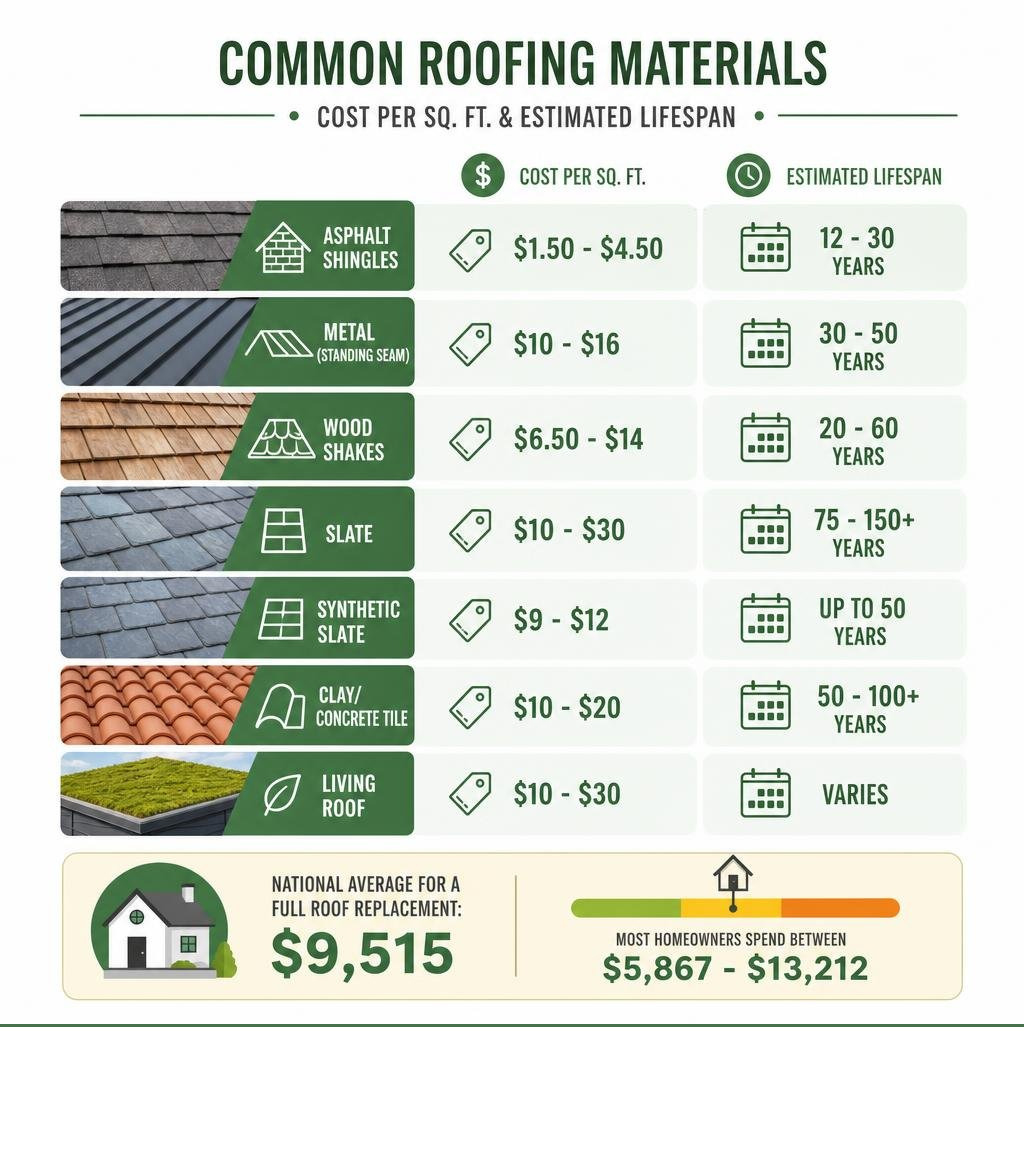
Here’s a quick overview of the most common options:
| Material | Cost per Sq. Ft. | Lifespan | Best For |
|---|---|---|---|
| Asphalt Shingles | $1.50 – $4.50 | 12-30 years | Most homes, budget-conscious buyers |
| Metal (Standing Seam) | $10 – $16 | 30-50 years | Durability, energy efficiency |
| Wood Shakes | $6.50 – $14 | 20-60 years | Aesthetics, dry climates |
| Slate | $10 – $30 | 75-150+ years | Premium, long-term investment |
| Synthetic Slate | $9 – $12 | Up to 50 years | Lightweight alternative to natural slate |
| Clay/Concrete Tile | $10 – $20 | 50-100+ years | Hot or coastal climates |
| Living Roof | $10 – $30 | Varies | Eco-conscious, flat or low-slope roofs |
The national average for a full roof replacement is $9,515, with most homeowners spending between $5,867 and $13,212 depending on material and roof size.
Your roof does more than keep out the rain. It protects your home’s structure, affects your energy bills, and plays a big role in curb appeal. With so many options — from everyday asphalt shingles to innovative solar tiles — it can be hard to know where to start.
This guide breaks it all down in plain language, so you can make a confident, informed decision.
At Heaton Bros. Roofing, we’ve helped homeowners throughout the Salt Lake City area choose and install the right roofing materials for their climate, budget, and home — from straightforward asphalt shingle replacements to full storm damage overhauls. If you’re weighing your options, you’re in the right place.
Simple guide to roofing materials terms:
Key Factors to Consider When Choosing Roofing Materials

When you look at a roof, you probably just see the colors and patterns of the shingles. But beneath that exterior layer lies a complex system of protection. Choosing the right roofing materials isn’t just about picking a pretty color; it requires balancing several practical factors that affect how well your roof will perform over the next few decades.
If you are planning a replacement in the Wasatch Front, here are the primary elements we always recommend keeping in mind:
1. Local Climate and Weather Extremes
Your local weather is the ultimate test of any roofing material. Here along the Wasatch Front—from the heavy snows of Park City and Logan to the hot summer afternoons in South Jordan and Bluffdale—our roofs must endure dramatic temperature swings.
- Snow and Ice: Heavy snow loads require strong structural support and materials that allow snow to slide off safely or resist ice damming.
- UV Radiation and Heat: Intense summer sun can dry out and crack lower-grade asphalt shingles over time, making UV-resistant granules and reflective coatings highly valuable.
- Wind and Storms: High winds rushing through the canyons of Bountiful and Alpine can lift loose shingles right off a deck.
2. Roof Slope and Pitch
The “slope” or “pitch” of your roof dictates which materials you can physically install. Roof pitch is measured as a ratio of vertical rise to horizontal run (for example, a 4/12 pitch rises 4 inches for every 12 inches of horizontal run).
- Low-Slope or Flat Roofs: Water drains slowly from these roofs, so traditional shingles aren’t an option because water can easily seep underneath them. Instead, low-slope roofs require continuous membrane systems like PVC or built-up roofing (BUR) to remain completely watertight.
- Steep-Slope Roofs: These drain water and shed snow quickly, allowing for a wide variety of overlapping materials like asphalt shingles, metal panels, wood shakes, and slate tiles.
3. Durability and Lifespan
How long do you plan to stay in your home? If you plan to move in a few years, a highly durable but expensive material like slate or standing seam metal might not yield a full return on your investment. However, if this is your “forever home,” investing in a premium material with a 50-year lifespan means you will likely never have to worry about replacing your roof again.
4. Aesthetics and Architectural Style
Your roof can represent up to 40% of your home’s visible exterior. The material you choose should complement your home’s architectural style. For instance:
- Craftsman and Rustic Homes: Often look best with wood shakes or architectural asphalt shingles that mimic wood.
- Modern and Contemporary Designs: Pair beautifully with sleek standing seam metal panels.
- Historic Homes: Frequently require natural slate or high-end synthetic alternatives to maintain historical accuracy.
To dive deeper into how these options stack up visually and structurally, check out our guide on How to Compare Different Roofing Options.
Traditional and Modern Roof Types Compared
To help you visualize how different materials stack up side-by-side, we have compiled a comprehensive comparison of the most common residential and commercial options.
| Material Type | Average Cost (Installed per Sq. Ft.) | Expected Lifespan | Primary Advantages | Primary Disadvantages |
|---|---|---|---|---|
| Asphalt Composite | $1.50 – $4.50+ | 12 – 30 Years | Affordable, easy to install, widely available | Shorter lifespan, susceptible to wind damage |
| Standing Seam Metal | $10.00 – $16.00 | 30 – 50 Years | Highly durable, fireproof, sheds snow easily | High upfront cost, can be noisy in heavy rain |
| Wood Shingles / Shakes | $4.50 – $14.00 | 20 – 60 Years | Natural, rustic look; provides insulation | High maintenance, poor natural fire resistance |
| Clay / Concrete Tile | $10.00 – $20.00 | 50 – 100+ Years | Extremely long-lasting, fire-resistant | Very heavy, requires reinforced roof framing |
| Natural Slate | $10.00 – $30.00 | 75 – 150+ Years | Virtually indestructible, gorgeous natural look | Extremely expensive, heavy, fragile to walk on |
| Synthetic Slate / Composite | $9.00 – $12.00 | Up to 50 Years | Lightweight, excellent impact and fire ratings | Higher cost than asphalt, newer to the market |
| Living / Green Roofs | $10.00 – $30.00 | Varies | Superior insulation, manages stormwater | Requires heavy maintenance and structural reinforcement |
Asphalt Shingles: The Most Popular Residential Roofing Materials
It is no secret that asphalt composite shingles are the most popular roofing material in North America. They are economical, highly versatile, and perform remarkably well across various weather types when installed correctly.
Three-Tab Shingles vs. Architectural Shingles
If you are looking at asphalt, you will generally choose between two main styles:
- Three-Tab Shingles: These are flat, traditional shingles with a uniform cut that gives them the appearance of three individual tabs. They are the most affordable option, typically costing around $1.00 to $1.20 per square foot for the material alone. However, they are thinner, have lower wind ratings (usually up to 60 MPH), and typically last 12 to 20 years.
- Architectural (Laminated or Dimensional) Shingles: Introduced in the 1970s, architectural shingles are constructed from multiple layers of asphalt-coated fiberglass fused together. This creates a textured, three-dimensional look that mimics natural wood shakes or slate. They are thicker, much more durable, can withstand winds up to 110–130 MPH, and generally last 20 to 30 years.
The Technology Behind Modern Shingles
Modern asphalt shingles are highly engineered products. Leading manufacturers like Owens Corning utilize advanced layers to defend your home. For example, their premium lines feature specialized components designed to seal out water, defend against wind, and let your attic breathe. You can explore their full range of styles on the Owens Corning Roofing Shingles product page.
Additionally, the outer surface of these shingles relies on ceramic-coated mineral granules to protect the underlying asphalt from degrading under intense UV rays. To learn more about how these protective minerals are manufactured to resist weather and maintain their color, you can read about Classic Roofing Granules from 3M.
If you are looking for a balance of cost and performance, asphalt is tough to beat. To see how it compares to other budget-friendly options, take a look at our breakdown of the Top 5 Affordable Roofing Options That Don’t Skimp on Quality.
Premium and Natural Roofing Materials: Slate, Clay, and Wood
For homeowners looking to make a long-term investment or achieve a distinct architectural aesthetic, natural and premium materials offer unmatched character and longevity.
Natural Slate Shingles
Often called the “indestructible roof,” natural slate is quarried directly from high-quality stone. A slate roof can easily last over 100 years—and in some cases, upwards of 150 years. It is completely fireproof, impervious to water, and beautifully elegant.
However, slate has two major drawbacks: cost and weight. It is one of the most expensive materials to purchase and install, and it is incredibly heavy. Before switching to slate, you must have a structural engineer verify that your home’s framing can support the immense load.
Clay and Concrete Tiles
Clay and concrete tiles are legendary for their durability and are highly popular in hot climates. While clay tiles offer a classic, warm aesthetic, concrete tiles are an incredibly versatile alternative. Concrete can be manufactured to replicate the appearance of wood shakes or slate while offering superior fire protection and rot resistance. Like slate, concrete and clay tiles are heavy and require robust structural support underneath.
Wood Shingles and Wood Shakes
Wood shingles are machine-cut for a clean, uniform look, while wood shakes are hand-split, offering a thicker, more rustic texture. Wood provides excellent natural insulation, helping keep your home cool in the summer and warm in the winter.
However, wood requires regular maintenance to prevent rot, mold, and insect damage. It also has poor natural fire resistance (often carrying only a Class C rating or no rating at all) unless treated with specialized fire retardants. To learn more about how modern engineering is solving the fire-safety issues of traditional wood and composite products, read our guide on Testing the Heat with Fire-Resistant Composite Roofing.
Innovative and Eco-Friendly Roofing Options
As technology advances, homeowners are no longer limited to traditional materials. Modern innovations allow you to turn your roof into an active, eco-friendly system.
Solar Roof Tiles
Unlike traditional solar panels that are bolted on top of an existing roof, solar roof tiles function as the actual roofing material itself. They integrate seamlessly with standard shingles, generating clean electricity (typically 13 to 63 watts per tile) while protecting your home from the elements. While they represent a significant upfront investment (often costing $60,000 to $75,000 for a standard home), they can dramatically reduce your utility bills and qualify for clean energy tax credits.
Synthetic Slate and Composite Materials
Synthetic slate shingles are manufactured from advanced polymers, rubber, or plastic resins. They are designed to perfectly mimic the luxurious texture and look of natural slate or wood shakes, but at a fraction of the weight and cost. They are highly impact-resistant, often carry a Class A fire rating, and frequently come with warranties lasting up to 50 years.
Living (Green) Roofs
A living roof is covered with a waterproof membrane, a root barrier, a drainage system, and a layer of soil supporting live vegetation. Green roofs are fantastic for:
- Absorbing rainwater and reducing stormwater runoff.
- Providing exceptional thermal insulation, keeping your home naturally cooler.
- Filtering air pollutants and creating a habitat for local pollinators.
However, living roofs require regular maintenance, specialized irrigation, and a highly reinforced structural frame to support the weight of wet soil. For a complete look at these and other green alternatives, explore our article on Eco-Friendly Roofing Options for a Sustainable Home.
Performance Metrics: Weather, Fire, and Energy Efficiency
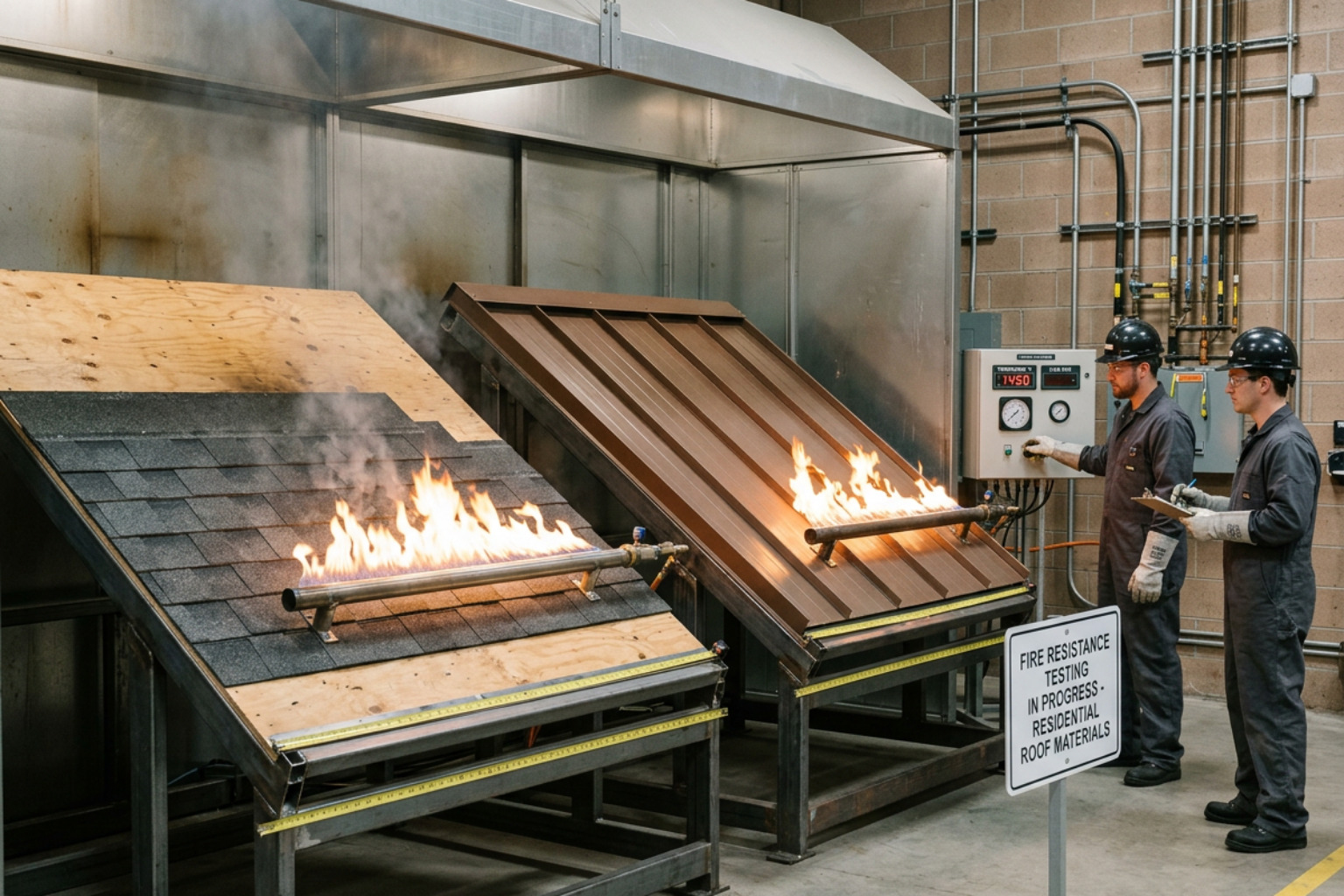
When selecting roofing materials, it is vital to look past the price tag and evaluate how the material performs under extreme physical stress.
Fire Safety Ratings
Roofing materials are rated for fire resistance using a scale from Class A to Class C, with Class A being the most fire-resistant:
- Class A: Materials that can withstand severe exposure to fire originating from outside the building. Examples include slate, clay tile, concrete tile, metal roofing, and most fiberglass-reinforced asphalt shingles.
- Class B: Effective against moderate fire exposure.
- Class C: Provide light fire protection (e.g., untreated wood shingles or organic asphalt shingles).
If you live near heavily wooded areas or wildfire-prone foothills in places like Draper, Sandy, or Alpine, choosing a Class A rated material is critical. For a deeper look into how roofs are engineered to resist flames, see our article on What Makes a Roof Fire-Resistant?.
Wind and Impact Resistance
High winds and hail can destroy a roof in minutes. When shopping for shingles, look for products that comply with high-performance standards:
- ASTM D3161 Class F or ASTM D7158 Class H are the gold standards for wind resistance, indicating the shingles can withstand winds up to 110–150 MPH.
- UL 2218 Class 4 Impact Rating measures hail resistance. During this test, steel balls are dropped onto the shingle to ensure it won’t crack or rupture. Many insurance companies offer premium discounts for homes with Class 4 rated roofs.
Energy Efficiency and Reflectivity
Your roof can act as a massive heat sink, radiating heat down into your living spaces and driving up your air conditioning costs. “Cool roofs” utilize highly reflective materials to bounce solar energy back into the atmosphere.
For commercial properties or flat-roofed residential structures, modern single-ply thermoplastic membranes are highly effective. For example, the Sarnafil S 327-48 Feltback EnergySmart Membrane features a highly reflective white surface that significantly reduces energy consumption by keeping the building’s interior cooler.
Cost Analysis of Roof Replacement and Installation
Understanding how roof replacement costs are calculated can help you avoid surprises when you receive an estimate. Contractors measure roofs in “squares,” where one roofing square equals 100 square feet.
1. Material Costs
The material you choose is the largest variable in your total estimate. While basic three-tab asphalt shingles might cost around $1.00 to $1.20 per square foot for materials, high-end standing seam metal or natural slate can easily exceed $10.00 to $20.00 per square foot.
2. Labor and Installation Complexity
Labor costs vary depending on the complexity of your roof’s design. Factors that increase labor costs include:
- Roof Pitch: Extremely steep roofs require specialized safety harnesses and scaffolding, which slows down the installation process.
- Valleys, Dormers, and Chimneys: Every intersection, valley, and penetration requires custom flashing and meticulous sealing, adding hours of skilled labor.
- Tear-Off Costs: Removing and disposing of your old layers of roofing requires significant labor and disposal fees.
3. Structural Reinforcement
If you are transitioning from a lightweight material like asphalt shingles to a heavy material like clay tile or natural slate, your home may require structural reinforcement. Adding support beams and rafters can add thousands of dollars to your project.
To get a complete, step-by-step breakdown of how these costs are calculated and what to expect during the process, read our A Comprehensive Guide to Residential Roofing Options.
Frequently Asked Questions about Roof Replacement
How do I know if my roof needs to be replaced?
There are several clear warning signs that your roof is reaching the end of its functional life:
- Curling or Cupped Shingles: Shingles that curl upward at the edges or bow in the middle are no longer shedding water properly.
- Significant Granule Loss: Finding a heavy accumulation of ceramic granules in your gutters is a sign that your shingles have lost their protective UV coating.
- Active Leaks or Water Stains: Water spots on your attic rafters or ceiling indicate that water has breached the underlayment.
- Age: If your asphalt shingle roof is over 20 to 25 years old, it is likely time to consider a replacement, even if it looks decent from the ground.
What is the most affordable and durable roofing material?
Asphalt composite shingles represent the best balance of affordability and durability for most homeowners. While they do not last as long as metal or slate, their low upfront cost, combined with modern wind and impact-resistant technologies, makes them an incredibly cost-effective choice.
Are there building code restrictions for certain roof types?
Yes. Local building codes and Homeowners Associations (HOAs) often place restrictions on roofing materials. For example, some fire-prone municipalities restrict the use of wood shakes unless they have been factory-treated with fire retardants. Other historic districts may require you to use specific colors or materials to maintain the neighborhood’s historical integrity. Always verify local building codes and HOA guidelines before choosing your materials.
Conclusion
Your roof is your home’s primary shield against the elements. Whether you opt for the economical versatility of architectural asphalt shingles, the sleek durability of standing seam metal, or the timeless elegance of synthetic slate, choosing the right material is essential for protecting your property and family.
At Heaton Bros. Roofing, we bring four generations and over 65 years of roofing expertise directly to your doorstep. We proudly serve homeowners across Salt Lake City, South Jordan, Bountiful, Bluffdale, Alpine, and the entire Wasatch Front, delivering reliable, high-quality, and affordable roofing solutions.
Ready to find the perfect roof for your home? Schedule a consultation with Heaton Bros. Roofing today, and let our family protect yours.