
What Is a Bitumen Sheet for Roof — and Is It Right for You?
A bitumen sheet for roof systems is a factory-made waterproofing membrane built from asphalt modified with polymers, reinforced with fiberglass or polyester, and used primarily on flat or low-slope roofs.
Here’s a quick overview of what you need to know:
| Feature | Details |
|---|---|
| Main types | SBS (rubber-modified), APP (plastic-modified), self-adhesive |
| Typical thickness | 2.2 mm to 4 mm |
| Application methods | Torch-applied, cold/mop-applied, peel-and-stick |
| Best for | Flat and low-slope roofs (commercial and residential) |
| Average lifespan | 15–25 years with proper maintenance |
| Common uses | Roofs, basements, foundations, and below-grade waterproofing |
Bitumen sheets have been around since the 1960s, evolving from traditional built-up roofing (BUR) into the modern multi-layer systems used on buildings across the country today — including right here in Salt Lake City.
They’re popular because they’re durable, waterproof, and flexible enough to handle both summer heat and heavy winter snow loads — exactly the kind of conditions Utah throws at your roof.
At Heaton Bros. Roofing, we’ve worked on countless flat and low-slope roofs across the Salt Lake City area, giving us hands-on experience with bitumen sheet for roof applications in Utah’s demanding climate. We’ll walk you through everything you need to know to make a confident, informed decision.
Understanding the Bitumen Sheet for Roof Systems
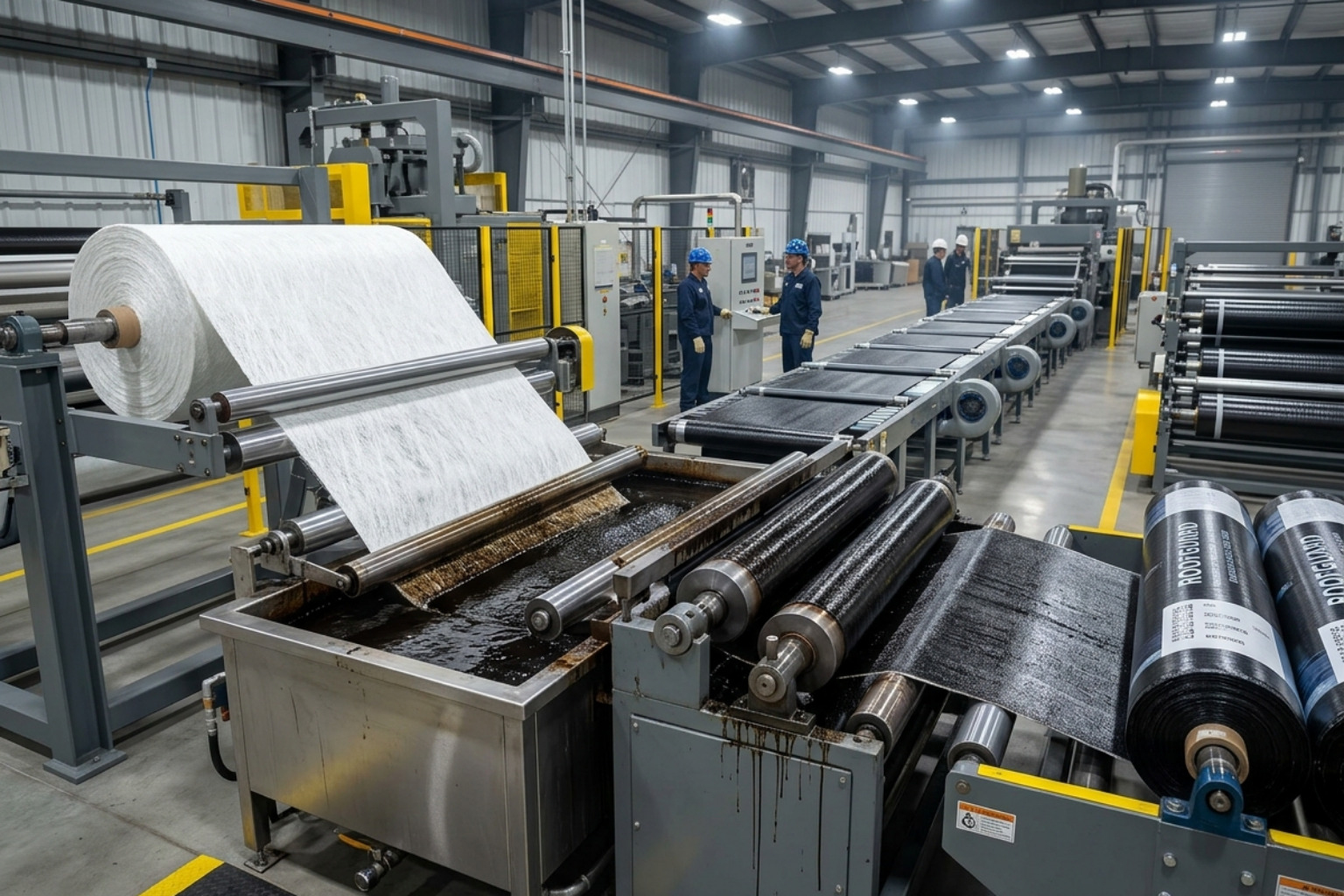
To understand why a bitumen sheet for roof applications is so effective, we have to look at what’s inside the roll. Think of it as a high-tech evolution of the old “tar and gravel” roofs. While those older systems were built layer-by-layer on-site, modern bitumen sheets are manufactured in a controlled factory environment.
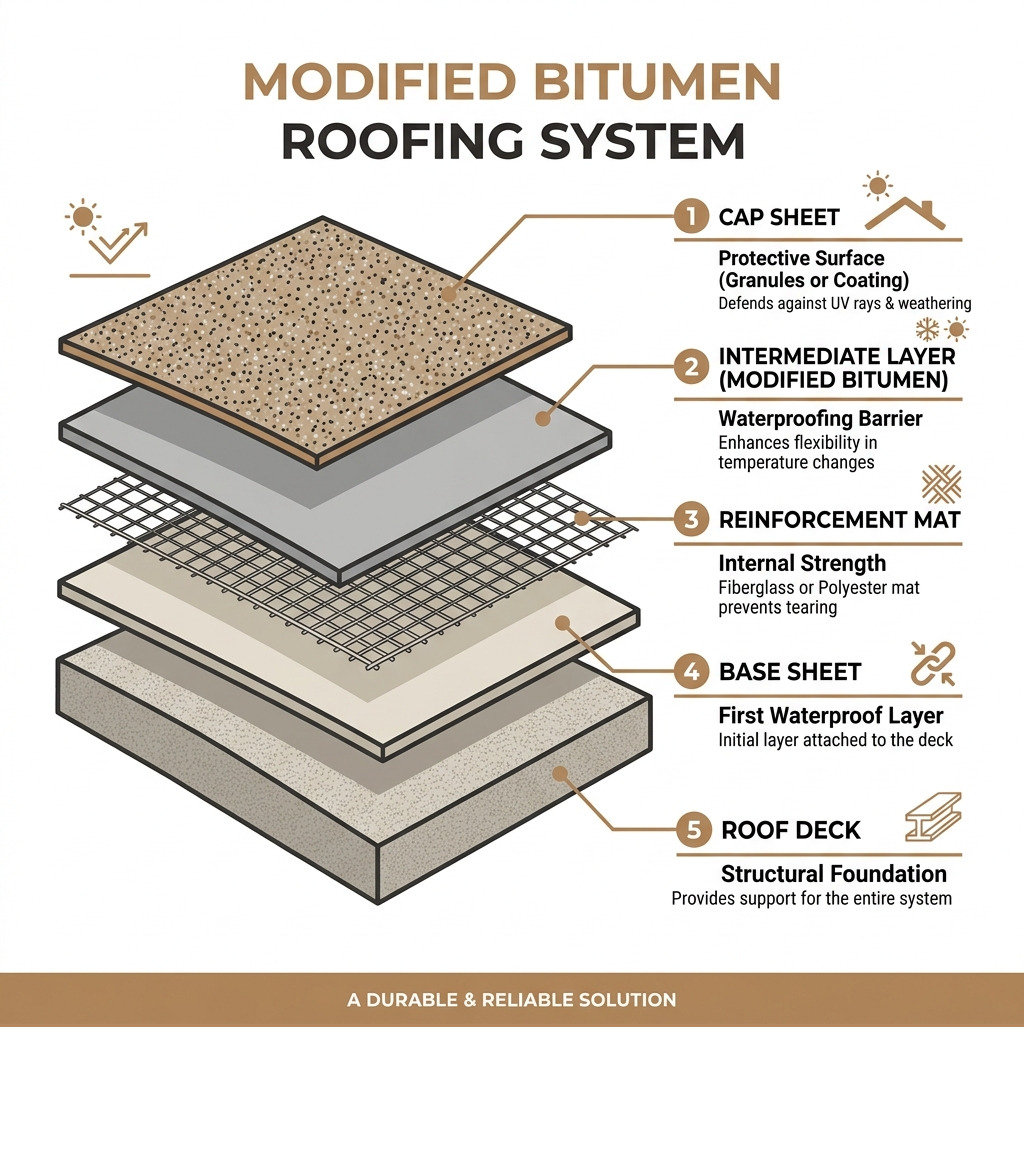
The process starts with a reinforcement mat, usually made of fiberglass or polyester. This mat is “bathed” in a mixture of bitumen (asphalt) that has been modified with specific polymers. This modification is what gives the sheet its “superpowers”—making it more flexible, more resistant to UV rays, and much tougher than plain asphalt.
Choosing the Right Bitumen Sheet for Roof Projects
When you’re looking at products, you’ll see various specifications. Thickness is a major factor. For instance, base plies might be around 2.2 mm (87 mil) or 3 mm (118 mil), while heavy-duty cap sheets often reach 4 mm (160 mil).
At Heaton Bros. Roofing, we often see different surfacing options as well. Some sheets come with a smooth finish, while others have mineral granules embedded on top. These granules aren’t just for looks; they provide essential UV protection and fire resistance, which is vital for the exposed roofs we see in the Salt Lake Valley.
Comparing SBS and APP Modifiers
The two “heavyweights” in modified bitumen are SBS and APP. Choosing between them depends largely on your specific roof and the local weather.
- SBS (Styrene-Butadiene-Styrene): This is essentially “rubberized” asphalt. The addition of SBS gives the bitumen incredible elasticity and a “memory,” meaning it can stretch and return to its original shape. This makes it a favorite for colder climates like Park City or Ogden because it stays flexible even when temperatures drop well below freezing.
- APP (Atactic Polypropylene): This is “plasticized” asphalt. It has a higher softening point, which makes it excellent for resisting the intense summer heat we experience in places like Nephi or Draper. It is typically applied using a torch, as the plastic modifiers flow well under heat to create a fused, waterproof bond.
Installation Methods and Best Practices
Installing a bitumen sheet for roof systems is a specialized skill. Depending on the building type and the specific product, we use one of several primary methods to “seal the deal.”
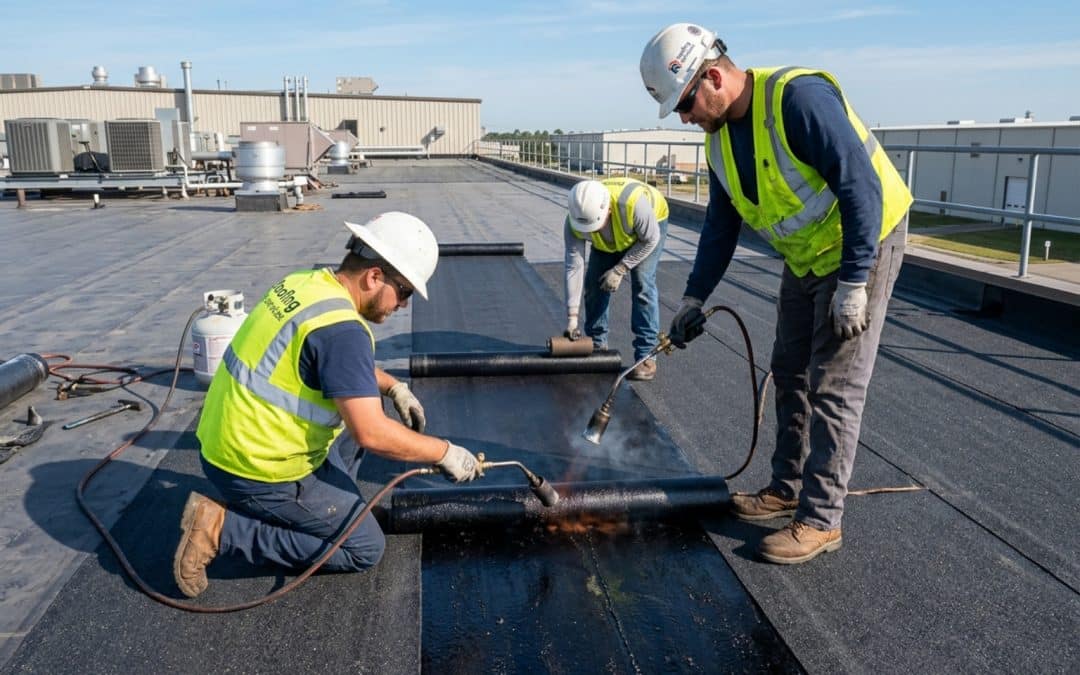
- Torch-Applied: This is the traditional method for many APP and some SBS systems. A roofer uses a propane torch to melt the bottom layer of the bitumen as it’s unrolled, fusing it directly to the substrate or the layer beneath it. It creates an incredibly strong, monolithic seal.
- Cold-Applied (Mop or Adhesive): In some cases, especially on occupied buildings like schools or hospitals where torch fumes might be an issue, we use cold adhesives. These are liquid bitumens applied with a mop or sprayer that chemically bond the sheets together.
- Self-Adhered (“Peel and Stick”): These are becoming increasingly popular for their ease of use and safety. The sheets come with a factory-applied adhesive backing protected by a release film. You simply peel the film and roll the sheet into place. While they save labor, they require very specific temperature windows—usually 40-50°F minimum—to bond correctly.
Preparation and Substrate Requirements
You can have the best Bitumen membrane roll sheet: Perfect Waterproofing for Roof in the world, but if the surface underneath isn’t ready, the roof will fail. The substrate must be bone-dry, clean, and free of oils or debris.
In many Utah installations, we first apply a primer to ensure the best possible “grip.” We also pay close attention to the slope. Even “flat” roofs should have a slight pitch to ensure water flows toward drains rather than “ponding” in the middle of the roof.
Safety and Handling Considerations
Safety is our top priority. When using torch-applied systems, we maintain a strict “fire watch” for several hours after the work is done to ensure no smoldering occurs.
Storage is also key. Bitumen Roll Sheet | Membrane Roll Sheet for Roof Isolation should always be stored upright to prevent them from becoming “oval” or flattened, which makes installation difficult. They should also be kept in opaque wrapping to protect the adhesive from UV damage before they ever hit the roof.
Performance, Lifespan, and Utah Climate Considerations
How does modified bitumen stack up against other popular flat roofing materials like EPDM (rubber) or TPO (thermoplastic)?
| Material | Durability | Installation | Best Use Case |
|---|---|---|---|
| Modified Bitumen | Very High (Multi-layer) | Torch, Mop, or Stick | High-traffic roofs, harsh climates |
| EPDM | High (Single-layer) | Adhesive | Large, open commercial roofs |
| TPO | Moderate to High | Heat-welded seams | Energy efficiency (white/reflective) |
Modified bitumen is often chosen for its “redundancy.” Because it is usually a multi-ply system (a base sheet and a cap sheet), it offers two layers of protection. This makes it exceptionally resistant to punctures—a big plus if you have HVAC technicians walking on the roof or if we get a heavy hailstorm in the Wasatch Front.
Maintaining Your Bitumen Sheet for Roof Longevity
While a bitumen sheet for roof system is tough, it isn’t “set it and forget it.” To reach that 20 to 25-year lifespan, you need to be proactive.
- Clear the Drains: Utah’s autumn leaves and winter ice can block drainage, leading to standing water that degrades the bitumen.
- Inspect the Seams: The seams are where most leaks start. We look for “fish-mouthing” or places where the adhesive might be lifting.
- Check for Granule Loss: If you see piles of granules in your gutters, it might mean your cap sheet is losing its UV protection.
Adapting to Utah’s Harsh Weather
In Salt Lake City, we deal with a “double whammy” of weather. Our summers are scorching, which can cause some roofing materials to become brittle. Our winters bring massive snow loads. Did you know that snow weight can range from 1 to 30 pounds per cubic foot? That’s a lot of pressure on a flat roof.
Modified bitumen’s multi-layer construction provides the tensile strength needed to support that weight without cracking. Furthermore, many modern bitumen sheets are designed with high solar reflectivity, helping to keep your cooling costs down during those 100-degree July days.
Frequently Asked Questions about Bitumen Sheets
How long does a bitumen sheet roof last?
A professionally installed and well-maintained modified bitumen roof typically lasts between 15 and 25 years. The average lifespan is often cited at around 20 years. Factors like the number of layers used and how well the roof drains will ultimately determine its longevity.
Can bitumen sheets be installed over an existing roof?
In some cases, yes—this is often called a “recover.” However, it depends on local building codes in your specific area (like South Jordan or Bountiful) and the condition of the existing roof. If the old roof is saturated with moisture, it must be torn off first to prevent trapped rot.
What is the difference between a cap sheet and a base sheet?
Think of the base sheet as the “under-armor.” It provides the primary waterproofing layer and is usually smooth. The cap sheet is the “outer-armor.” It is the top layer that is exposed to the elements and usually features mineral granules for UV and fire protection.
Conclusion
Choosing a bitumen sheet for roof projects is a smart investment for anyone dealing with low-slope structures in Utah. From the industrial hubs of West Jordan to the residential neighborhoods of Alpine, this material offers a time-tested balance of flexibility, strength, and waterproofing.
At Heaton Bros. Roofing, we’ve been a part of the Salt Lake City community for four generations. With over 65 years of experience, we know exactly what it takes to make a roof survive a Utah winter and thrive in a Utah summer. Whether you need a minor repair or a full system replacement, our family is here to ensure your property stays dry and protected.
Ready to secure your roof? More info about roofing services is just a click away. Let us help you “seal the deal” with a roof that lasts.