
Why Timely Roof Repairs Can Save Utah Homeowners Thousands
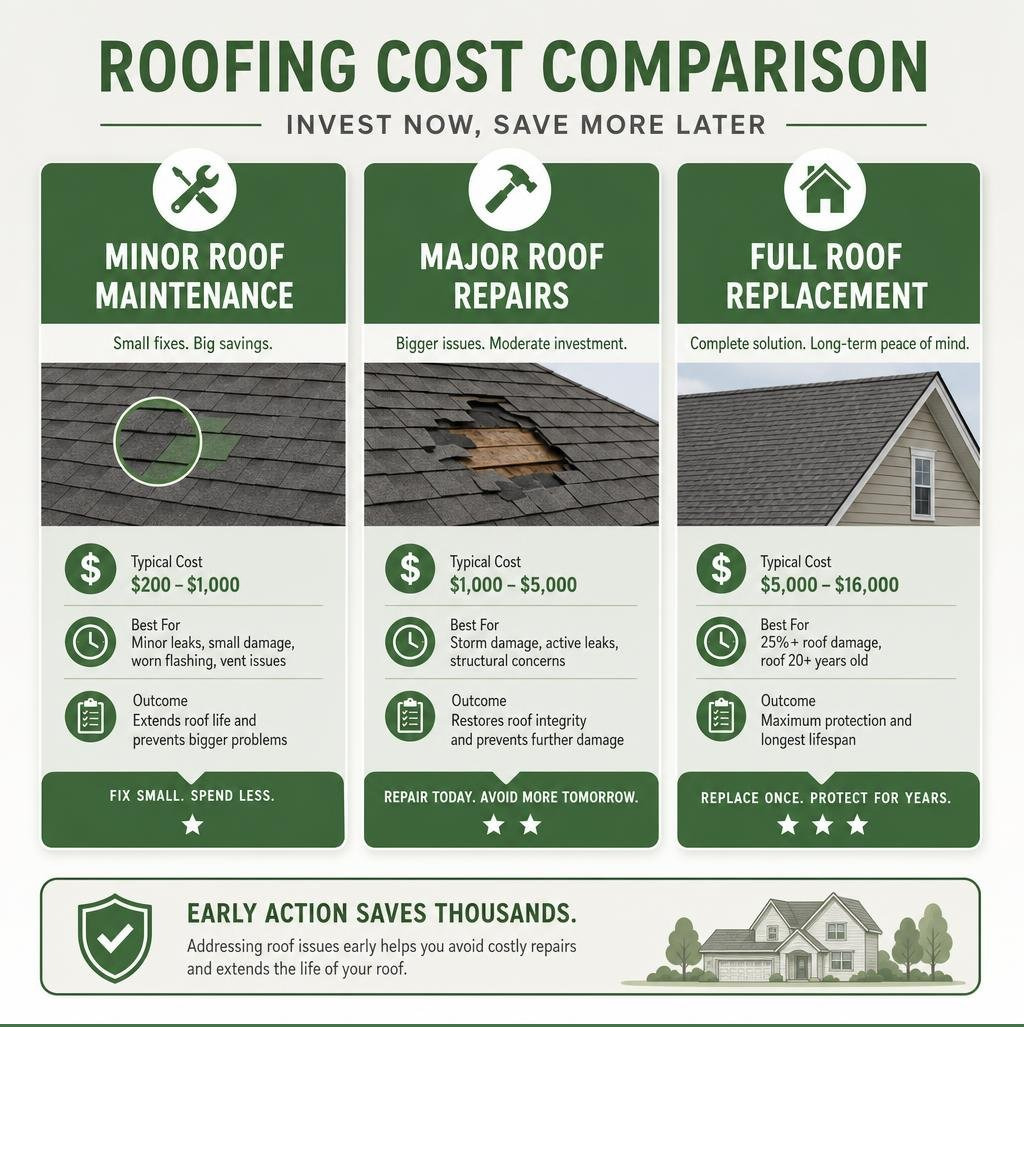
When roof repairs are needed, most homeowners assume the worst — a full replacement costing $5,000 to $16,000. But that’s often not the case.
Here’s a quick look at your most important options:
| Situation | Best Action | Typical Cost |
|---|---|---|
| Minor leaks, isolated damage | Targeted repair | $300 – $1,000 |
| Damaged flashing or vent boots | Reseal or replace components | $200 – $600 |
| Storm damage, active leak | Emergency tarping + repair | $380 – $1,800 |
| Roof under 15 years old, localized damage | Spot patch or shingle replacement | $350 – $800 |
| 25%+ of roof damaged, age 20+ years | Full replacement | $5,000 – $16,000 |
The truth is, most roofing problems don’t require a full replacement. Small issues — a cracked shingle, worn flashing, a deteriorated vent boot — can often be fixed for a few hundred dollars. The key is catching them early.
What turns a $600 repair into a $4,000 problem? Waiting. Water doesn’t stop moving once it finds a gap. It soaks insulation, rots wood framing, and invites mold — all before you notice a single stain on your ceiling.
Utah homeowners face extra pressure here. High-altitude UV rays break down roofing materials faster than lower elevations, and freeze-thaw cycles weaken seals every winter.
At Heaton Bros. Roofing, we specialize in roof repairs and full replacements for homeowners across the Salt Lake City area — and we take a repair-first approach whenever the roof structure supports it. If you’re dealing with storm damage, aging shingles, or a mysterious drip, we’ll give you a straight answer on what actually needs to be done.
Common roof repairs vocab:
Understanding the Real Cost of Roof Repairs
When faced with a dripping ceiling, it is easy to let your budget anxiety take over. Understanding how roofing costs are calculated can help you make an informed decision. Typically, professional roof repairs run between $300 and $1,000 for minor to moderate issues. More extensive structural work can reach up to $3,000.
In contrast, a full roof replacement is a major capital investment, averaging between $5,000 and $10,000, and sometimes climbing to $16,000 or more for complex rooflines or premium materials. This is why we encourage homeowners to explore The Savvy Homeowner’s Guide to Affordable Roof Fixes before assuming they need to replace the entire system.
Several key factors influence the final price of any repair project:
- Scope and Size of Damage: Patching a single square of shingles is far less expensive than fixing structural decking rotted by a long-term leak.
- Roof Pitch and Height: Steep slopes and multi-story homes require specialized safety gear and more labor-intensive staging.
- Material Types: Standard architectural asphalt shingles are highly cost-effective, while specialty metals or luxury materials demand specialized installation techniques.
- Accessibility: If our crews have a hard time reaching certain sections of your roof due to tight landscaping or neighboring properties, labor costs can increase.
To help you decide between a targeted patch and a complete tear-off, the industry relies on the 25% Rule. Simply put, if the damaged area covers more than 25% of your total roof surface, a full replacement is usually the most cost-effective long-term option. Repeatedly patching a severely compromised roof is like putting a band-aid on a dam—eventually, the system will fail, and you will end up paying for a replacement anyway.
5 Cost-Effective Alternatives to Major Roofing Overhauls

Many homeowners do not realize that they have options between a simple patch and a full replacement. By taking a proactive approach, you can keep your home dry without draining your savings. Let’s look at five practical alternatives to a total roof replacement. If you are dealing with a low-slope or flat section of your home, you can also read about how to Stop the Drip with These Simple Flat Roof Fixes to prevent minor leaks from spreading.
Alternative 1: Preventative Maintenance and Gutter Cleaning
The easiest way to avoid expensive roof repairs is to stop them before they start. Debris like pine needles, leaves, and twigs can trap moisture against your shingles, accelerating granule loss and rot. Regular gutter cleaning is also critical. When gutters clog, rainwater backs up under the edge of your roof, rotting the fascia boards and roof sheathing.
In Utah climates—from Logan down to Nephi—preventative maintenance is your primary defense against ice dams. During winter, snow melts on your warm upper roof and refreezes at the cold eaves, creating a block of ice that forces water backward under your shingles. Keeping your gutters clear and your attic properly insulated prevents this destructive cycle. For low-slope roofs, refer to our guide on Flat Out Fixes: Your Guide to Low Slope Roof Maintenance to keep your drainage systems flowing smoothly.
Alternative 2: Targeted Spot Patching and Shingle Replacement
If your roof is relatively young (under 15 years old) and has only suffered localized wind damage, spot patching is an excellent alternative to a full replacement. High winds along the Wasatch Front can occasionally peel back a few shingles, leaving the underlayment exposed.
By replacing only the missing or damaged shingles, you can restore your roof’s weather protection for a fraction of the cost. The primary challenge of spot patching is shingle matching. Over time, UV exposure fades asphalt shingles. Professional roofers will source the closest matching color and style to ensure the repair blends in seamlessly with your existing roof. For localized fixes that keep your home secure, check out our advice on how to Protect Your Home with the Right Roof Repair.
Alternative 3: Flashing Resealing and Vent Boot Replacement
Did you know that flashing failures are the single most common cause of roof leaks? Flashing is the thin metal material installed around roof penetrations—such as chimneys, skylights, dormers, and valleys—to redirect water away from these vulnerable seams.
Over time, the sealant around flashing can crack, or the metal itself can rust. Similarly, the rubber collars on your vent boots (the pipes that vent your plumbing through the roof) deteriorate under intense solar UV exposure. Replacing a cracked vent boot or resealing chimney flashing is a quick, inexpensive fix that can stop a major leak instantly. Learn more about how to address these vulnerable areas in our guide on Solving the Mystery of the Leaky Roof Edge.
Alternative 4: Roof Rebuilds and Component Preservation
A roof rebuild is an intermediate solution that falls between a minor repair and a full replacement. If a specific section of your roof has failed—such as a valley that collects debris or a poorly ventilated gabled section—but the rest of your shingles are in excellent shape, we can rebuild just that portion.
This method can deliver 30% to 50% cost savings compared to a complete replacement while successfully extending the overall lifespan of your roof. It is particularly useful for preserving specialized materials like heavy tile or metal systems where only the underlying underlayment has failed. When choosing this path, working with GAF certified roofing contractors ensures that your localized rebuild complies with strict manufacturer standards, keeping your warranties intact.
Alternative 5: Emergency Tarping and Temporary Protection
When severe weather strikes, you cannot always wait for a dry day to perform permanent roof repairs. If active leaks are threatening your ceilings, drywall, and electrical systems, emergency tarping is your best first step.
A heavy-duty, professionally secured tarp protects your home from water intrusion until permanent repairs can be scheduled. This prevents the immediate spread of moisture, stopping toxic mold growth and wood rot before they can take hold. To understand how to handle flat roof emergencies, read our breakdown of Emergency Mastic and Other Quick Fixes for Flat Roof Disasters.
When Alternative Fixes Fail: Knowing Your Roof’s Limits
While we always look for repair-first solutions, there comes a point where alternative fixes are no longer safe or cost-effective. If your asphalt roof is approaching the 20-to-30-year mark, the shingles become brittle, lose their protective granules, and can no longer seal out water.
When a roof reaches the end of its natural lifespan, or if it has structural sagging and widespread leaks, continuous patching is simply throwing money away. To help you evaluate your roof’s current condition, read our guide on the Signs You Need Roof Repair or Replacement.
Spotting Early Warning Signs That Require Roof Repairs
Catching damage early is the difference between a minor repair bill and an emergency home insurance claim. Homeowners should inspect their homes regularly—especially after major wind or snow storms. Keep an eye out for these common warning signs:
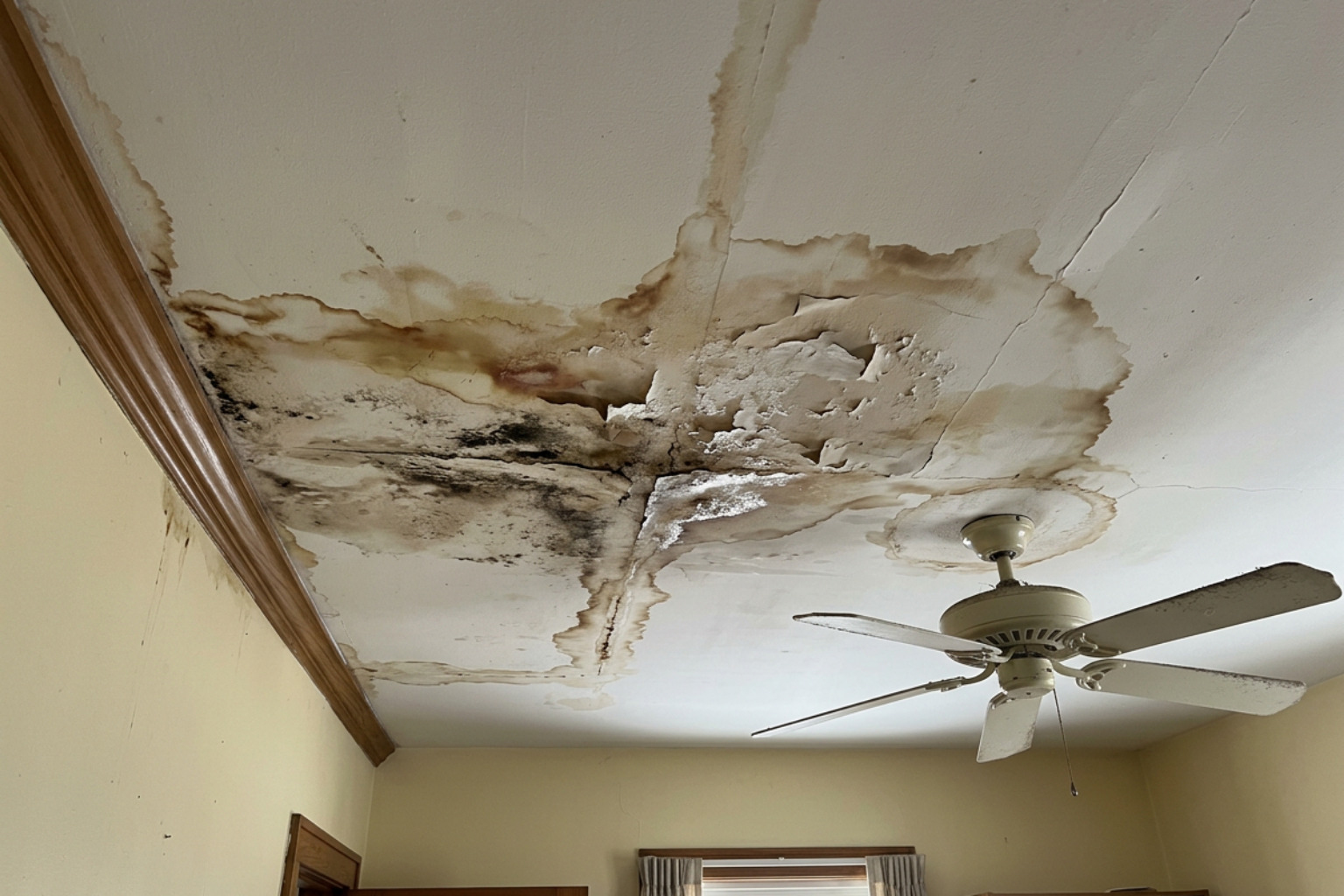
- Interior Signs: Water stains on walls or ceilings, bubbling or blistering paint, damp insulation in the attic, or visible daylight shining through the attic roof boards.
- Exterior Signs: Missing, curled, cracked, or buckling shingles; heavy accumulations of dark shingle granules in your gutters; dark streaks or moss growth on your roof; and loose or damaged flashing around chimneys and vents.
For a comprehensive checklist on what to look for, explore our Local Roofer Insights: How to Spot Early Signs of Roof Damage.
Why Delaying Professional Roof Repairs Costs More Long-Term
It is tempting to ignore a small ceiling spot, especially if it only drips during heavy downpours. However, roof leaks never resolve themselves. Delaying professional repairs allows water to quietly destroy your home from the inside out.
Unaddressed water intrusion quickly leads to wood rot in your rafters, ruined attic insulation (which spikes your heating and cooling bills), and hazardous mold growth that compromises your family’s health. Furthermore, attempting DIY fixes or hiring uncertified handymen can void your manufacturer warranties. To see how timely intervention keeps your wallet happy, read about How Local Roofers Can Save You Time & Money on Roof Repairs.
Frequently Asked Questions about Roof Maintenance
How do I know if my roof needs a simple repair or a full replacement?
It usually comes down to three things: age, the 25% rule, and the location of the damage. If your roof is under 15 years old and the damage is localized to a small area, a targeted repair is almost always the best choice. However, if the shingles are brittle, bald, and leaking in multiple rooms, a replacement is necessary. For a detailed breakdown of this decision, refer to our article on When It’s Time for Roof Repair.
Will homeowners insurance cover the cost of alternative roof fixes?
Yes, if the damage was caused by a sudden, accidental event covered by your policy, such as high winds, hail, or a falling tree limb. Homeowners insurance is designed to restore your home to its pre-damage condition. However, insurance will not cover repairs caused by normal wear and tear, neglect, or lack of regular maintenance.
Can I perform these alternative roof fixes myself?
We strongly advise against DIY roof repairs. Walking on a roof is highly dangerous, especially if the surface is wet or steep. Furthermore, diagnosing the exact source of a leak is incredibly difficult because water often travels along rafters before dripping onto your ceiling. Professional roofers have the safety equipment, training, and materials to fix the root cause of the leak without voiding your manufacturer warranties.
Conclusion
Maintaining a secure, dry roof does not have to mean facing an immediate financial crisis. By understanding your options—from simple gutter cleaning and preventative maintenance to targeted spot patching and flashing repairs—you can keep your home safe while keeping your budget intact.
Here along the Wasatch Front, our homes face unique environmental stresses. Between high-altitude UV rays that degrade shingles and intense winter freeze-thaw cycles that test every seal, your roof works hard year-round.
As a 4th-generation, family-owned company with over 65 years of experience in Salt Lake City, Heaton Bros. Roofing is dedicated to providing honest, affordable, and reliable roofing solutions. We live and work in your neighborhoods—from Ogden and Layton down to Sandy, Draper, and Provo—and we treat your home like our own. We will never upsell you on an expensive replacement when a high-quality, professional repair will do the job.
If you want to keep your home protected for decades to come, Explore our professional roofing services or contact us today to schedule a free, honest estimate.