Why Your Home’s Roof is One of Your Most Important Investments
Residential roofing is the protective barrier that shields your home from weather, prevents water damage, and plays a major role in your property’s curb appeal and energy efficiency. Whether you’re building a new home, replacing an aging roof, or repairing storm damage, understanding your roofing options, materials, and the installation process helps you make confident decisions that protect your investment for decades to come.
Quick Answer: What You Need to Know About Residential Roofing
- Common Materials: Asphalt shingles (20-30 year lifespan), metal (50+ years), tile and slate (50-100+ years)
- Average Replacement Cost: $5,855 to $13,116 for most homes
- Key System Components: Roof deck, underlayment, ice and water shield, flashing, ventilation
- When to Replace: Missing/curling shingles, granule loss, water stains, or a roof over 20 years old
- Installation Timeline: Typically 1-3 days for a full replacement
- Critical Factors: Proper installation, quality materials, adequate ventilation, and manufacturer warranties
As Kelly Moomey, the market analyst covering roofing for Consumer Reports, points out, “asphalt shingles remain the most common type of residential roofing purchased in the U.S.” But that doesn’t mean they’re your only choice—or even the best choice for your specific home, climate, and budget.
Your roof is more than just shingles. It’s a complete system working together to protect your home. The roof deck provides structural support. The underlayment acts as a critical water barrier. Flashing seals vulnerable areas around chimneys, vents, and skylights. And proper attic ventilation prevents moisture buildup and extends the life of your entire roofing system.
The reality is simple: A properly installed, high-quality roof saves you money in the long term by preventing costly water damage, reducing energy bills, and lasting for decades without major repairs.
In this comprehensive guide, we’ll walk you through everything Utah homeowners need to know about residential roofing—from understanding the anatomy of a roof system to comparing materials, navigating the replacement process, finding a qualified contractor, and maintaining your investment for maximum lifespan.
Understanding the Anatomy of a Roof System
When we talk about your roof, we’re not just referring to the visible shingles. A residential roofing system is a complex, multi-layered structure designed to work cohesively, providing maximum protection and longevity for your home in Salt Lake City and throughout the Wasatch Front. As GAF notes, a roof is “a lot more than shingles,” comprising several vital components that each play a crucial role.
Key Components and Their Functions
Let’s break down the essential elements that make up your home’s protective shield:
- Roof Deck (Sheathing): This is the foundation of your roof, typically made of plywood or OSB (oriented strand board). It provides the structural base to which all other roofing materials are attached. The integrity of your roof deck is paramount; any damage here must be repaired before new roofing can be installed.
- Ice and Water Shield: Especially critical in areas like Utah that experience heavy snow and ice, this self-adhering membrane is installed along eaves, valleys, and around penetrations. It creates a waterproof barrier, protecting against ice dams and wind-driven rain.
- Underlayment: Laid over the entire roof deck, this felt or synthetic material acts as a secondary barrier, providing an additional layer of protection against moisture penetration should water get past the primary roofing material.
- Flashing: These thin pieces of metal (often aluminum or copper) are strategically installed around vulnerable areas where the roof meets vertical surfaces or changes direction. This includes chimneys, vents, skylights, and along wall junctions. Properly installed flashing diverts water away from these critical points, preventing leaks.
- Drip Edge: Installed at the edges of the roof, the drip edge is a metal flashing that directs water away from the fascia and into the gutters, protecting the roof’s edge and preventing water damage to the underlying structure.
- Soffit and Fascia: These components are part of your home’s “roofline.” The fascia is the board running along the edge of the roof, covering the ends of the roof rafters. The soffit is the underside of the eave that extends from the house wall to the fascia. Both play a role in your home’s aesthetics and, importantly, in the attic ventilation system.
The importance of these components working together cannot be overstated. Each layer contributes to the overall resilience of your roof, ensuring it stands strong against Salt Lake City’s diverse weather conditions, from intense summer sun to heavy winter snows.
The Critical Role of Attic Ventilation
Effective attic ventilation is not just a nice-to-have; it’s a critical component of a healthy and long-lasting residential roofing system. Our research highlights that it helps prevent attic heat buildup, humidity, and ice-dams by continuously moving air along the underside of the roof.
Here’s why proper ventilation is so vital:
- Heat Buildup Control: In Utah’s hot summers, attics can become extremely hot—sometimes 50-85 degrees warmer than the outside air, as one source notes. This heat can transfer into your living space, making your air conditioning work harder and driving up energy bills. Good ventilation allows hot air to escape, keeping your attic cooler.
- Moisture Control: Moisture from household activities (showering, cooking) can migrate into the attic. Without proper ventilation, this moisture can condense on cold surfaces, leading to mold growth, wood rot, and compromised insulation.
- Extending Shingle Life: Extreme heat in the attic can literally “bake” your shingles from below, accelerating their aging process and reducing their lifespan. By keeping the attic cooler, ventilation helps your shingles last longer.
- Preventing Ice Dams: In winter, uneven attic temperatures can cause snow on your roof to melt, run down, and refreeze at the colder eaves, forming ice dams. These dams can force water under your shingles, leading to leaks. Proper ventilation maintains a consistent, cool temperature across the entire roof surface, minimizing ice dam formation.
Common types of attic ventilation include soffit vents (intake vents located under the eaves) and ridge vents (exhaust vents installed along the peak of the roof). These work together to create a continuous airflow, drawing in cool air and expelling hot, moist air.
For a deeper dive into how your attic contributes to your home’s overall health and energy profile, we encourage you to explore More on attic insulation and ventilation.
Exploring Common Roofing Materials
Choosing the right roofing material is one of the most significant decisions you’ll make for your residential roofing project. It impacts everything from aesthetics and durability to energy efficiency and long-term cost. In Utah, where we experience a wide range of weather conditions, selecting a material that performs well against high winds, hail, and heavy snow is crucial.
You can compare different options and find the best fit for your home at How to compare different roofing options.
Here’s a comparison of the most common residential roofing materials we work with, highlighting their lifespan, average cost considerations, and performance in various weather conditions:
| Material Type | Expected Lifespan | Average Cost (per sq ft installed) | Pros | Cons tactical planning for the project, the actual installation, and the critical post-installation review.
Signs Your Roof Needs Attention
Your roof works hard every day, enduring the elements to protect your home. Over time, even the best roofs will show signs of wear. Knowing these indicators can help you address issues before they escalate into costly damage. Here are some common signs that your residential roofing needs repair or replacement:
- Missing Shingles: Obvious gaps in your roof covering, often after high winds. This leaves your underlayment exposed to the elements.
- Curling or Buckling Shingles: Shingles that are no longer lying flat, indicating they’re past their prime and losing their effectiveness.
- Granule Loss in Gutters: As asphalt shingles age, they shed their protective granules. Finding excessive granules in your gutters is a sign your shingles are deteriorating.
- Water Stains on Ceiling or Walls: This is a clear indicator of a leak. Don’t ignore it; water damage can quickly spread and lead to mold.
- Sagging Roof Deck: A visible sag or dip in your roofline can point to structural damage, which requires immediate professional attention.
If you’ve noticed any of these signs, especially after a harsh Utah winter or a summer storm, it’s time for a closer look. For a comprehensive overview of what to watch for, check out Top 5 signs your Utah roof needs a roof inspection. Deciding whether to repair or replace can be tricky, but we offer guidance at Deciding between roof replacement vs. repair.
The Typical Residential Roofing Replacement Process
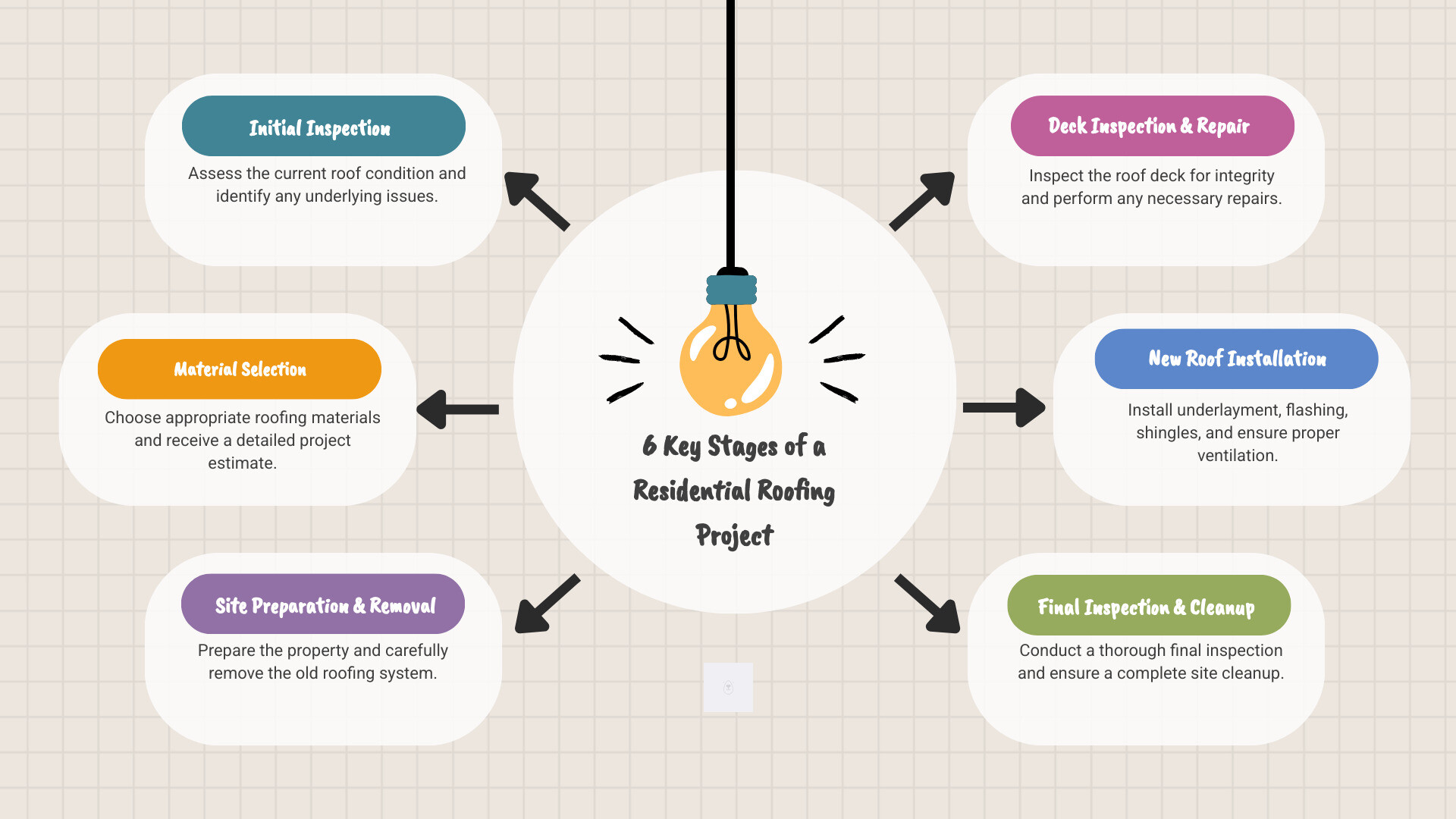
Once you’ve determined that your roof needs attention, understanding the replacement process can ease any anxieties. The project typically involves several key stages, from initial assessment to final cleanup. Our team ensures a smooth and efficient process, keeping you informed every step of the way.
One of the first decisions for a replacement project is whether to do a “tear-off” or an “overlay” (also known as re-roofing).
- Overlay (Re-roofing): This involves installing new shingles directly over your existing ones. It’s often quicker and less expensive upfront. However, most building codes in the U.S. allow for a maximum of two layers of asphalt shingles. The major drawback is that it doesn’t allow for inspection or repair of the underlying roof deck, and any existing issues are simply covered up.
- Tear-off (Full Replacement): This is our preferred method because it involves removing all existing roofing materials down to the roof deck. While more labor-intensive and costly initially, it allows us to thoroughly inspect the roof deck for damage, make necessary repairs, and ensure a pristine foundation for your new roof. This approach also allows for upgrades to flashing and ventilation, maximizing the lifespan and performance of your new roofing system.
The typical process for a full roof replacement includes:
- Site Preparation: Protecting your landscaping, moving vehicles, and preparing for debris.
- Old Roof Removal: Carefully tearing off all existing layers of roofing down to the deck.
- Deck Inspection and Repair: Our team inspects the exposed roof deck for any rot, damage, or weaknesses and makes necessary repairs.
- Underlayment and Flashing Installation: Installing ice and water shield in critical areas and laying down new underlayment across the entire deck, followed by new flashing around all penetrations.
- New Material Installation: Expertly installing your chosen residential roofing material, whether it’s asphalt shingles, metal, or tile, according to manufacturer specifications.
- Ridge Vent and Cap Installation: Ensuring proper attic ventilation with new ridge vents and finishing the roof peak with matching ridge caps.
- Cleanup: A thorough cleanup of the job site, including magnetic sweeps for stray nails.
- Final Inspection: A comprehensive review of the new roof to ensure quality and adherence to all specifications.
While the duration can vary based on roof size and complexity, a typical residential roof installation takes about 1-3 days. For a detailed breakdown of what to expect, read Understanding the roof installation process: what to expect.
How to Prepare for a Roof Installation
A roof replacement is a significant project, and a little preparation on your part can go a long way in ensuring a smooth and stress-free experience for everyone. Here’s how you can prepare your home and family:
- Protect Landscaping: Our crews take precautions, but it’s a good idea to cover plants, shrubs, and trees near the house with tarps. If you have delicate potted plants, consider moving them.
- Move Vehicles: Clear your driveway and ensure there’s ample space for material deliveries and a dumpster. Moving cars to the street or a neighbor’s driveway will protect them from falling debris.
- Secure Pets: The noise and activity can be unsettling for pets. Arrange for them to be safely indoors, in a quiet part of the house, or even away from home for the day.
- Plan for Noise: Roofing work can be loud. If you or family members work from home, have young children, or have sensitive pets, be aware of the potential for noise disruption.
- Clear Attic/Walls: Vibrations from roofing work can sometimes dislodge items in your attic or on your walls. Remove any valuable or fragile items from shelves or walls, especially those on the top floor.
- Ensure Access: Make sure the crew has clear access to your property and electrical outlets.
Taking these proactive steps will help us focus on delivering a high-quality roof efficiently, minimizing disruption to your daily life. For more detailed advice, consult Planning a roof replacement: the ultimate guide.
Key Considerations for Your Residential Roofing Project
Starting on a residential roofing project, whether it’s a repair or a full replacement, involves several crucial considerations. From budgeting and contractor selection to warranties and energy efficiency, each aspect plays a vital role in the success and longevity of your investment. We believe that professional roof installation saves you money in the long run by ensuring quality and preventing future issues. Learn more about this at Why professional roof installation saves you money in the long run.

How to Find and Hire a Qualified Roofing Contractor
Choosing the right roofing contractor is arguably the most critical decision in your entire residential roofing project. A reputable contractor ensures quality workmanship, proper installation, and adherence to safety standards. Here’s what we recommend looking for, especially for homeowners in Salt Lake City and surrounding Utah communities:
- Local Reputation and Experience: Look for a contractor with a strong local presence and a proven track record. For example, Heaton Bros. Roofing is a 4th-generation, family-owned company with over 65 years of experience serving Salt Lake City and the Wasatch Front. This kind of longevity speaks volumes about reliability and customer satisfaction.
- Licensing and Insurance: Always verify that the contractor is fully licensed and insured. This protects you from liability in case of accidents on your property and ensures they operate legally.
- Checking References and Reviews: Ask for references from recent clients and check online reviews. Positive feedback about professionalism, communication, and quality of work is a good sign.
- Manufacturer Certifications: Certifications from major manufacturers, like GAF, indicate that a contractor has met rigorous standards for expertise and professionalism. For instance, GAF Master Elite certification is held by only 2% of roofing contractors across North America, signifying a commitment to excellence and ongoing training. A GAF Certified contractor, like us, can offer some of the strongest lifetime limited warranties on the market.
- Clear Communication and Detailed Estimates: A good contractor will communicate clearly, answer all your questions, and provide a detailed, written estimate.
We’ve put together some helpful resources to guide you: 5 questions to ask before hiring a roofing contractor and How to find a reliable roofing contractor in your area.
Understanding Costs, Estimates, and Warranties
Investing in a new residential roofing system is a significant financial commitment. Understanding the costs involved and the warranties that protect your investment is essential.
- Average Costs: While exact costs vary widely based on material, roof size, and complexity, replacing a roof costs about $10,000 on average, with most homeowners paying between $5,855 and $13,116. Our research shows that costs generally break down as follows:
- Materials: 55%-65%
- Labor: 25%-35%
- Disposal: ~5%
- Job Site Extras (e.g., permits, special equipment): ~5%
- What to Look for in an Estimate: A comprehensive roofing estimate should be detailed and transparent. It should clearly outline:
- The specific materials to be used (brand, type, color).
- The scope of work (tear-off or overlay, deck repairs, flashing, ventilation).
- Labor costs.
- Permit fees and disposal costs.
- Payment schedule and project timeline.
- Warranty information.
We provide transparent estimates so you know exactly what to expect. Learn more at What to expect from a roofing estimate.
- Types of Warranties: There are two primary types of warranties for residential roofing:
- Manufacturer’s Warranty: This covers defects in the roofing materials themselves. For example, GAF offers lifetime limited warranties on certain roofing products. These typically cover material failure and premature product degradation.
- Workmanship Warranty: This is provided by the contractor and covers the quality of the installation. A strong workmanship warranty demonstrates a contractor’s confidence in their work. As a GAF Certified contractor, we can offer improved warranties, such as the Golden Pledge Warranty, which covers both manufacturer defects and extended misapplication. It’s crucial to understand what each warranty covers and for how long. Neither typically covers “acts of God” like extreme weather damage.
Enhancing Energy Efficiency with Your Roof
Your residential roofing plays a crucial role in your home’s energy efficiency, especially in Utah’s climate. A well-chosen and properly installed roof can significantly impact your heating and cooling costs.
- Cool Roofs: These are designed to reflect more sunlight and absorb less heat than traditional roofs. Typically lighter in color, cool roofs can reduce the energy and cost needed to cool your home by up to 15 percent, as our research indicates. White roofs can reflect 60-90% of sunlight, while “cool colored” roofs (darker roofs with specialized pigments) reflect 30-60%.
- In warmer climates like the lower elevations of the Wasatch Front, investing in cool roof shingles can be a smart move, helping to keep your attic cooler and reducing your reliance on air conditioning. The Cool Roof Rating Council tests and rates different roofing products, helping you choose.
- For advice on selecting energy-efficient roofing, check out the DOE’s Energy Saver page.
- Solar Panel Integration: If you’re considering solar energy, integrating solar roofing options during a roof replacement is a highly efficient approach. Major manufacturers like GAF and CertainTeed, along with Tesla, offer photovoltaic solar roofing shingles and tiles that blend seamlessly with your roof. Homeowners who retrofit their roofs with solar panels or solar roofing tiles can also get a federal tax credit of 30 percent of the project cost through the end of 2025.
- Attic Insulation and Ventilation: As discussed earlier, proper attic insulation and ventilation work hand-in-hand with your roofing material to create a thermal barrier, preventing heat transfer and maintaining stable indoor temperatures.
By considering these energy-efficient options, your new residential roofing can become a powerful tool for reducing your carbon footprint and saving on utility bills. For more information, visit Home energy efficiency starts with your roof.
Essential Roof Maintenance and Inspection
Even the most durable residential roofing system requires regular care to achieve its maximum lifespan. Proactive maintenance and routine inspections are key to identifying minor issues before they become major problems, saving you time, money, and stress in the long run.
For insights into when to schedule these critical check-ups, refer to When to get a roof inspection.
How Often Should You Inspect Your Residential Roofing?
We recommend that homeowners inspect their residential roof at least twice a year: once in the spring after the winter snows and ice have melted, and again in the fall before winter sets in. Additionally, it’s crucial to inspect your roof after any major weather event, such as high winds, heavy hail, or severe thunderstorms, which are not uncommon in our Utah communities.
Regular inspections offer numerous benefits, including:
- Early Detection: Catching small issues like loose shingles or minor flashing damage before they lead to leaks.
- Extended Lifespan: Addressing problems promptly helps maintain your roof’s integrity and prolong its life.
- Preventing Costly Repairs: A small repair today is always cheaper than a major overhaul tomorrow.
- Maintaining Warranty: Some manufacturer warranties require proof of regular maintenance.
To help you stay on top of your roof’s health, here is a 10-point roof inspection checklist you can perform safely from the ground or with binoculars:
- Check for missing, cracked, or curling shingles.
- Look for excessive granule loss in gutters or downspouts.
- Inspect flashing around chimneys, vents, and skylights for damage or gaps.
- Examine gutters for clogs, rust, or improper drainage.
- Look for signs of moss, algae, or fungi growth on shingles.
- Check for sagging areas in the roofline, which could indicate structural issues.
- Inspect the attic from inside for water stains, leaks, or signs of moisture.
- Ensure all roof penetrations (pipes, vents) are sealed properly.
- Look for debris accumulation (leaves, branches) that can trap moisture.
- Confirm that attic vents are clear and unobstructed.
For more on the advantages of regular check-ups, explore The benefits of regular roof inspections.
Simple Maintenance to Extend Your Roof’s Lifespan
Beyond professional inspections, there are several simple maintenance tasks you can perform to keep your residential roofing in top condition:
- Cleaning Gutters and Downspouts: Clogged gutters can cause water to back up and pool on your roof, leading to water damage and premature aging of your shingles. Clean them regularly, especially in spring and fall, to ensure proper drainage.
- Trimming Overhanging Branches: Tree branches can scrape against your roof, damaging shingles. They also drop leaves and debris, contributing to moisture buildup and potential pest issues. Keep trees trimmed back away from your roof.
- Checking for Moss, Algae, or Fungi: These growths can trap moisture and accelerate shingle deterioration. While some require professional treatment, early signs can sometimes be addressed with appropriate cleaning solutions.
- Sealing Flashing: Periodically check the caulk around your flashing. If it’s cracked or deteriorating, reapply a high-quality sealant to prevent water intrusion.
- Removing Debris: After storms, safely remove any large branches or debris that may have landed on your roof.
Safety first! If any task seems too dangerous or requires working on a steep or high roof, always call a professional. For more expert advice, read Roof maintenance 101: tips from your local roofing company.
Conclusion
Your residential roofing is much more than just a cover over your head; it’s a critical component of your home’s structure, protection, and value. From understanding the intricate layers of a roof system and choosing the right materials to navigating the replacement process and performing essential maintenance, making informed decisions ensures the longevity and performance of your investment. We’ve seen how asphalt shingles offer affordability and variety, while metal, tile, and slate provide best durability and unique aesthetics, each with specific advantages against Utah’s diverse weather.
The longevity of a residential roof depends not only on the quality of the materials but, most importantly, on proper installation and consistent maintenance. When it comes time for a repair or replacement, partnering with a qualified, experienced, and reputable contractor is paramount. Look for local experts who are licensed, insured, and hold respected industry certifications, ensuring you receive both top-tier workmanship and comprehensive warranty protection.
As a 4th-generation, family-owned roofing company, Heaton Bros. Roofing has proudly served Salt Lake City and the surrounding communities for over 65 years. Our dedication to quality, affordability, and customer satisfaction means we approach every residential roofing project with integrity and expertise. We understand the unique challenges and opportunities presented by our local climate, and we’re committed to providing solutions that protect your home for decades to come.
For expert guidance on your next project, explore our residential roofing services. We’re here to help you make the best choices for your home.