
What to Do When Your Roof Is Leaking
Roof leak repair is something most homeowners will face at some point – and acting fast is the key to avoiding serious damage.
Here’s a quick overview of what to do:
- Find the leak – Check your attic for water stains, wet insulation, or mold. Trace the moisture upward to find the entry point.
- Contain the damage – Place a bucket under active drips. If needed, poke a small hole in a bulging ceiling to relieve water pressure.
- Identify the cause – Common culprits include damaged shingles, cracked flashing, clogged gutters, or worn vent boots.
- Make a temporary fix – Use roofing cement, waterproof tape, or a tarp to stop water from getting in while you plan a permanent repair.
- Repair or call a pro – Simple shingle or sealant fixes can be DIY. Structural damage, steep roofs, or complex flashing issues need a professional.
Even a small roof leak can spiral into a big problem fast. Water finds its way into wood framing, insulation, and drywall – causing rot, mold, and costly structural damage if left alone.
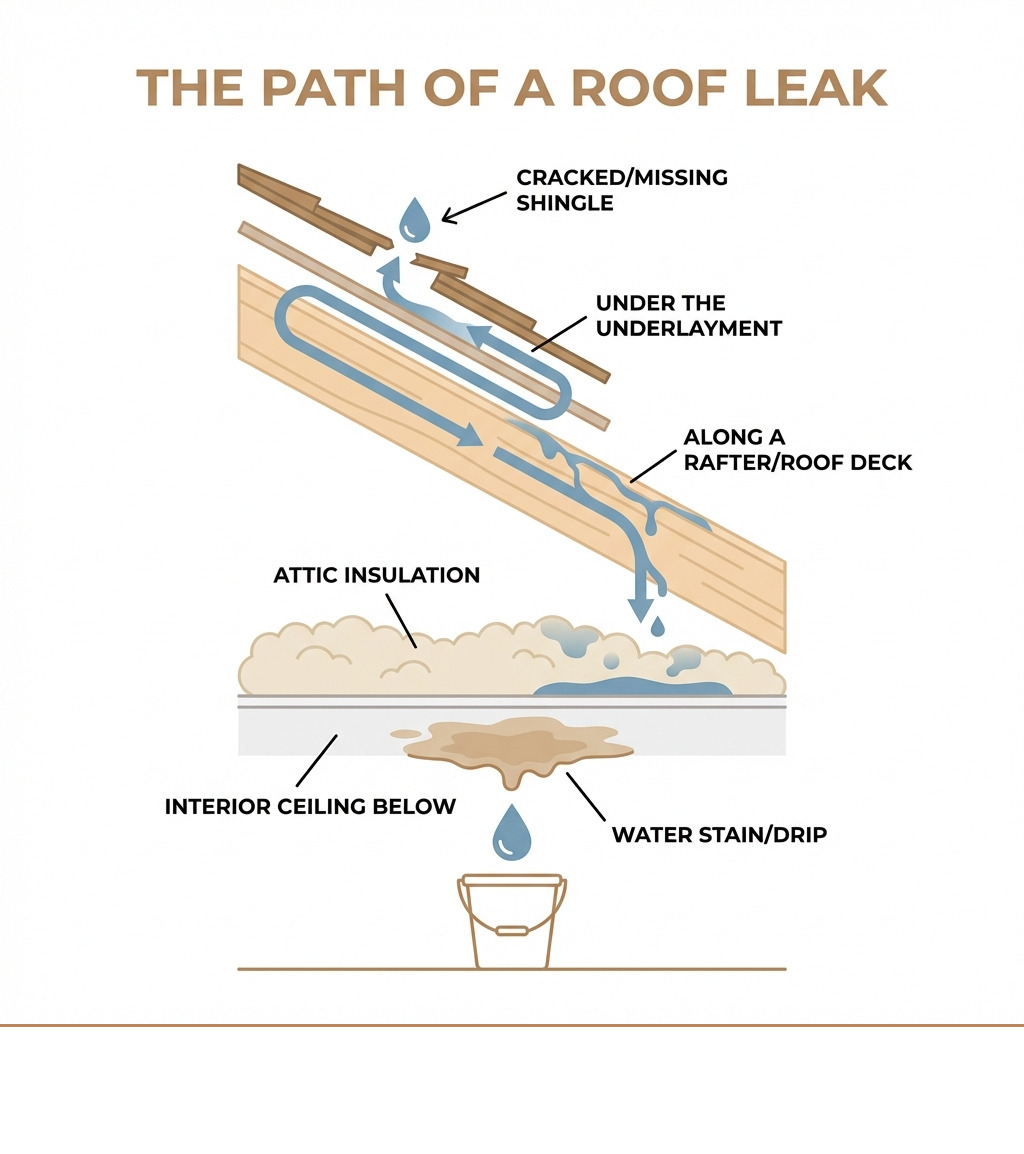
The tricky part? The spot where water drips from your ceiling is rarely where the leak actually starts. Water travels along rafters and sheathing before it shows up inside your home. That’s what makes roof leaks so sneaky – and so important to address the right way.
This guide walks you through everything: how to spot the signs, what causes leaks, how to fix them yourself, and when to call in a pro.
Quick roof leak repair definitions:
Essential Steps for Effective Roof Leak Repair

When we talk about roof leak repair, timing and preparation are everything. You don’t want to be scrambling on a wet, slippery roof in the middle of a Salt Lake City thunderstorm. The best time to tackle a repair is on a dry, sunny day when the surface is clear and traction is at its peak.
Most roofs develop leaks years before the entire structure needs to be replaced. This is usually due to localized damage—think of it like a small chip in a windshield that eventually cracks the whole glass if ignored. By focusing on these specific areas, you can extend the life of your roof significantly. Before you climb up, it’s worth checking out the signs you need roof repair or replacement to see if a simple patch will do or if you’re looking at a bigger project. For many Utah homeowners, targeted roof repairs are the most cost-effective way to stay dry.
Identifying Signs of a Roof Leak Repair Need
You don’t always need to be on the roof to know there’s a problem. Inside your home, keep an eye out for ceiling drips, damp walls, or blistering paint. If you see a brown “coffee stain” on your ceiling, that’s a classic sign of water ingress.
To find the source, we recommend a two-step approach:
- The Attic Inspection: Head into the attic with a bright flashlight. Look for wet spots on the sheathing, mold, or rotted wood along the rafters. Water often enters at a high point and runs down a board before dripping.
- The Garden Hose Test: If you can’t find the leak visually, enlist a helper. One person stays in the attic while the other uses a garden hose on the roof. Start low, soaking the areas around chimneys and vents, and slowly move upward until the person inside shouts that they see a drip.
For more expert advice, check out these local roofer insights how to spot early signs of roof damage.
Safety Precautions for Working at Heights
We cannot stress this enough: safety is the absolute priority. Roofing is one of the most dangerous home maintenance tasks. If you are uncomfortable with heights or have a particularly steep pitch, it is always better to call us.
If you do choose the DIY route, follow these safety gear requirements:
- Rubber-Soled Shoes: Wear boots with high-traction rubber soles to prevent slipping.
- Ladder Safety: Ensure your ladder is tall enough to extend at least three feet past the roof edge. Always have a helper steady the base.
- Fall Arrest Systems: Use a safety harness and ropes anchored properly to the roof structure.
- Power Line Awareness: Be extremely mindful of where power lines enter your home. Never let your ladder or tools come near them.
Common Causes of Residential Roof Leaks
In our 65+ years of experience along the Wasatch Front, we’ve seen that most leaks aren’t a mystery—they usually come from a handful of usual suspects.
| Leak Source | Common Damage | Impact Level |
|---|---|---|
| Shingles | Missing, cracked, or curled tabs | Moderate – allows water under the deck |
| Flashing | Rusted, loose, or cracked sealant | High – creates direct paths for water |
| Vent Boots | Cracked rubber or rotted seals | High – frequent cause of “mystery” drips |
| Gutters | Clogged with leaves or ice | Moderate – causes water to back up under shingles |
Deteriorating Flashing: Flashing is the metal transition material around chimneys, dormers, and vents. Over time, the tar or sealant used to secure it dries out and cracks.
Broken Shingles: Whether it’s high winds in Bountiful or heavy snow in Park City, shingles can snap or blow off entirely. Once the shingle is gone, the underlying wood is defenseless.
Ice Dams: This is a big one for Utah. When heat escapes your attic, it melts snow on the roof. That water runs down to the cold eaves and refreezes, creating a dam. New meltwater then pools behind the ice and seeps under your shingles. This is why the benefits of regular roof inspections are so vital before winter hits.
DIY Techniques and Materials for Fixing Leaks
If you’ve identified a small leak, you might be able to handle it with the right products. For RVs or quick patches on metal surfaces, products like CHUANGSEED RV Roof Sealant Tape or ADHES Butyl Tape can provide a weatherproof seal.
However, for a permanent roof leak repair on a residential home, you’ll need more robust steps. Here’s how a roof repair made easy how a local roofer ensures long lasting results:
- Replace Vent Boots: If the rubber seal around your plumbing pipe is cracked, you can often slide a new boot over the old one or replace the flashing entirely.
- Patch Shingles: Use a pry bar to lift the shingles above the damaged one. Remove the nails, slide in a new shingle, and nail it down. Seal the nail heads with roofing cement.
- Repair Step Flashing: This is the L-shaped metal along walls. If it’s rusted, you’ll need to slide new pieces under the siding and shingles, securing them with sealant.
Best Products for a Permanent Roof Leak Repair
Don’t settle for cheap caulk. For a repair that survives Utah’s climate, you need:
- Roofing Cement (Mastic): Great for sealing shingles and small holes.
- Silicone Caulk: Best for dormer walls and window transitions.
- Washer-Head Roofing Screws: These are essential for securing vent boots without leaving a leak path.
- EPDM Membrane: If you have a flat section of roof, you’ll need matching rubber material and contact cement.
Having the right tools—like a flat bar, utility knife, and a caulk gun—is half the battle. You can learn more about how to protect your home with the right roof repair materials here.
Maintenance Tips to Prevent Future Leaks
The best roof leak repair is the one you never have to do.
- Gutter Cleaning: Clogged gutters are a leading cause of roof rot. Clean them every spring and fall.
- Tree Trimming: Keep branches at least three feet away from your roof to prevent them from scraping shingles or dropping debris.
- Ridge Cap Inspection: Check the very top of your roof. Ridge caps often develop holes from wind or improper harness use.
Did you know the roofing industry in North America is growing at an incredible rate? In Ontario alone, it’s a multi-billion dollar industry because roofs naturally degrade over time. The key is knowing when to get a roof inspection to catch minor wear before it becomes a flood.
Professional Intervention vs. DIY Solutions
While we love a good DIY project, roofing has a steep learning curve—literally. If your roof has a high pitch, multiple valleys, or structural rot, it’s time to call in the experts.
There are top 5 benefits of choosing a local roofer for your roof repair needs:
- Safety Gear: We use professional-grade fall arrest systems.
- Hidden Damage Detection: We can spot mold and wood rot that a homeowner might miss.
- Warranty Protection: DIY repairs can sometimes void your shingle warranty.
- Efficiency: What takes a homeowner a weekend takes our crew a few hours.
If you’re staring at a leak and wondering roof replacement vs repair how to decide, we can help you weigh the costs.
When to Call a Professional for Roof Leak Repair
Sometimes, an “easy fix” is just a Band-Aid on a bigger problem. You should call us immediately if:
- The leak is persistent after your DIY attempt.
- You see structural sagging or “bouncy” spots on the roof deck.
- The leak is near a complex area like a chimney or skylight.
- You need an emergency roof repair in salt lake city made for your roof after a major storm.
A professional roof inspection covers and why it matters because it gives you a full health report of your home’s defense system.
Frequently Asked Questions about Roof Leaks
How do I find a leak if I can’t see the source?
Use the garden hose test mentioned earlier. Start at the lowest point of the roof and work your way up in sections. Have a helper in the attic watching for the exact moment water starts to seep through.
Can I repair a roof leak from the inside of my attic?
The short answer is no. Applying sealant to the inside of your attic only diverts the water to another part of your ceiling or causes the roof deck to rot faster. You must stop the water from the outside.
How much does a typical roof repair cost compared to replacement?
A simple roof leak repair can cost anywhere from $150 to $1,000 depending on the complexity. A full replacement for a standard home can range from $5,000 to $15,000+. Regular maintenance and timely repairs are almost always the cheaper option!
Conclusion
At Heaton Bros. Roofing, we’ve spent four generations perfecting the art of keeping Utah families dry. Whether you’re in Salt Lake City, Draper, or Logan, our 65+ years of experience ensures that your roof leak repair is done right the first time. Don’t let a small drip turn into a major disaster. More info about professional roofing services is just a click away—let us protect your home with expert craftsmanship and long-term reliability.