
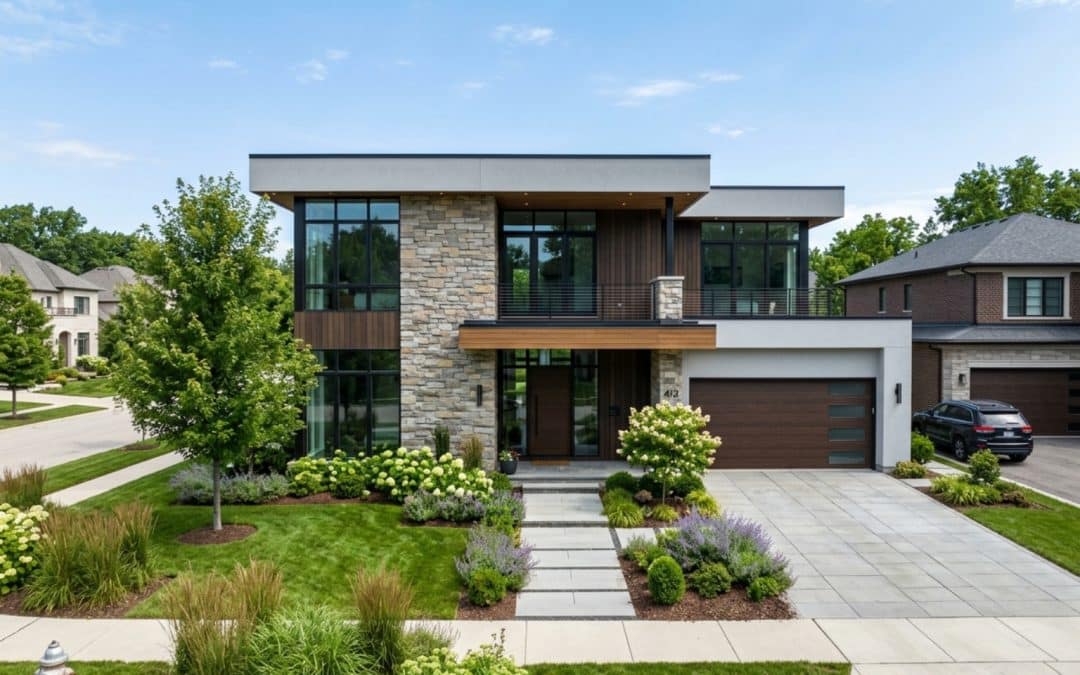
Is a Flat Roof Right for Your New Build? Here’s What You Need to Know
A new build flat roof is one of the most practical and stylish choices you can make for a modern home or commercial property — but only when it’s designed and installed correctly.
Quick answer: What makes a good new build flat roof?
- A slight slope of at least 1/4 inch per foot to drain water away
- A waterproof membrane system (EPDM, TPO, PVC, or modified bitumen)
- Proper insulation above or below the deck to meet energy codes
- Internal drains, scuppers, or gutters sized for heavy rainfall
- Regular inspections twice a year to catch issues early
Flat roofs are not truly flat. As expert Tom Silva puts it, “The most important thing to know about a flat roof is that it’s not flat.” That slight pitch is what separates a durable, long-lasting roof from a maintenance headache.
Done right, a flat roof can last 20 to 50 years, support solar panels or a rooftop garden, and reduce your cooling costs by up to 15%. Done wrong, it becomes a cycle of pooling water, leaks, and costly repairs.
This guide covers everything — materials, drainage, construction steps, insulation, and maintenance — so you can make confident decisions for your project.
At Heaton Bros. Roofing, we’ve helped homeowners and business owners across Salt Lake City plan and install new build flat roofs that hold up against Utah’s tough winters and freeze-thaw cycles. Whether you’re starting from scratch or replacing an aging system, we’re here to walk you through every step.
Quick new build flat roof definitions:
Advantages and Challenges of a New Build Flat Roof
When you’re planning a new build flat roof, you’re often looking for that specific “Modern Alpine” or minimalist look. But beyond the aesthetics, there are practical reasons why these designs are dominating the Wasatch Front.
The Advantages
One of the primary reasons Why Flat Roofs Are Making a Comeback in Contemporary Architecture is the creation of usable space. In cities like Salt Lake City or Bountiful, where land is at a premium, your roof can become your backyard.
- Rooftop Terraces: You can turn your roof into a garden, a lounge, or even a space for a hot tub (provided the structure is engineered for it!).
- Cost-Efficiency: Flat roofs generally require fewer materials for the initial installation compared to complex pitched roofs with multiple gables and valleys.
- Energy Efficiency: Modern membranes like TPO are highly reflective, which can reduce cooling loads by 10-15% during our scorching Utah summers.
- HVAC Placement: It’s much easier and safer to house heavy HVAC equipment on a flat surface rather than mounting it on a steep slope.

The Challenges
We’ll be honest: flat roofs are less forgiving than pitched roofs. If a shingle roof has a tiny flaw, gravity usually helps the water skip over it. On a flat roof, water “takes its time,” and any imperfection becomes a potential leak.
- Pooling Water: If the slope isn’t perfect, water can sit. Ponding water weighs about 5 pounds per square foot per inch of depth, which puts immense stress on the seams.
- Snow Management: In places like Park City or Alpine, snow loads can be massive. We have to ensure the structure can handle the weight of a heavy Utah snowstorm.
- Membrane Vulnerability: While modern materials are tough, they can still be punctured by falling branches or dropped tools during maintenance.
For a deeper dive into the basics, check out our guide on All About New Construction Roofing.
Residential vs. Commercial Suitability
Flat roofs were once the exclusive domain of warehouses and office buildings. However, urban density and the rise of mid-century modern styles have brought them into the residential world.
In a commercial setting, flat roofs are often chosen for their ability to cover massive square footage with minimal seams. For smaller projects, like a retail shop in Draper or a home addition in Sandy, Small Commercial Roofing techniques are often used to ensure the same level of industrial-strength protection.
Impact of Local Climate and Building Codes
In Utah, our weather is extreme. We go from sub-zero winters to triple-digit summers. This “freeze-thaw” cycle is the ultimate test for any new build flat roof.
Building codes in our service areas—from Layton down to Nephi—typically require a minimum slope of 1/4 inch per foot. This is known as “positive drainage.” If your roof doesn’t have this, it isn’t up to code and won’t last. Furthermore, we have to account for snow loads that can exceed 50 pounds per square foot in certain high-elevation neighborhoods.
Essential Materials and Systems for New Construction
Choosing the right material is the most important decision you’ll make for your new build flat roof. Each system has its own strengths, lifespans, and price points.
Comparison of Flat Roof Materials
| Material | Typical Lifespan | Best For | Key Advantage |
|---|---|---|---|
| EPDM (Rubber) | 20-50 Years | Residential/Small Commercial | Extremely flexible in cold weather |
| TPO (Thermoplastic) | 20-30 Years | Energy-conscious builds | Highly reflective; lowers cooling costs |
| PVC | 20-30 Years | Restaurants/Industrial | Chemical and grease resistant |
| Modified Bitumen | 10-20 Years | High-traffic roofs | Multi-layered and very durable |
For more information on specific project types, browse our Category/New Construction Roofing.
Single-Ply Membrane Benefits
Single-ply membranes like EPDM, TPO, and PVC currently account for about 40% of all flat roof installations nationwide.
- EPDM: Often called “rubber roofing,” EPDM comes in large sheets (up to 50 feet wide). This means fewer seams where leaks can start. It stays flexible even when temperatures drop to -40°F, which is a huge plus for Utah winters.
- TPO/PVC: These are “thermoplastic” membranes. The seams aren’t glued; they are heat-welded together using a hot-air tool. This creates a single, continuous sheet of plastic across your entire roof. PVC is particularly famous for its “Cradle-to-Cradle” sustainability certifications and its resistance to fire and chemicals.
Lifespans and Warranties
When we install a new build flat roof, we aren’t just looking at the next five years—we’re looking at the next thirty.
- EPDM is the “workhorse,” with some systems lasting over 50 years if properly maintained.
- Warranties: Many manufacturers offer “single-point QA” warranties. This means the manufacturer inspects the job and guarantees the performance, regardless of whether the original contractor is still in business.
To understand the timeline of these installations, see The Stopwatch Guide To Small Commercial Roof Installation.
Designing for Performance: Drainage, Insulation, and Slope
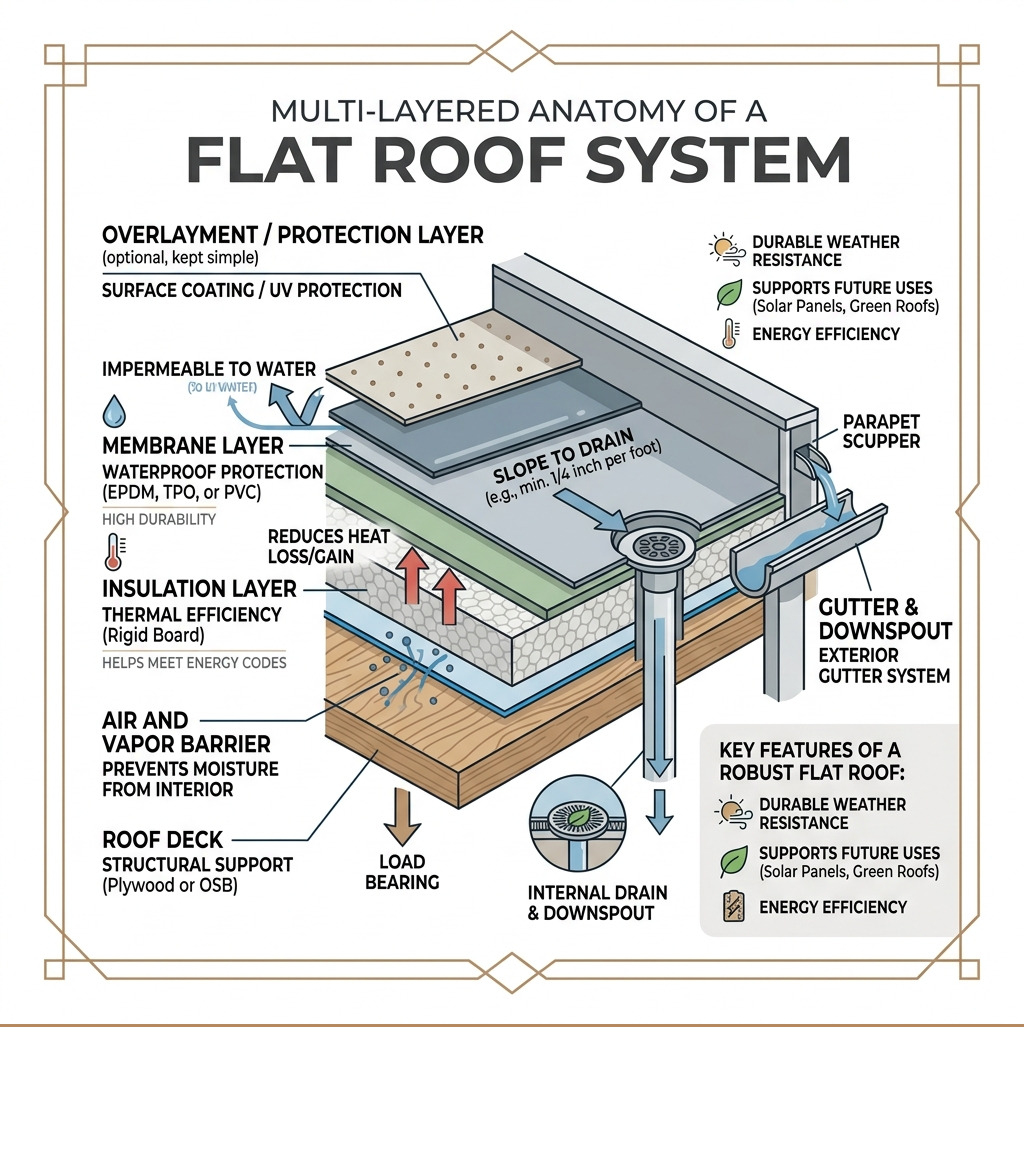
A new build flat roof is a complex sandwich of layers. If any layer is missing or poorly installed, the whole system fails.
The Role of Tapered Insulation
Since the structural deck of a building is often perfectly level, we create the necessary 1/4-inch slope using tapered insulation. These are rigid foam boards (usually polyisocyanurate) that are cut at an angle.
This system allows for “positive drainage” without needing to angle the actual wood or steel beams of the house. It also provides the “R-value” (insulation power) required by Utah energy codes to keep your home warm in the winter.
Drainage Systems
You have three main options for getting water off your roof:
- Internal Drains: These work like a shower drain in the middle of the roof, connected to pipes inside the building.
- Scuppers: These are holes in the perimeter wall (parapet) that allow water to pour out into a downspout on the exterior.
- Gutters: Similar to a pitched roof, these catch water at the edge.
For a successful project, we often recommend “overflow” systems. If your primary drain gets clogged by a stray plastic bag or autumn leaves, the overflow system prevents the roof from turning into a swimming pool.
Get more tips on the planning phase in our guide From Blueprint To Beautiful Your Guide To New Construction Roofing.
Essential Steps in Flat Roof Construction
Building a new build flat roof requires precision. Here is the general flow:
- Structural Decking: Usually 5/8-inch plywood or OSB. We leave 1/8-inch gaps between sheets to allow for natural expansion and contraction.
- Vapor Barrier: This prevents moisture from inside the house from rising into the insulation and causing rot.
- Insulation Board: Screwed down with specialized plates and fasteners.
- Underlayment: A protective base layer for the membrane.
- Membrane Installation: We “dry-fit” the membrane first, letting it relax for about 30 minutes to an hour to remove wrinkles before adhering or welding it.
- Perimeter Flashing: This is where most leaks happen. We extend the membrane up the side walls at least 8 inches to ensure a watertight seal.
If you’re feeling overwhelmed, our article on How To Build A New Roof Without Losing Your Mind can help simplify the process.
Professional Specification and Inspection
Because flat roofs are so technical, professionals use tools like moisture mapping and core sampling to ensure the roof is performing as it should. For a new build, we work closely with your architect to ensure the drainage capacity is sized for “100-year storms”—because as we know in Utah, those “100-year” storms seem to happen every decade!
Maximizing Your Roof: Solar, Gardens, and Modern Living
One of the coolest things about a new build flat roof is that it’s not just a lid for your house—it’s an asset.
Rooftop Gardens (Green Roofs)
Green roofs aren’t just for looks. They can reduce stormwater runoff by 50-90%. The plants and soil act as a natural sponge, and they also provide an extra layer of insulation. However, a green roof is heavy. You must consult a structural engineer to ensure your new build can handle the “dead load” of the soil and the “live load” of the water it holds.
Solar Integration
Flat roofs are perfect for solar panels. Instead of drilling holes into your roof, we often use ballasted systems. These use heavy weights to hold the panels in place, meaning zero penetrations in your waterproof membrane.
Urban Heat Island Mitigation
By using a white TPO or PVC membrane, you’re doing your part to cool down the neighborhood. Dark roofs soak up heat and radiate it back, making cities hotter. A reflective “cool roof” stays much closer to the ambient air temperature.
Maintenance is key to keeping these features working. Check out Flat Out Fixes Your Guide To Low Slope Roof Maintenance for more advice.
Frequently Asked Questions about New Build Flat Roofs
How long does a new build flat roof last?
The lifespan depends heavily on the material and the quality of the install.
- EPDM can last 20-50 years.
- TPO/PVC usually lasts 20-30 years.
- Modified Bitumen lasts 10-20 years.
Environmental exposure is the biggest factor. In Utah, the intense UV rays at high altitudes can “cook” a low-quality roof. That’s why we emphasize high-quality membranes. If you ever run into trouble, we are known as The Best Flat Roof Repair Specialists In Utah And Beyond.
What is the best material for a new build flat roof?
There is no single “best,” but there is a “best for you”:
- Best for Budget: EPDM.
- Best for Energy Savings: TPO.
- Best for Durability: PVC or high-end Modified Bitumen.
- Best for DIY (Small Sheds only!): EPDM.
What maintenance is required for long-term durability?
Prevention is always cheaper than a cure. We recommend a simple checklist:
- Bi-Annual Inspections: Check in the spring (after the snow melts) and fall (before the snow hits).
- Clear Debris: Leaves and twigs trap moisture and can clog your scuppers.
- Check Seams: Look for any signs of “fish-mouthing” (where the edge of a seam starts to lift).
- Inspect Flashings: Ensure the metal edges and seals around chimneys or vents are still tight.
Conclusion
Building a new build flat roof is an exciting opportunity to embrace modern design and functional living. Whether you’re dreaming of a rooftop garden in Sugar House or a sleek, energy-efficient office in Lehi, the success of your project comes down to two things: the right design and the right team.
At Heaton Bros. Roofing, we are a 4th-generation, family-owned company. We’ve been roofing the Salt Lake City area for over 65 years. We know the local codes, we know the Utah weather, and we know how to build a roof that lasts. We pride ourselves on reliability, customer satisfaction, and providing quality that stays affordable.
Ready to start your project? Learn more about our New Construction services and let us help you build something beautiful. Give us a call today—we’d love to welcome you into the Heaton Bros. family.