
The Most Common Metal Roof Installation Mistakes (Quick Answer)
Metal roof installation mistakes are more common than most homeowners realize — and even small errors can lead to leaks, voided warranties, and thousands in repairs.
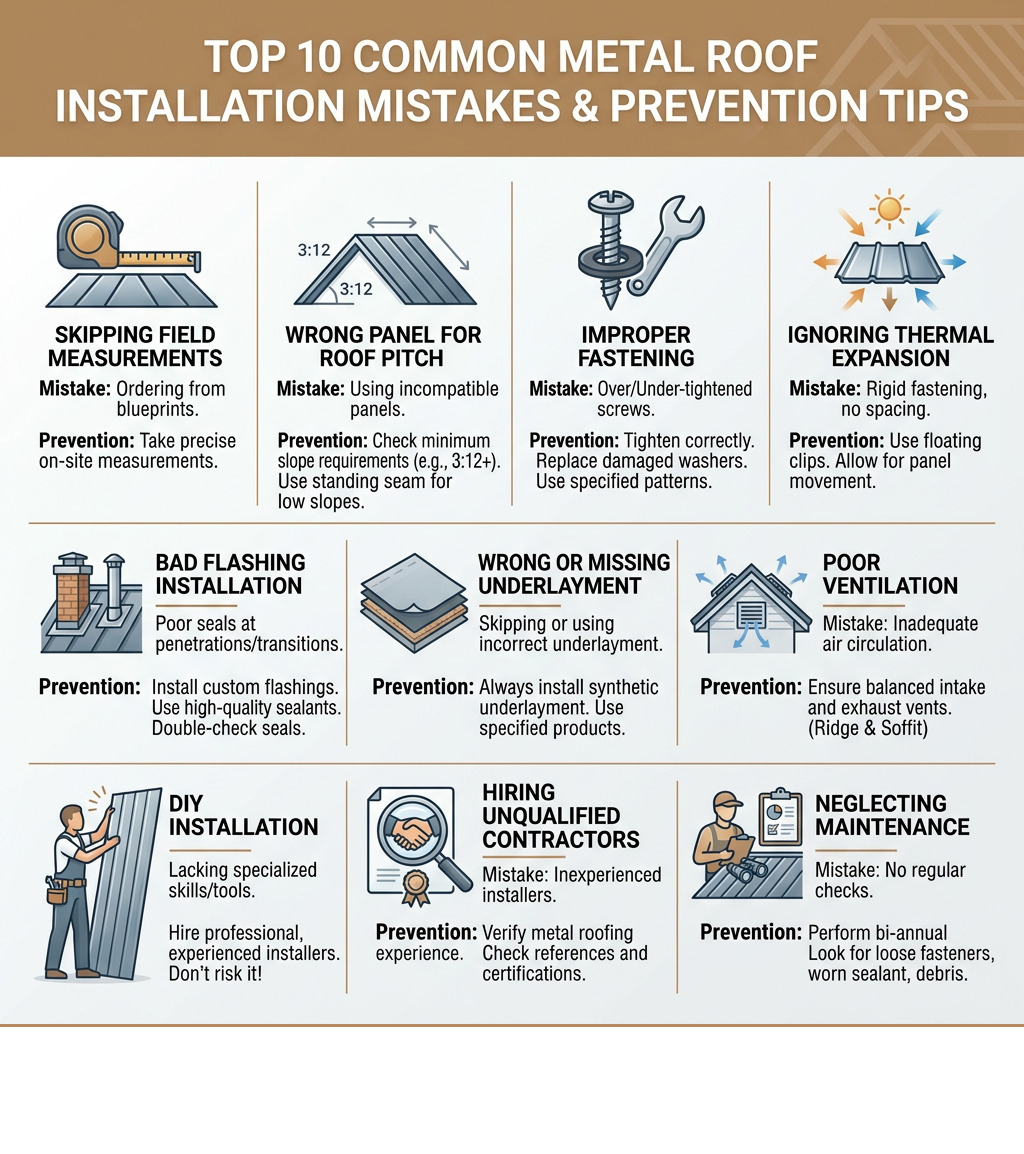
Here are the most common mistakes to avoid:
- Skipping field measurements — Ordering panels from blueprints instead of actual roof measurements leads to panels that are too long or too short.
- Choosing the wrong panel for your roof pitch — Most panels require at least a 3:12 slope. Low-slope roofs need standing seam systems.
- Improper fastening — Over-tightened screws damage washers and cause leaks. Under-tightened ones let water and wind in.
- Ignoring thermal expansion — Metal expands and contracts. Without floating clips and proper spacing, panels warp and fasteners fail.
- Bad flashing installation — Improperly sealed flashings around chimneys, vents, and transitions are the #1 cause of metal roof leaks.
- Wrong or missing underlayment — Skipping underlayment leaves your roof vulnerable to condensation and moisture damage.
- Poor ventilation — Without proper ridge and soffit vents, heat and moisture build up, leading to mold and reduced efficiency.
- DIY installation — Metal roofing requires specialized tools, techniques, and training that go far beyond standard roofing skills.
- Hiring unqualified contractors — Inexperienced installers often lack the metal-specific knowledge needed to prevent the mistakes above.
- Neglecting maintenance — Even a well-installed metal roof needs bi-annual inspections to catch loose fasteners and worn sealants early.
Metal roofing is one of the smartest long-term investments a Utah homeowner can make. A properly installed metal roof can last more than 50 years — more than double the lifespan of a standard asphalt shingle roof. It’s durable, energy-efficient, and looks great.
But here’s the catch: installation has to be done right.
Unlike asphalt shingles, metal roofing is less forgiving. The materials behave differently. The tools are different. The techniques are different. And the consequences of getting it wrong — leaks, warped panels, voided warranties — can be expensive and frustrating.
Whether you’re planning a new metal roof or trying to figure out why an existing one is underperforming, this guide walks you through every major installation mistake, why it happens, and exactly how to avoid it.
Critical Planning and Measurement Errors
The foundation of a successful metal roof isn’t actually the roof itself—it’s the math done before a single panel is cut. One of the most frequent metal roof installation mistakes we see in the Salt Lake City area involves poor planning during the initial phase.
The Danger of Ordering Off Blueprints
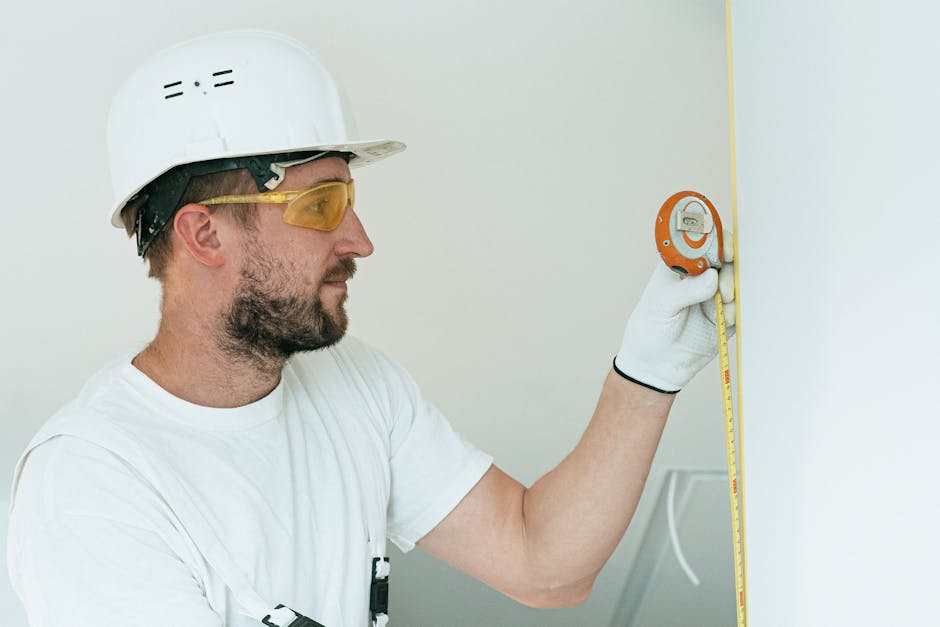
Many contractors or homeowners try to save time by ordering materials directly from architectural blueprints or building plans. This is a recipe for disaster. Real-world construction rarely matches a drawing perfectly. Walls can be slightly out of square, or the actual roof deck might have settled.
If you order off plans, you often end up with panels that are either too long (leading to wasteful cutting) or, worse, too short. A panel that is even half an inch too short can fail to reach the eave properly, leading to water backup and rot in your fascia. We always perform a detailed field measurement once the structure is actually built to ensure every panel fits like a glove.
Using a Roofing Calculator Correctly
To avoid material waste and lead-time delays, we recommend using a roofing calculator as a secondary check. However, a calculator is only as good as the numbers you put into it. Accurate measurements of the ridge, hip, valley, and rake lengths are essential.
Failing to account for the “overhang” is another common slip-up. Typically, metal roofing should overhang the eave by 1 to 1.5 inches to ensure water clears the roof edge and enters the gutters. If you’re in the middle of Planning a Roof Replacement: The Ultimate Guide for your home, precision here prevents expensive “emergency” re-orders that can stall your project for weeks.
Technical Metal Roof Installation Mistakes to Avoid
Once the materials arrive, the technical execution begins. This is where specialized knowledge of metal behavior becomes critical.
Matching Panel Type to Roof Pitch
Not all metal panels are created equal when it comes to slope. A major mistake is installing an “exposed fastener” corrugated panel on a roof with a very low pitch.
| Roof Pitch | Recommended Panel Type | Why? |
|---|---|---|
| Low Slope (1:12 to 3:12) | Standing Seam (Mechanical) | Prevents water from “ponding” and seeping into screw holes. |
| Standard Slope (3:12+) | Most Panels (Corrugated, etc.) | Steep enough for gravity to pull water away from fasteners. |
| Ultra-Low (< 1:12) | Not recommended for metal | High risk of weather-tightness failure. |
If you use the wrong panel for your pitch, water won’t shed fast enough. On low-slope roofs, we strongly advocate for standing seam systems with a 2-inch mechanical seam. These systems hide the fasteners under the metal, creating a continuous “umbrella” that is virtually leak-proof.
Underlayment: The Secondary Shield
Skipping underlayment or using the wrong type is a critical error. In our Utah climate, temperature swings are dramatic. When warm, moist air from inside your home hits the cool underside of a metal roof, condensation forms.
Without a high-quality synthetic underlayment, that moisture sits directly on your roof deck, leading to mold and wood rot. For more localized advice on this, check out our Utah Residential Metal Roofing: A Homeowner’s Handbook. We always ensure the underlayment is installed with a generous overlap to provide a continuous moisture barrier.
Fastening and Structural Integrity Issues
Fastening is perhaps the most repetitive part of the job, which makes it the most prone to “autopilot” errors.
The “Goldilocks” of Screw Tightness
Metal roofing screws come with neoprene or rubber washers designed to create a waterproof seal. However, they only work if they are driven in “just right.”
- Over-tightened: The washer deforms, squishing out the sides or even cracking. This creates a “cup” that holds water and eventually leaks.
- Under-tightened: The washer never compresses against the metal, leaving a gap for wind-driven rain to enter.
- Angled: If the screw isn’t driven perpendicular to the panel, the washer can’t seal evenly.
We use torque-controlled drills to ensure every single fastener is seated with the exact amount of pressure required to compress the gasket without damaging it.
Accounting for Thermal Expansion
Metal is alive—at least in a physical sense. It expands when the Utah sun beats down on it and contracts when the temperature drops at night. If panels are pinned too tightly to the structure without room to move, you get oil canning (visible waviness or “stress wrinkling” in the flat areas of the panels).
To fix this, professional installers use floating clips in standing seam systems. These clips hold the panel down while allowing it to slide back and forth as it changes temperature. If your substrate (the wood deck) isn’t perfectly flat, these movement issues are magnified. Ensuring a flat surface is a vital part of Understanding the Roof Installation Process: What to Expect.
Flashing, Sealants, and Ventilation Pitfalls
Even if the panels are perfect, the “penetrations”—chimneys, vents, and valleys—are where 90% of leaks occur.
The Art of Flashing
Flashing is the metal trim used to direct water away from joints. A common mistake is “bottom-up thinking” on vertical details, which leads to reverse laps. In roofing, everything must lap like fish scales—the piece above must always overlap the piece below so water flows over the joint, not into it.
We also see many installers using generic caulking from a big-box store. Standard silicone doesn’t adhere well to the high-tech paints used on metal roofs and will peel off within a few years. We only use high-grade polyurethane sealants or butyl sealant tape specifically designed for the expansion and contraction of metal.
Ventilation and Attic Airflow
Don’t suffocate your house! Proper ventilation is essential for any roof, but especially metal. Without a balance of ridge vents and eave (soffit) vents, your attic becomes a hothouse. This heat buildup can actually bake the finish of your roof from the inside out and drastically increase your cooling bills in the summer.
For a deeper dive into how these components work together, see Beyond the Tin: A Comprehensive Guide to Residential Metal Roofing.
Galvanic Reaction: Dissimilar Metals
One “invisible” mistake is the galvanic reaction. If you put copper flashing or gutters on a steel roof, the two metals will literally fight each other. Through a process called electrolysis, the more “noble” metal (copper) will cause the steel to corrode and rust through with shocking speed. We always ensure all trim, fasteners, and accessories are metallurgically compatible.
Frequently Asked Questions about Metal Roof Installation Mistakes
Why is DIY a major metal roof installation mistake?
While we love a good weekend project as much as anyone, metal roofing is an “expert-only” zone. It requires specialized equipment like heavy-duty shears, bending brakes, and standing seam crimpers that most homeowners don’t have in their garage.
More importantly, it’s a safety risk. Metal panels are incredibly slippery, especially if there’s a hint of moisture, and the edges are razor-sharp. Furthermore, most manufacturers will only honor their 50-year warranties if the roof is installed by a certified professional. As we discuss in our article on Why Professional Roof Installation Saves You Money in the Long Run, the cost of fixing one DIY leak often exceeds what you would have paid a pro in the first place.
How do I fix common metal roof installation mistakes like oil canning?
If you already see waviness in your panels, it’s often due to the substrate being uneven or the fasteners being too tight. While you can’t always “undo” oil canning once the metal is stretched, you can minimize its appearance.
- Stiffening Ribs: Choosing panels with “striations” or “pencil ribs” helps break up the flat surface so the eye doesn’t notice the waviness.
- Clip Spacing: Ensuring clips are not over-driven into the deck allows the panel to sit flatter.
- Backer Rods: In some cases, installers can place foam backer rods under the center of the panel to create a slight “crown,” which takes the slack out of the metal.
What are the risks of hiring unqualified contractors for metal roofing?
Just because someone can nail down an asphalt shingle doesn’t mean they can install a standing seam roof. Unqualified contractors often treat metal like wood, which leads to improper material handling (like scratching the protective coating) and poor craftsmanship.
You should always verify The ABCs of Hiring a Roofer: Licensing, Insurance, and Experience Explained. Ask for references specifically for metal projects. An inexperienced crew might save you $1,000 today, but they could cost you a $20,000 “tear-off and replace” in five years when the roof starts leaking from a hundred different screw holes.
Conclusion
At Heaton Bros. Roofing, we’ve seen it all. As a 4th-generation, family-owned company with over 65 years of experience serving Salt Lake City and the Wasatch Front, we know that a metal roof is only as good as the hands that install it. From the windy ridges of Park City to the heat of the Salt Lake valley, we understand how Utah weather puts metal to the test.
Avoiding metal roof installation mistakes starts with choosing a partner who values precision over speed. Once your roof is on, don’t forget about it! We recommend bi-annual inspections—once in the spring and once in the fall—to clear debris from valleys and check that sealants are still holding strong.
If you’re ready to upgrade your home with a roof that will truly last a lifetime, we’re here to help. More info about our services is just a click away. Let’s make sure your next roof is your last roof!