Why Your Commercial Roof Matters in Salt Lake City
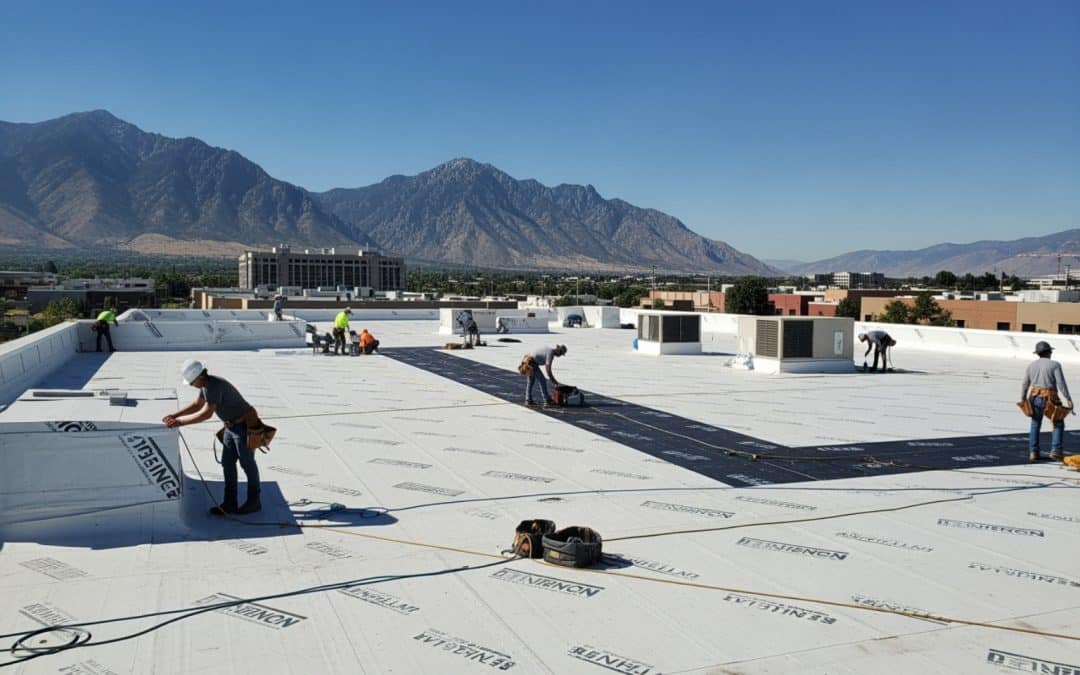
Commercial roofers SLC are essential partners for protecting your business from one of the harshest climates in the country. Salt Lake City’s unique weather pattern—with heavy winter snowfall that can exceed 60 inches annually and intense summer UV exposure at high elevation—puts extraordinary stress on commercial roofing systems.
Quick Answer: Finding Commercial Roofers in SLC
When searching for commercial roofers in Salt Lake City, look for:
- Experience: Companies with 20+ years serving the local climate
- Credentials: A+ BBB rating, proper licensing, and manufacturer certifications
- Services: Full spectrum from installation to emergency repairs
- Local Knowledge: Understanding of snow loads and UV resistance specific to Utah
- Insurance: High-liability coverage (ideally $1,000,000+)
Your commercial roof is one of your largest business investments. A failing roof doesn’t just mean leaks—it means damaged inventory, disrupted operations, and costly emergency repairs. Yet many business owners only think about their roof when something goes wrong.
The stakes are high. As one local property manager finded, ignoring minor leaks led to thousands of dollars in interior damage. But choosing the right roofing partner and understanding your options can transform your roof from a liability into a long-term asset.
This guide will walk you through everything you need to know: selecting a qualified contractor, understanding which roofing materials work best in SLC’s climate, and what services you actually need versus what you’re sold.
Choosing Your Partner: How to Select the Best Commercial Roofers in SLC
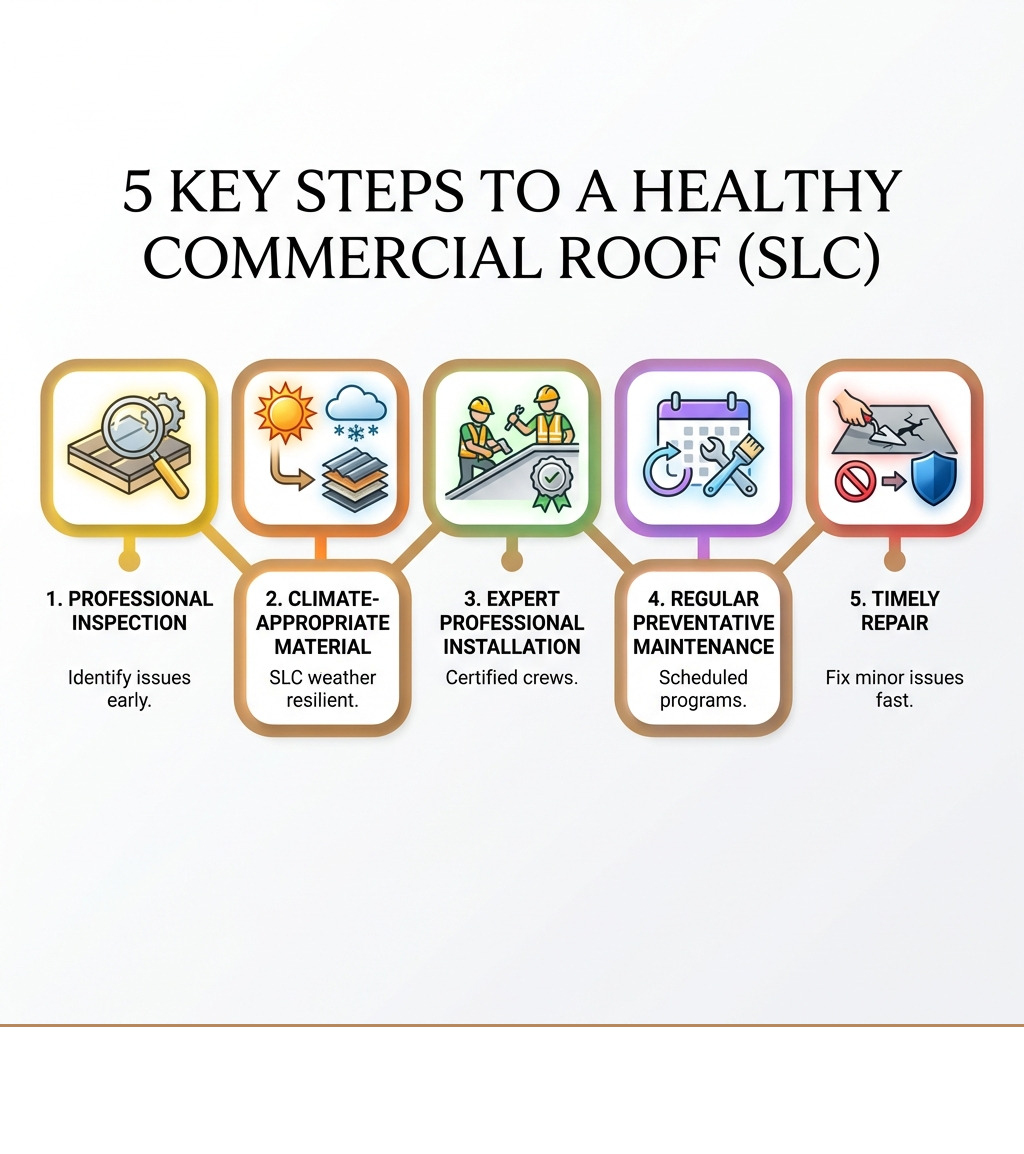
Choosing the right commercial roofer in Salt Lake City is a critical decision for the longevity and performance of your business’s roof. With many companies out there, it can feel daunting, but focusing on a few key factors helps us confidently select a partner who will protect our investment.
Verifying Credentials and Experience
When we look for commercial roofers SLC, we’re not just looking for someone to patch a leak; we’re seeking a long-term partner. The first step is always to verify their credentials and experience.
- Years in Business: Experience truly matters in roofing, especially in a dynamic climate like Salt Lake City’s. A company with a long history demonstrates stability and expertise. For example, our company has been in operation for over 65 years, bringing four generations of roofing knowledge to every project. This extensive experience means we’ve seen it all—from the toughest winters to the hottest summers—and we know how to build roofs that last.
- A+ BBB Rating: The Better Business Bureau (BBB) rating is a quick indicator of a company’s commitment to customer service and ethical business practices. An A+ rating signifies that the roofer has a strong track record of resolving customer complaints and operating transparently.
- Proper Licensing: Always ensure your chosen roofer is properly licensed to operate in Utah. This protects us from unqualified contractors and ensures they adhere to state and local building codes.
- High-Liability Insurance: Accidents can happen. Reputable commercial roofers SLC should carry comprehensive liability insurance, ideally over $1,000,000. This protects our property and business from potential damages or injuries that could occur during the roofing project.
- Manufacturer Certifications: Certifications from major roofing material manufacturers, such as being Certainteed SELECT ShingleMaster™ Certified, indicate that a roofer has met rigorous standards for installation quality. These certifications often allow them to offer improved warranties on the materials they install, providing us with additional peace of mind.
- Proven Track Record: A history of quality work and satisfied customers is invaluable. We should look for companies that can provide references or showcase a portfolio of successfully completed commercial projects.
Gauging Reputation and Local Knowledge for commercial roofers SLC
Beyond basic credentials, a roofer’s reputation and local knowledge are crucial in our unique Salt Lake City environment.
- Customer Reviews and Testimonials: What do other business owners say about their experience? Online reviews and testimonials offer insight into a roofer’s reliability and quality of work. We often find that much of our work comes from referrals and repeat customers, which speaks volumes about the trust we’ve built.
- Portfolio of SLC Projects: A roofer familiar with Salt Lake City will have a portfolio of projects completed in the area. This demonstrates their understanding of local building codes and the specific challenges our climate presents.
- Understanding Snow Loads: Salt Lake City sees significant snowfall. A local expert will understand the engineering requirements for snow loads on commercial roofs, ensuring our roof can withstand heavy winter accumulation without structural compromise.
- UV Resistance Knowledge: Our high elevation means intense UV radiation, which can prematurely degrade many roofing materials. An experienced local roofer will recommend materials specifically designed for superior UV resistance.
- Storm Damage Experience: Salt Lake City experiences a range of severe weather, from heavy snowstorms to high winds. We need commercial roofers SLC who are experienced in assessing and repairing storm damage efficiently.
- Community Reputation: A company that has been a part of the Salt Lake City community for decades, like ours, builds a strong, positive reputation through consistent, reliable service. This deep community root means we’re invested in the success of local businesses and stand behind our work.
SLC-Proof Your Building: A Guide to Commercial Roofing Systems & Materials
Choosing the right roofing material is crucial for longevity and performance in Salt Lake City’s four-season climate. It’s not just about aesthetics; it’s about selecting a system that can withstand heavy snow, intense UV exposure, and wide temperature fluctuations without failing. Let’s break down the most suitable options for local businesses.
Common Roofing Systems for Salt Lake City’s Climate
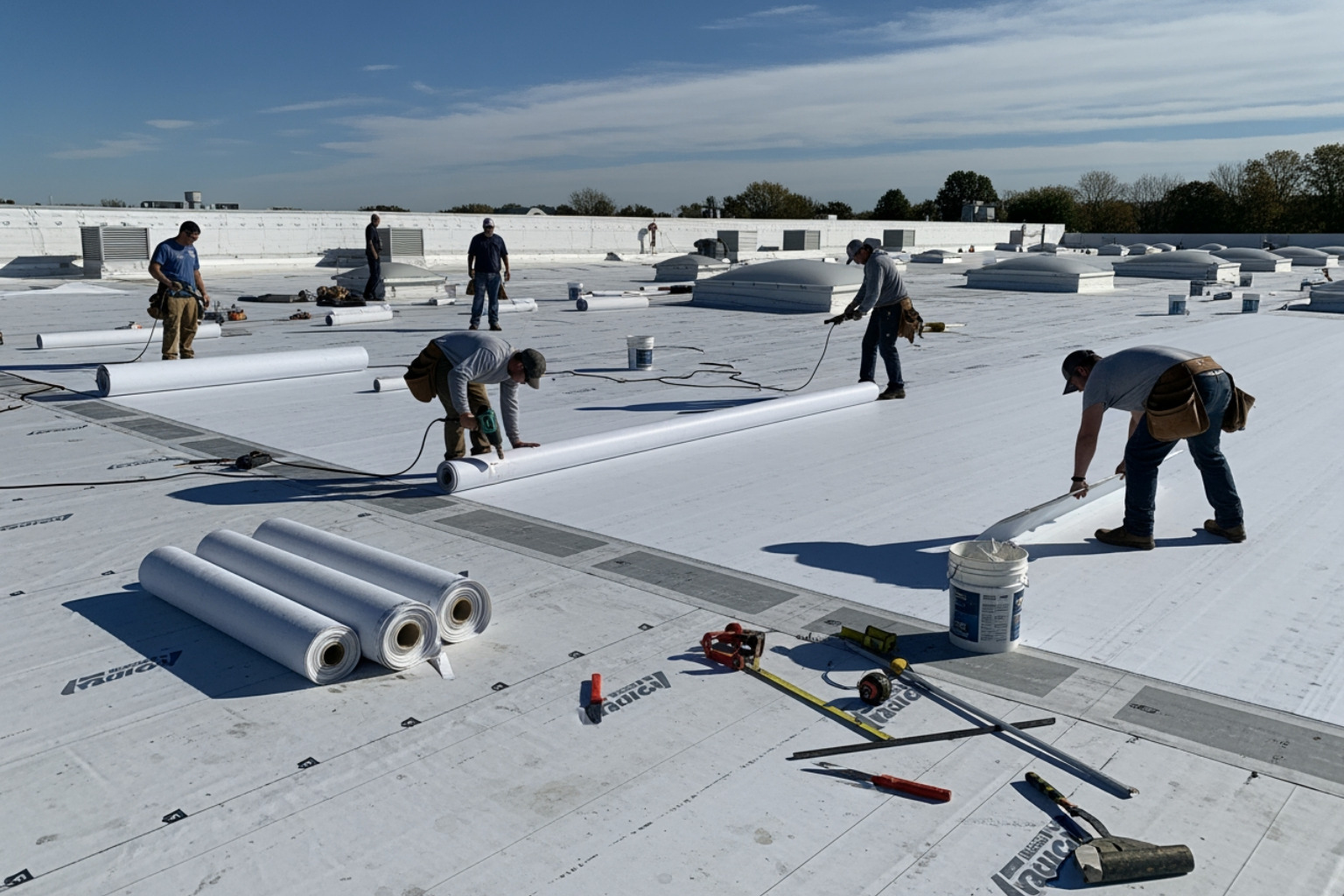
When we talk about commercial roofing in Salt Lake City, several systems stand out for their durability and suitability:
- Single-Ply Membranes: These are among the most popular choices for flat and low-slope commercial roofs. They are lightweight, flexible, and offer excellent waterproofing.
- TPO (Thermoplastic Polyolefin): TPO is a highly energy-efficient option because it reflects sunlight, helping to keep buildings cooler in the summer. It’s affordable compared to other single-ply membranes and typically lasts up to 20 years when properly installed and maintained. TPO is a strong contender for businesses looking for both performance and energy savings.
- EPDM (Ethylene Propylene Diene Monomer): Often called “rubber roofs,” EPDM is known for its durability, hail resistance, and ease of installation. It’s a great choice for buildings with solar panels due to its robust nature.
- PVC (Polyvinyl Chloride): PVC is another single-ply membrane offering exceptional durability, chemical resistance, and fire resistance. While it may cost more upfront, its longevity and performance can make it a cost-effective choice over its lifespan.
- Metal Roofing: One of the most durable and reliable commercial roofing systems, metal roofs can last 50+ years. They offer excellent resistance to hail, wind, and fire. They are also energy-efficient, often made from recycled materials, and can be fully recyclable at the end of their life. For pitched commercial roofs, metal is an outstanding, long-term investment.
- Spray Polyurethane Foam (SPF): SPF roofing systems offer a seamless, protective layer that’s ideal for irregular roof shapes. They provide excellent insulation, which can lead to significant energy savings, and are known for their durability and low maintenance needs. With proper care, an SPF roof can be the last roof we ever need to buy.
- Modified Bitumen (Mod-Bit): This is an asphalt-based, rolled roofing system, often used for low-slope roofs. It offers good waterproofing and is relatively easy to repair. It’s a robust option that has evolved over the years to include various reinforcement layers for added strength.
- Built-Up Roofing (BUR): One of the oldest and most trusted roofing systems, BUR consists of multiple layers of bitumen (asphalt) and reinforcing fabrics, topped with a layer of aggregate or coating. It’s incredibly durable and provides excellent waterproofing, making it a reliable choice for the SLC climate.
Lifespan, Maintenance, and Energy Efficiency
Understanding the typical lifespan and maintenance needs of these materials, alongside their energy efficiency, helps us make an informed decision for our Salt Lake City business.
| Material | Average Lifespan | Maintenance Needs | SLC Climate Suitability |
|---|---|---|---|
| Metal Roofing | 50+ years | Low; periodic inspections, occasional coating | Excellent; highly durable against snow, ice, wind, and UV. |
| TPO | 20-30 years | Moderate; seam inspections, cleaning, minor repairs | Very Good; reflective properties aid in summer heat reduction, good snow resistance. |
| EPDM | 25-35 years | Moderate; seam inspections, patching, occasional coating | Very Good; flexible in cold, resistant to hail and UV. |
| PVC | 20-30 years | Moderate; seam inspections, cleaning, minor repairs | Very Good; strong chemical and fire resistance, good for varied temperatures. |
| SPF | 20-50 years | Low; recoating every 10-15 years, minor repairs | Excellent; seamless, superior insulation for extreme temperatures, good for irregular roofs. |
| Modified Bitumen | 15-20 years | Moderate; seam inspections, patching, granular surface care | Good; robust waterproofing, but less reflective than TPO/PVC. |
| Built-Up Roofing | 20-30 years | Moderate; surface aggregate maintenance, crack repairs | Good; very durable, multi-layered protection, but heavy and less energy-efficient. |
- Cool Roofs and Energy Savings: In Salt Lake City, where summer temperatures can soar, cool roofs play a significant role in energy efficiency. Materials like TPO and light-colored coatings reflect more of the sun’s rays, lowering roof surface temperature by up to 100°F. This significantly decreases heat transfer into the building, reducing the amount of air conditioning needed and lowering peak cooling demand by 10-15 percent. With Americans spending approximately $40 billion annually to air condition buildings, and air conditioning accounting for one-sixth of all electricity generated in the US, choosing an ENERGY STAR® qualified roof product can lead to substantial savings. We can explore expected calculated results on the Department of Energy’s ‘Roof Savings Calculator’ website.
- Sustainability and LEED Points: Many modern commercial roofing options contribute to sustainability efforts and can help businesses earn LEED (Leadership in Energy and Environmental Design) points. This includes using recycled content, recyclable materials, cool roof properties, and systems that reduce energy consumption. As businesses increasingly prioritize environmental responsibility, selecting sustainable roofing solutions becomes a valuable choice.
From Leaks to Longevity: Understanding Commercial Roofing Services
Professional commercial roofers SLC offer much more than just putting a new roof on our building. Understanding the full spectrum of services available can save us significant money, prevent business disruptions, and extend the life of our commercial roof for years to come.
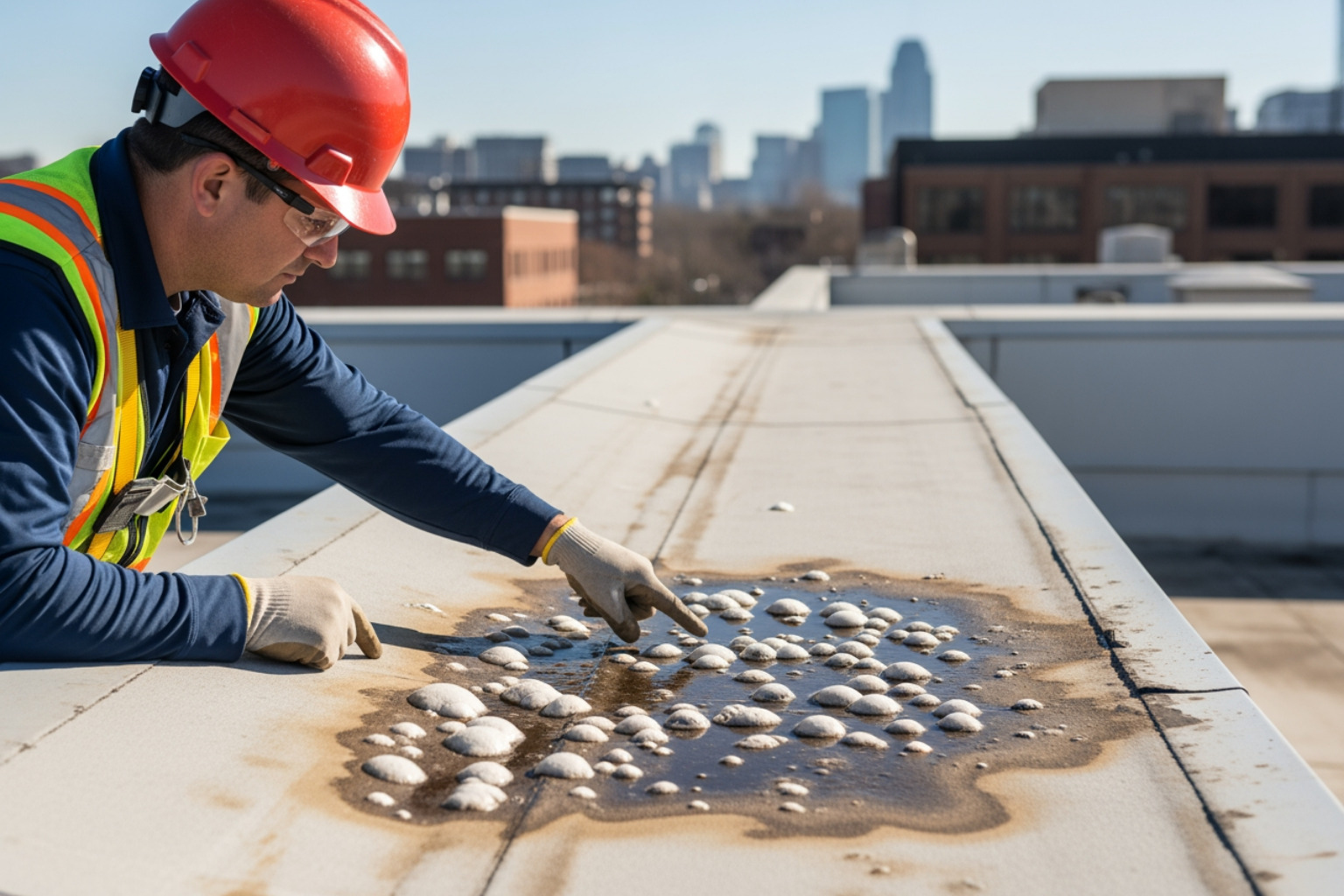
Identifying the Need: Roof Assessment and Common Issues
Before we can decide on a service, we first need to know what’s going on up there. Regular roof assessments are vital for catching issues early. Here are common signs that our commercial roof might need attention:
- Leaks: The most obvious sign. Water stains on ceilings or walls, especially after rain or snowmelt, indicate a compromised roof.
- Ponding Water: Water that stands on a flat roof for more than 48 hours is a major concern. It puts stress on the roofing membrane and can lead to leaks and structural damage.
- Bubbling or Blistering: These raised areas on the roof surface often indicate trapped moisture or air, which can weaken the membrane.
- Damaged Flashing: Flashing around vents, skylights, and parapet walls is crucial for waterproofing. If it’s cracked, loose, or corroded, water can easily enter.
- Visible Punctures or Tears: Debris, foot traffic, or even wildlife can cause physical damage to the roof membrane.
- Seam Separation: For single-ply roofs, seams can separate over time, creating pathways for water.
- Age-Related Wear: As a roof ages, materials become brittle, crack, or degrade. Knowing the typical lifespan of our roof material helps us anticipate when age will become a factor.
- Interior Water Stains: Sometimes the first sign of a roof problem isn’t on the roof itself, but inside the building.
If we notice any of these signs, it’s time to call in the experts for a thorough inspection.
Core Services Offered by commercial roofers SLC
A comprehensive commercial roofing company, like ours, provides a full suite of services to meet every need our business might have:
- New Roof Installation: For new construction projects in Salt Lake City and the surrounding areas, we design and install roofing systems custom to the building’s specific needs, ensuring compliance with all local codes and optimal performance in our climate.
- Roof Replacement: When a commercial roof reaches the end of its lifespan or is extensively damaged, a full replacement is necessary. This involves tearing off the old roof down to the deck and installing a brand-new system, offering a fresh start and decades of protection.
- Commercial Roof Repair: From patching small leaks to fixing damaged flashing, repairs address specific issues to restore the roof’s integrity and prevent further damage. Prompt and precise repairs are crucial to avoid escalation.
- Roof Restoration: This is a cost-effective and environmentally friendly alternative to full replacement. Restoration involves cleaning, repairing all minor issues, and applying a new protective coating over the entire roof surface. A commercial roof restoration can add 10 to 15 years of protection, reducing waste and extending the life of the existing system.
- Preventative Maintenance Programs: These programs involve regular inspections and minor maintenance tasks designed to identify and address small issues before they become major problems. This proactive approach is key to maximizing roof longevity.
- Emergency Repairs: After severe weather events like heavy snow or strong winds, emergencies can arise. Reputable commercial roofers SLC offer rapid response emergency services to mitigate damage and secure our property quickly.
- Commercial Snow Removal: Heavy snow accumulation can put immense stress on commercial roofs, leading to potential structural damage or leaks from ice dams. Professional snow removal services are crucial in Salt Lake City to protect our roof and ensure safety.
The Power of Preventative Maintenance
We can’t stress enough the benefits of preventative maintenance for our commercial roofs, especially in our challenging Salt Lake City climate. It’s not just an expense; it’s an investment that pays dividends.
- Extending Roof Lifespan: Regular inspections and timely minor repairs can significantly extend the life of our commercial roof. By catching small issues like loose seams or minor punctures early, we prevent them from escalating into costly failures.
- Preventing Costly Damage: Proactive maintenance helps us avoid expensive emergency repairs and interior damage to inventory, equipment, or structural components. Think of it as an annual check-up for our roof – it keeps things running smoothly and prevents major breakdowns.
- Protecting Building Assets: Our roof protects everything inside our building. By keeping it in top condition, we’re safeguarding our business operations, equipment, and products from water damage.
- Lowering Utility Bills: A well-maintained roof, especially with reflective coatings or good insulation, performs better thermally. This can lead to reduced heating and cooling costs throughout the year.
- Maintaining Manufacturer Warranties: Many roofing system warranties require regular professional maintenance to remain valid. Neglecting maintenance could void our warranty, leaving us responsible for repairs that would otherwise be covered.
- Peace of Mind: Knowing that our roof is regularly inspected and cared for by professionals allows us to focus on running our business, free from constant worry about potential roofing problems.
The Project Roadmap: What to Expect During Your Commercial Roofing Project
Starting on a commercial roofing project, whether it’s a repair, restoration, or full replacement, can seem like a significant undertaking. However, by understanding the typical step-by-step process, we can plan accordingly and ensure a smooth experience from initial consultation to project completion. This roadmap helps us know what to expect from our commercial roofers SLC.
From Initial Call to Final Handshake
Here’s a breakdown of what a business owner should expect during a commercial roofing project:
- Initial Consultation & Needs Assessment: Our journey begins with a conversation. We’ll discuss our concerns, budget, and any specific requirements for our commercial property. This initial consultation helps us understand our needs and allows us to provide preliminary guidance.
- Thorough On-Site Inspection: Following the consultation, our experienced team will conduct a detailed, physical inspection of our commercial roof. This isn’t just a quick look; it involves a comprehensive examination of the entire roof system, including the membrane, flashing, drainage, and any signs of damage or wear. We’ll often take photos or videos to document our findings and ensure we have a complete picture of the roof’s condition. This step is crucial, as some companies might provide estimates remotely without truly understanding the roof’s unique needs, especially for shallow-pitch or complex systems.
- Detailed Proposal & Quote: Based on our comprehensive inspection, we’ll provide a transparent and detailed proposal. This will outline the recommended scope of work, material options suitable for our SLC climate, the estimated timeline, and a clear, itemized cost breakdown. We believe in providing quality information without pressure, ensuring we understand every aspect of the project.
- Project Scheduling & Material Ordering: Once we approve the proposal, we’ll work with us to schedule the project at a time that minimizes disruption to our business operations. We’ll then order all necessary materials, ensuring they arrive on-site when needed. Our goal is to complete projects efficiently and on schedule, often being able to schedule replacements within seven days.
- Installation or Repair Phase: This is where the magic happens! Our professional crews, equipped with the right tools and expertise, will execute the work according to the agreed-upon plan. For larger projects, commercial roof installations can take around a month, significantly longer than residential jobs, due to the scale and complexity. Safety is paramount, and we adhere to strict safety procedures and targeted action plans to protect our property and our team.
- Daily Site Cleanup: We understand that ongoing business operations are important. Our crews are committed to maintaining a clean and organized work site throughout the project, with daily cleanup to minimize inconvenience to our customers and employees.
- Final Walk-through & Inspection: Upon completion of the work, we’ll conduct a final walk-through with us to ensure everything meets our expectations and the agreed-upon specifications. We’ll answer any questions we have and ensure our complete satisfaction with the finished project. All new installations typically come with a workmanship guarantee and manufacturer warranties for the products used.
Frequently Asked Questions about Commercial Roofing in SLC
We often hear similar questions from business owners navigating their commercial roofing needs in Salt Lake City. Let’s address some of the most common ones.
How do roofers handle emergencies after SLC’s severe weather events?
Salt Lake City’s weather can be unpredictable, bringing heavy snow, strong winds, and hailstorms that can suddenly compromise a commercial roof. Reputable commercial roofers SLC understand the urgency of these situations and offer 24/7 emergency services.
The process typically involves:
- Immediate Response: A rapid response team is dispatched to our property to assess the immediate danger and prevent further water intrusion.
- Temporary “Dry-In”: The first priority is to apply temporary measures, often called a “dry-in,” to seal off the damaged areas. This prevents additional water from entering the building, protecting our interior assets and preventing further business disruption.
- Thorough Assessment: Once the immediate crisis is contained, a detailed assessment is conducted to determine the full scope of damage. This helps us understand whether a repair, restoration, or replacement is the most appropriate long-term solution.
- Permanent Repairs: Based on the assessment, permanent repairs are then scheduled and executed with precision to restore the roof’s integrity. We’re also experienced in working with insurance companies to streamline the claims process during these stressful times.
What’s the difference between roof repair, restoration, and replacement?
Understanding these terms is key to making the right decision for our commercial roof:
- Repair: This targets specific, localized issues, such as a single leak, a damaged section of flashing, or a minor puncture. Repairs are typically quick and cost-effective solutions for isolated problems.
- Restoration: This is a more comprehensive approach than a simple repair but less extensive than a full replacement. Roof restoration involves cleaning the entire roof, repairing all minor issues (like small leaks, flashing, or edges), and then applying a new protective coating over the entire surface. This process can add 10 to 15 years of life to an existing roof, making it a cost-effective and environmentally friendly option that reduces waste.
- Replacement: This is the most extensive and expensive option. A full replacement involves tearing off the old roofing system down to the deck and installing a brand-new roof. This is necessary when the existing roof is beyond repair or restoration due to extensive damage, age, or structural issues.
Our experts can help us determine which option is best suited for our roof’s current condition and our long-term goals.
How long does a typical commercial roof replacement take?
The timeline for a commercial roof replacement can vary significantly based on several factors:
- Size and Complexity: A smaller commercial roof might take a few days, while a large industrial or warehouse roof could take several weeks to a month. Complex designs, multiple penetrations (skylights, HVAC units), or unique architectural features will also extend the timeline.
- Material Type: The type of roofing material being installed can influence the duration. Some systems, like single-ply membranes, can be installed more quickly than multi-layer systems like built-up roofs.
- Weather Conditions: This is a major factor in Salt Lake City. Unfavorable weather, such as heavy snow, rain, or extreme temperatures, can cause delays. We prioritize safety and quality, which means we might pause work during adverse conditions.
- Accessibility: The ease of access to the roof for materials and equipment also plays a role in how quickly the project can proceed.
- Crew Size and Efficiency: A larger, experienced crew can complete the work more efficiently.
While a residential roof replacement might be a one-day job, commercial roof installations are longer projects, potentially taking around a month for larger facilities. We always provide an estimated timeline in our detailed proposal, keeping us informed every step of the way.
Conclusion
Navigating commercial roofing in Salt Lake City can seem complex, but by focusing on key aspects, we can make informed decisions that protect our business for years to come. Choosing the right commercial roofers SLC, selecting materials best suited for our unique climate, and understanding the importance of proactive maintenance are all critical steps.
Our roof is a significant investment, shielding our assets, ensuring operational continuity, and contributing to our building’s energy efficiency. By being proactive and partnering with experienced professionals, we can transform our roof from a potential liability into a long-term asset.
As a 4th-generation, family-owned company, Heaton Bros. Roofing has provided reliable commercial roofing solutions in Salt Lake City, the Wasatch Front, and surrounding areas like South Jordan, Alpine, and West Jordan for over 65 years. We emphasize quality, affordability, and customer satisfaction, ensuring our business receives the protection it deserves.
Contact us for a free commercial roofing consultation and let us help you find your perfect match in commercial roofing.