
Why Every Business Needs a Solid Commercial Roof
Roofing for businesses is fundamentally different from residential roofing. It’s about protecting your inventory, keeping your employees safe, and maintaining the watertight integrity that your operations depend on every single day.
Key differences between commercial and residential roofing:
- Roof slope: Commercial buildings typically use low-slope or flat roofs (¼:12 to 3:12 pitch), while residential roofs are steep-sloped
- Materials: Commercial roofs use TPO, EPDM, PVC, or built-up systems; residential roofs primarily use asphalt shingles
- Scale: Commercial roofs cover larger areas and require specialized equipment and expertise
- Purpose: Commercial roofs must support HVAC units, protect business assets, and minimize operational disruptions during installation
- Lifespan: Commercial systems often last 20-30+ years with proper maintenance, versus 15-25 years for residential shingles
Your roof is the first line of defense against rain, snow, hail, and wind. When it fails, the costs go far beyond repair bills. You’re looking at damaged equipment, ruined inventory, potential employee safety risks, and lost business during downtime.
The good news? With the right system and proper maintenance, a commercial roof can protect your business for decades. Whether you’re dealing with a warehouse in a high-wind zone, a restaurant where grease resistance matters, or an office building where energy efficiency impacts your bottom line, there’s a roofing solution designed for your specific needs.
This guide walks you through everything from understanding roof components and choosing between TPO, EPDM, and other systems, to knowing when repair makes more sense than replacement. You’ll learn what to look for in warranties, how to select a qualified contractor, and why proactive maintenance is your best investment.
Understanding the Fundamentals of Commercial Roofing
This section will explore the essential factors and components that define a commercial roofing project, setting the foundation for making an informed decision for your business property.
Key Factors for Choosing a Commercial Roof
Choosing the right roof for your business is a strategic investment requiring careful consideration of several factors. Here in Salt Lake City and across the Wasatch Front, our unique climate means that every choice for roofing for businesses must be custom.
First, consider your building type and use. A hospital, for instance, needs a high-performing roof with superior insulation and protection to safeguard critical operations. In contrast, a storage warehouse might prioritize durability and budget. Restaurants often benefit from PVC roofing due to its resistance to grease and chemicals from kitchen exhaust. Data centers require specialized, robust systems to protect sensitive equipment and ensure continuous operation.
Next, geographic location and climate play a monumental role. Utah’s unpredictable weather, from intense sun to heavy snow and hail, demands specific solutions. In hail-prone zones, Class 4 impact-rated materials can prevent costly repairs. For high-wind areas, reinforced decks and materials with strong wind resistance are non-negotiable. In snowy regions like Park City, roofs must handle calculated snow loads to prevent structural damage. We specify systems engineered to withstand your building’s specific local challenges.
Your budget is always a factor, but it’s crucial to look beyond the initial price tag to the long-term costs. A higher-quality system might have a larger upfront investment, but it often comes with longer warranties and significantly reduced maintenance and repair expenses over its lifespan. Sometimes, spending a little more now can save you a lot later.
Finally, many businesses today are keen on incorporating green goals and achieving certifications like LEED. We can explore options that contribute to these environmental objectives. Reflective roofing, for example, can significantly reduce your building’s air conditioning demands, leading to substantial savings on utility costs, especially during our hot Utah summers. The Cool Roof Rating Council provides valuable data on the solar reflectance and thermal emittance of roofing products, helping us choose materials that improve your building’s energy efficiency. Explore how we can help you achieve your Eco-Friendly Roofing Options for a Sustainable Home goals and improve overall building performance.
The Anatomy of a Commercial Roof System
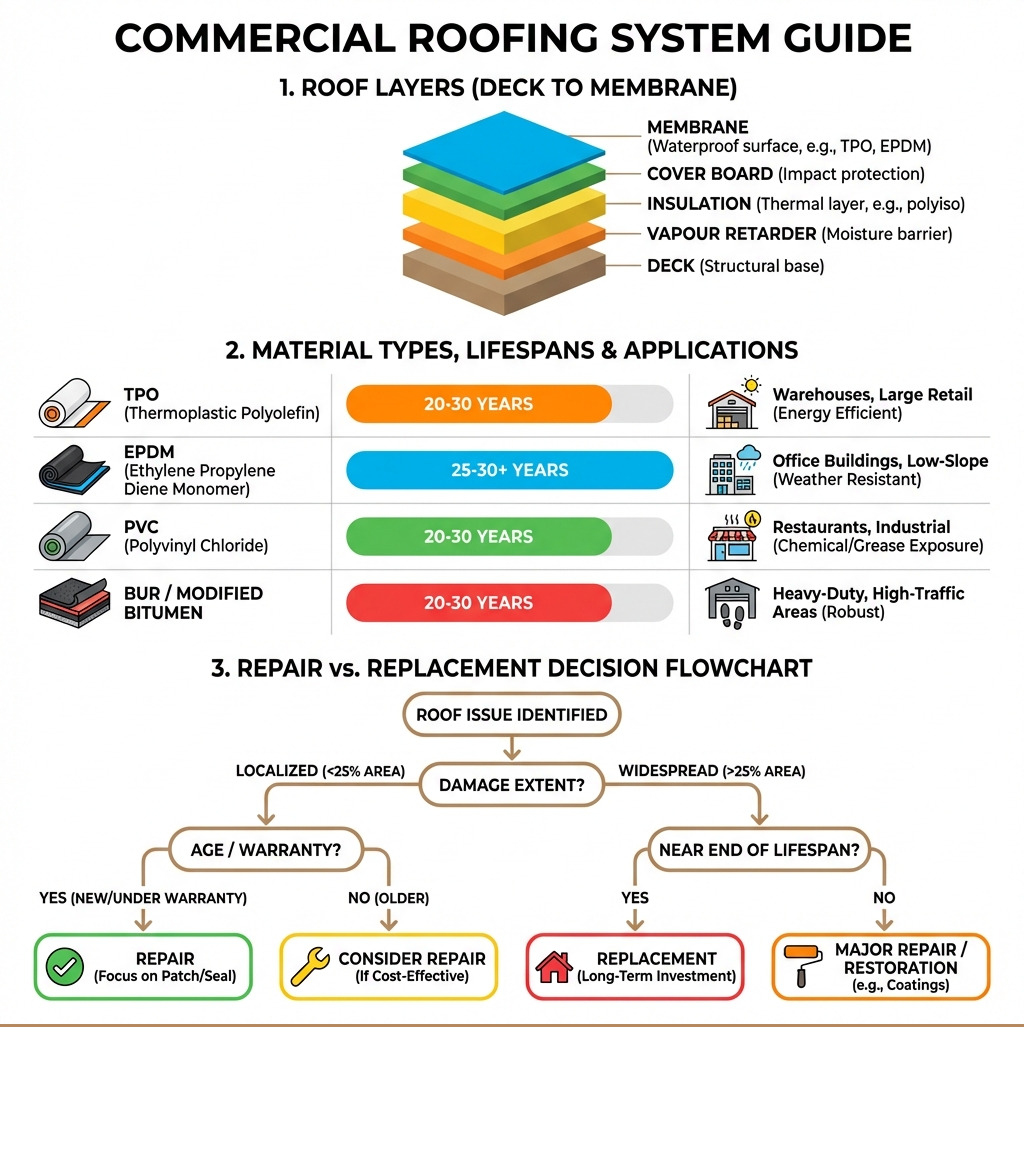
A commercial roof is a sophisticated system of interconnected layers, each with a vital job. Understanding these components is key to appreciating how they contribute to your roof’s integrity and longevity.
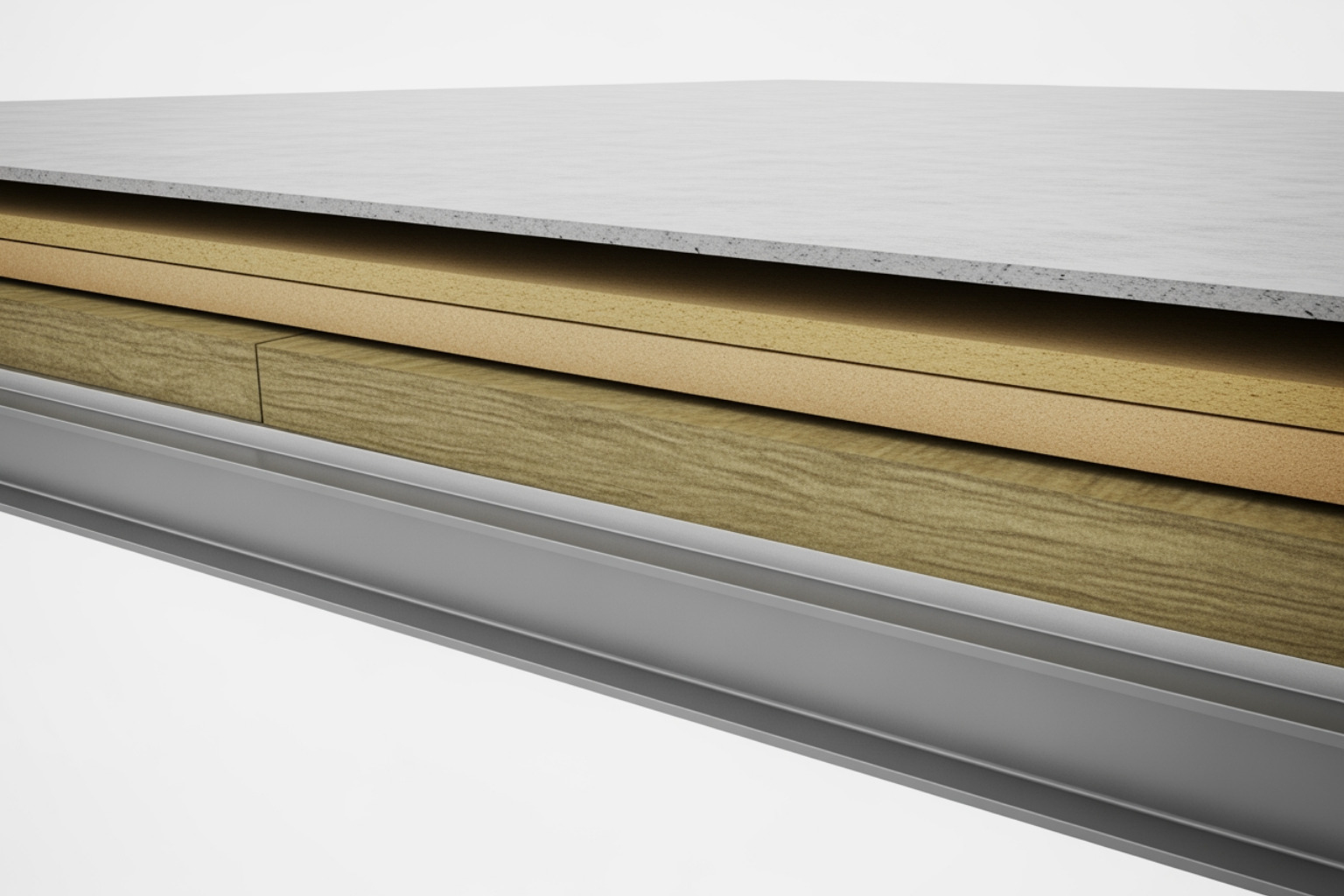
At the very bottom, supporting everything, is the roof deck. This is the structural foundation of your roof system. Common roof deck types in commercial buildings include metal, wood, lightweight insulating concrete, standard concrete, poured gypsum, and even specialized Tectum decks. The type of deck influences the type of roofing system that can be installed and how it’s attached.
Next up is insulation. This unsung hero plays a critical role in your building’s thermal performance, directly impacting your energy bills and indoor comfort. The R-value of the insulation indicates its resistance to heat flow; a higher R-value means better insulation. For businesses in Utah, where temperatures swing from scorching summers to freezing winters, proper insulation is key to maintaining a stable indoor environment and keeping heating and cooling costs in check. We always consider the energy requirements of your building when recommending insulation. You can learn more about the role of insulation in maintaining your building’s energy efficiency.
Often installed above the insulation are cover boards. These rigid panels provide a smooth, stable surface for the roofing membrane. More importantly, they offer crucial protection against impact or punctures, which is especially valuable for roofs with regular foot traffic or heavy rooftop equipment. Some cover boards also contribute to the roof system’s fire rating, helping to meet safety codes.
Finally, we reach the top layer: the waterproofing membrane. This is the visible surface of your roof and the primary barrier against water intrusion. It’s designed to shed water and protect all the layers beneath. Surrounding and sealing any penetrations in this membrane (like HVAC units or skylights) is flashing—strips of material expertly installed to prevent leaks at these vulnerable points. Along the edges of the roof, edge metal (like drip edges and fascia) directs water off the roof and protects the perimeter from wind uplift and weather damage. Each component works in harmony to create a robust, weather-resistant shield for your business.
A Guide to Commercial Roofing Systems
From time-tested traditional materials to modern, energy-efficient membranes, we break down the primary types of commercial roofing systems available today.
Single-Ply Membranes (TPO, EPDM, & PVC)
For low-slope commercial roofs, single-ply membranes are incredibly popular. These systems consist of large, flexible sheets of synthetic material installed in a single layer, ensuring consistent, factory-manufactured quality. The three main types are TPO, EPDM, and PVC.
TPO (Thermoplastic Olefin) is a superstar in roofing for businesses and the low-slope market leader, with a 40% share in new construction and 30% in reroofing. Popular for over 20 years, its success comes from excellent energy efficiency—its light-colored, reflective membranes help reduce cooling costs in Utah’s sunny climate. It is also durable and cost-effective.
EPDM (Ethylene Propylene Diene Monomer), often called “rubber roofing,” has been a reliable choice since the 1960s. It’s a durable rubber material, available in both black and white. EPDM follows TPO in market share, capturing 22 percent of new construction and 26 percent of the reroofing market. It’s known for its flexibility, ease of installation, and proven long-term performance.
PVC (Polyvinyl Chloride) membranes were introduced in the 1970s and offer strong puncture resistance and excellent chemical and grease resistance. This makes them an ideal choice for restaurants or manufacturing facilities where these elements might be present on the roof. PVC roofing membranes can even offer guarantees up to 30 years.
The key difference between these systems often boils down to their chemical makeup: TPO and PVC are thermoplastic membranes, meaning their seams are heat-welded together, creating a monolithic, watertight bond. EPDM, on the other hand, is a thermoset membrane, meaning its seams are typically sealed with adhesive or tape. This distinction impacts seam integrity and installation methods. You can learn more about the specifics of these materials from the Single Ply Roofing Industry (SPRI).
Here’s a quick comparison:
| Feature | TPO (Thermoplastic Olefin) | EPDM (Ethylene Propylene Diene Monomer) | PVC (Polyvinyl Chloride) |
|---|---|---|---|
| Cost | Generally moderate | Generally moderate | Often higher than TPO/EPDM |
| Lifespan | 15-20+ years | 20-30+ years | 20-30+ years (guarantees up to 30 years) |
| Durability | Good puncture and tear resistance | Excellent flexibility, good impact resistance | Excellent puncture, chemical, and grease resistance |
| Energy Eff. | Highly reflective (light colors), good energy savings | Black absorbs heat, white reflects; moderate energy savings | Reflective (light colors), good energy savings |
| Seams | Heat-welded for strong, watertight bonds | Adhered or taped seams | Heat-welded for strong, watertight bonds |
| Best For | Energy-conscious businesses, general commercial applications | Durable, flexible solution for various climates | Restaurants, chemical plants, high-traffic areas |
Asphaltic Roofing Systems (BUR & Mod Bit)
While single-ply membranes are relatively new, asphaltic roofing systems have a long, proven history in commercial roofing. These systems offer durability and reliability, especially for low-slope applications.
Built-Up Roofing (BUR) systems are a classic, popular in North America for over 100 years. Often recognized by their gravel surface, BUR systems are constructed with alternating layers of roofing felts and hot-applied bitumen. This multi-layered approach creates exceptional, redundant waterproofing. BUR is incredibly durable, suitable for roofs with heavy foot traffic, and its gravel surface offers UV protection. Despite a labor-intensive installation with a noticeable odor, its longevity (20-30 years) and robust performance make it a solid choice.
Modified Bitumen (Mod Bit) is a modern evolution of BUR. It takes traditional asphalt and modifies it with polymers like APP (atactic polypropylene) or SBS (styrene-butadiene-styrene) to improve its flexibility and toughness. This modification makes the membrane more resistant to temperature extremes and cracking, which is a great benefit in our fluctuating Utah climate. Mod Bit systems are typically installed as two- or three-ply systems, offering excellent waterproofing. Installation methods vary, including hot-applied (similar to BUR), cold-applied (using adhesives), or self-adhered systems, which can speed up installation and reduce odors. Mod Bit currently holds a 12.4 percent share of the new construction market and 14 percent of the reroofing market, proving its continued relevance. The Asphalt Roofing Manufacturers Association is an excellent resource for learning more about these robust systems.
Liquid-Applied & Metal Roofing Systems
Beyond membranes and asphaltic layers, two other significant players in roofing for businesses are liquid-applied and metal roofing systems, each offering unique advantages.
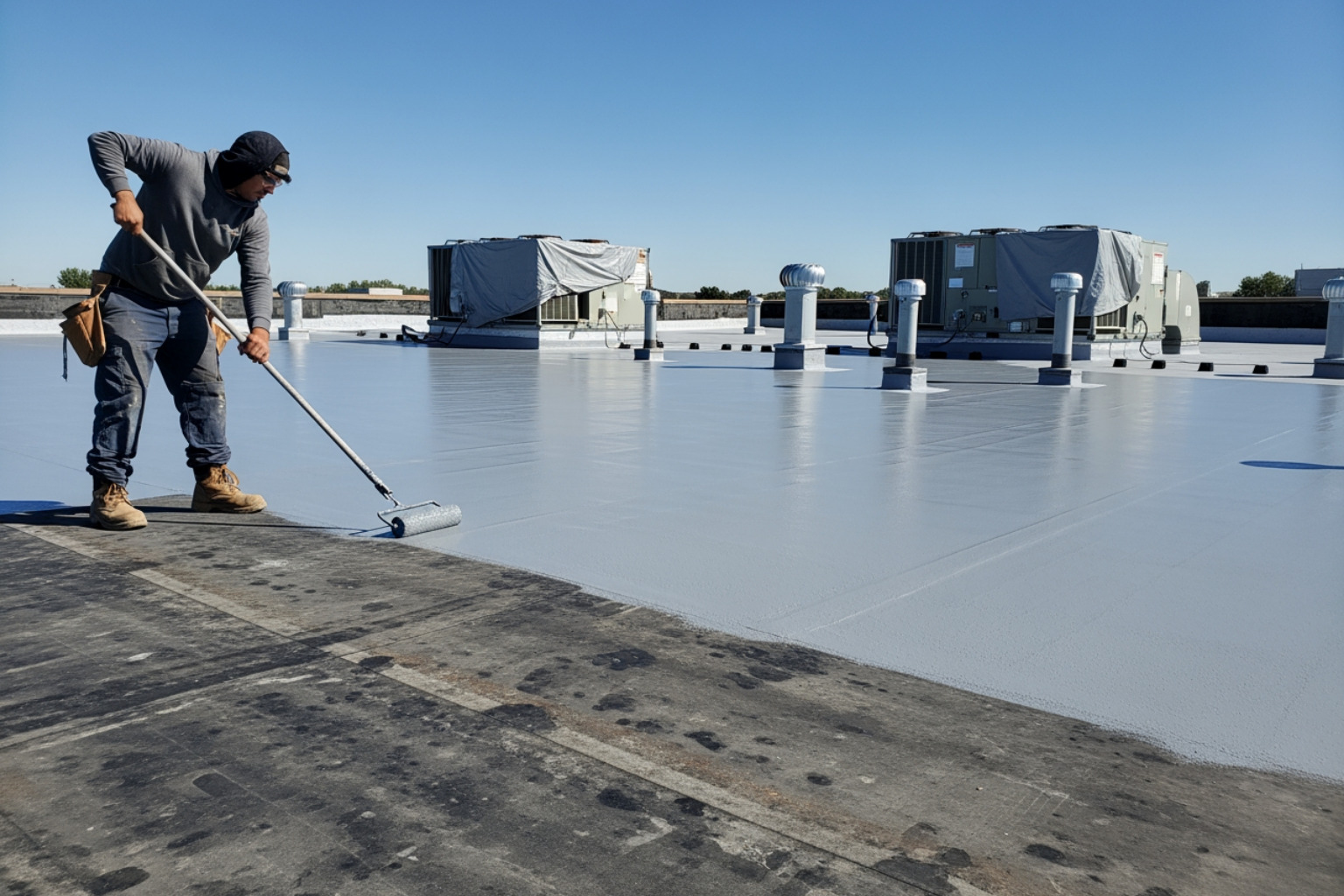
Liquid-applied roofing systems are gaining popularity, especially for existing roofs. These systems involve applying a liquid coating that cures into a seamless, monolithic (one-piece) membrane over the existing roof. This is a fantastic option for roof restoration, as it can extend the life of a structurally sound roof, delaying the need for a costly tear-off and full replacement. Imagine getting years more out of your current roof just by applying a protective coating!
There are several types of liquid-applied coatings:
- Silicone coatings are excellent for areas prone to ponding water and offer great reflectivity.
- Acrylic coatings provide good durability, reflectivity, and waterproofing.
- Urethane coatings are known for their exceptional durability and resistance to impact and foot traffic.
- Fluoropolymer Resin (PVDF) coatings offer flexibility and color stability, sometimes used for decorative elements like company logos.
- SEBS coatings cure into a flexible, rubber-like membrane, capable of handling temperature-induced expansion and contraction.
Then there’s Metal Roofing. While often associated with steep-slope residential applications, metal is a highly durable and long-lasting choice for low-slope commercial applications too, particularly standing seam metal systems. These systems are known for their excellent drainage capabilities, fire resistance, and impressive durability and longevity, often lasting 50 years or more. While the initial investment might be higher, the long-term benefits, including minimal maintenance and superior protection, can make it a very cost-effective solution for your business. We’ve seen metal roofs provide decades of reliable service in our demanding Utah climate.
The Lifecycle of Your Business’s Roof: Maintenance, Repair, and Replacement
A commercial roof is a long-term investment. Proper care is crucial to maximize its lifespan and protect your business from costly disruptions.
Proactive Commercial Roof Maintenance and Inspection
An “out of sight, out of mind” approach to your commercial roof can lead to disaster. Unaddressed minor damage can escalate into a catastrophic failure, disrupting operations, damaging inventory, and risking employee safety. This is why proactive commercial roof maintenance is vital.
We strongly recommend annual inspections and additional checks after any major weather events, especially given Utah’s diverse weather patterns. During these inspections, we’ll look for signs of wear and tear, potential vulnerabilities, and any accumulating debris. Debris removal is crucial, as leaves, branches, or even trash can block drains and lead to standing water, which is a roof’s worst enemy. Regular drain cleaning ensures water flows freely off the roof, preventing ponding that can prematurely age membranes and lead to leaks.
By catching and addressing minor repairs early, we can prevent them from becoming expensive, complex problems. This approach isn’t just about saving money; it’s about preventing major damage that could disrupt your operations, cost you revenue, and potentially void your warranty. Speaking of warranties, keeping detailed documentation for warranties of all maintenance and repairs performed is critical. This ensures your manufacturer and contractor warranties remain valid, protecting your investment for the long haul. Regular maintenance truly is the best way to extend your roof’s lifespan and avoid unpleasant surprises. You can find more information on The Benefits of Regular Roof Inspections and Maintenance.
Roof Replacement vs. Repair: How to Decide
A common question from business owners is whether to repair or replace their roof. It’s a critical financial decision that requires a thorough professional assessment.
First, we need to accurately assess the damage. Is it localized, affecting only a small section, or widespread, indicating systemic failure? The age of your roof is a major factor. A relatively new roof with minor, localized damage is a strong candidate for repair. However, if your roof is nearing the end of its projected lifespan (e.g., 20+ years for many commercial systems) and experiencing frequent issues, a replacement might be the more economical choice in the long run.
Consider the frequency of repairs. If you’re constantly patching leaks or dealing with recurring problems, the cumulative cost of repairs can quickly outweigh the investment in a new roof. This is where a careful cost-benefit analysis comes into play. We’ll help you weigh the cost of continued repairs against the long-term benefits and lifespan of a new system.
Another consideration is whether a tear-off vs. roof-over is appropriate. In some cases, if the existing roof structure is sound and dry, we can install a new roofing system directly over the old one (a “roof-over”). This can save on labor and disposal costs. However, local building codes often limit the number of roof layers, and if the underlying structure is damaged or wet, a full tear-off is absolutely necessary to prevent further issues. Our professional assessment will determine the best approach for your building.
Regardless of the path forward, the importance of a professional Roofing Estimate cannot be overstated. We’ll provide a detailed estimate outlining the scope of work, materials, timeline, and costs, so you know exactly what to expect. And remember, if you ever face unexpected damage, our team is ready to help with Emergency Roof Repair in Salt Lake City Made for Your Roof.
Navigating the Business Side of Roofing for Businesses
Beyond the materials and installation, understanding warranties and selecting the right contractor are critical business decisions that ensure a successful project.
Explaining Commercial Roofing Warranties
When investing in a new commercial roof, the warranty is as important as the materials. It protects your investment and provides peace of mind for years. You will typically encounter two main types of warranties:
First, the manufacturer warranty covers defects in the manufacturing of the roofing membrane or materials. This means if the product itself fails due to a flaw from the factory, the manufacturer will cover the cost of replacement materials. Most commercial roofing systems come with a limited 10-year warranty, but coverage can vary significantly depending on the manufacturer and the system. Some high-performance systems, like certain PVC membranes, can even offer guarantees up to 30 years.
Second, the contractor workmanship warranty covers the installation itself. This ensures that if the roof fails due to faulty installation or errors made by the roofing crew, the contractor will correct the issues. This is why choosing an experienced and reputable contractor is paramount.
For high-value commercial projects, you might also encounter NDL (No Dollar Limit) warranties. These are comprehensive warranties, often offered by manufacturers, that cover both materials and labor with no financial cap, typically extending for a longer period, sometimes up to 35 years. However, all warranties have warranty exclusions, so it’s critical to read the fine print. Common exclusions might include damage from unauthorized repairs, improper maintenance, or acts of God.
Specific coverage details are also important, such as puncture coverage (how well the roof is protected from physical damage) and wind speed coverage (the maximum wind speed the roof is warrantied to withstand). Understanding warranties and why they are important will empower you to ask the right questions and ensure your business is fully protected. We always walk our clients through the specifics of their warranty to eliminate any surprises.
Choosing the Right Partner for your roofing for businesses
Selecting a commercial roofing contractor is a critical business decision. You are entrusting a key asset to a team that will ensure its long-term performance and your peace of mind.
First and foremost, verify their licensing and insurance. We are fully licensed, bonded, and insured, which means we meet all state and local requirements and carry the necessary liability and workers’ compensation coverage to protect both our team and your property. Never work with a contractor who can’t provide current certificates of insurance; it’s too great a risk for your business.
Next, inquire about their safety protocols. Commercial roofing can be hazardous work, and a professional contractor will have rigorous safety programs in place. We adhere strictly to OSHA safety standards to ensure every project is completed safely and efficiently. A commitment to safety protects not only the crew but also your employees and property.
Consider the contractor’s local reputation. In a close-knit community like Salt Lake City, a strong reputation speaks volumes. We’re a 4th-generation, family-owned business with over 65 years of experience, and our commitment to reliability and customer satisfaction is reflected in the trust our local businesses place in us. Ask for references from other commercial clients in the area—we’re always happy to provide them!
Finally, don’t be afraid to ask probing questions. We’ve compiled a list of 5 Questions to Ask Before Hiring a Roofing Contractor that can help you gauge a contractor’s experience, processes, and commitment to quality. Choosing the right partner for your roofing for businesses needs means finding a team that combines expertise, integrity, and a deep understanding of your specific requirements. We pride ourselves on being that trusted partner for businesses across Utah. You can also explore our guide on How to Find a Reliable Roofing Contractor in Your Area.
Frequently Asked Questions about Roofing for Businesses
What is the most popular type of commercial roofing material?
Currently, TPO (Thermoplastic Olefin) is the undisputed market leader for commercial low-slope roofing in both new construction and reroofing projects. It holds a significant share, capturing 40 percent of the new construction market and 30 percent of the reroofing market. Its popularity is largely due to its excellent energy efficiency (especially lighter-colored, reflective membranes), cost-effectiveness, and impressive durability. It’s a versatile choice that performs well in diverse climates like ours here in Utah.
How long does a typical commercial roof last?
The lifespan of a commercial roof can vary quite a bit, depending on the material, installation quality, climate, and how well it’s maintained. However, with proper care, a well-installed commercial roof can last anywhere from 15 to 30+ years. For instance, PVC roofing membranes can offer guarantees up to 30 years, while Built-Up Roofing (BUR) systems, with their multi-layered construction, have a proven track record of over 100 years of use in North America. Metal roofing systems are also renowned for their longevity, often lasting 50 years or more. Regular maintenance and timely repairs are key to maximizing any roof’s lifespan.
Can a new commercial roof be installed over an existing one?
Yes, in many situations, a new commercial roofing system can be installed directly over an existing one. This process, often called a “roof-over” or “recover,” can be a cost-effective solution because it saves on the expense and disruption of tearing off the old roof. However, there are important caveats. Building codes typically limit the number of roof layers that can be installed on a structure, often to one or two roof-overs. More critically, a full tear-off of the old roof is absolutely necessary if the existing roof system is severely damaged, saturated with water, or if the underlying roof deck is compromised. Installing a new roof over a wet or unstable foundation is a recipe for disaster. A qualified and experienced professional roof installation expert from our team will conduct a thorough inspection to determine if a roof-over is a viable and responsible option for your business, ensuring the long-term integrity of your new roof.
Conclusion: Protecting Your Biggest Business Asset
Choosing, installing, and maintaining a commercial roof is a significant undertaking that directly impacts your business’s safety, budget, and operational continuity. By understanding the different systems, prioritizing proactive maintenance, and partnering with a trusted roofing company, you can ensure your investment is protected for decades. With over 65 years of experience, the 4th-generation team at Heaton Bros. Roofing has the expertise to guide you through every step. For a comprehensive evaluation of your commercial roofing needs, explore our professional roofing services.