

Why Understanding Roof Replacement Costs Matters
Replacing your roof is one of the most significant investments you’ll make in your home. It’s a decision that impacts not just your curb appeal, but the long-term safety and structural integrity of your entire property. With the average price for a roof replacement in the United States ranging from $7,000 to $14,500, and many homeowners spending around $11,000, it’s a project that requires careful consideration and budgeting. Here in Utah, the costs can fluctuate even more, typically falling between $4,000 and $20,000, depending on the unique characteristics of your home and the materials you choose.
So, what exactly drives these costs? Several key factors come into play:
- Materials: The type of roofing material is the biggest variable. Standard asphalt shingles might cost between $3-$7 per square foot, while premium options like metal can range from $7-$13 per square foot, and high-end materials like slate can go as high as $15-$30 per square foot.
- Roof Size: Roofs are measured in “squares,” where one square equals 100 square feet. The average American home has a roof size of 20-25 squares, but larger or more complex homes can easily exceed this.
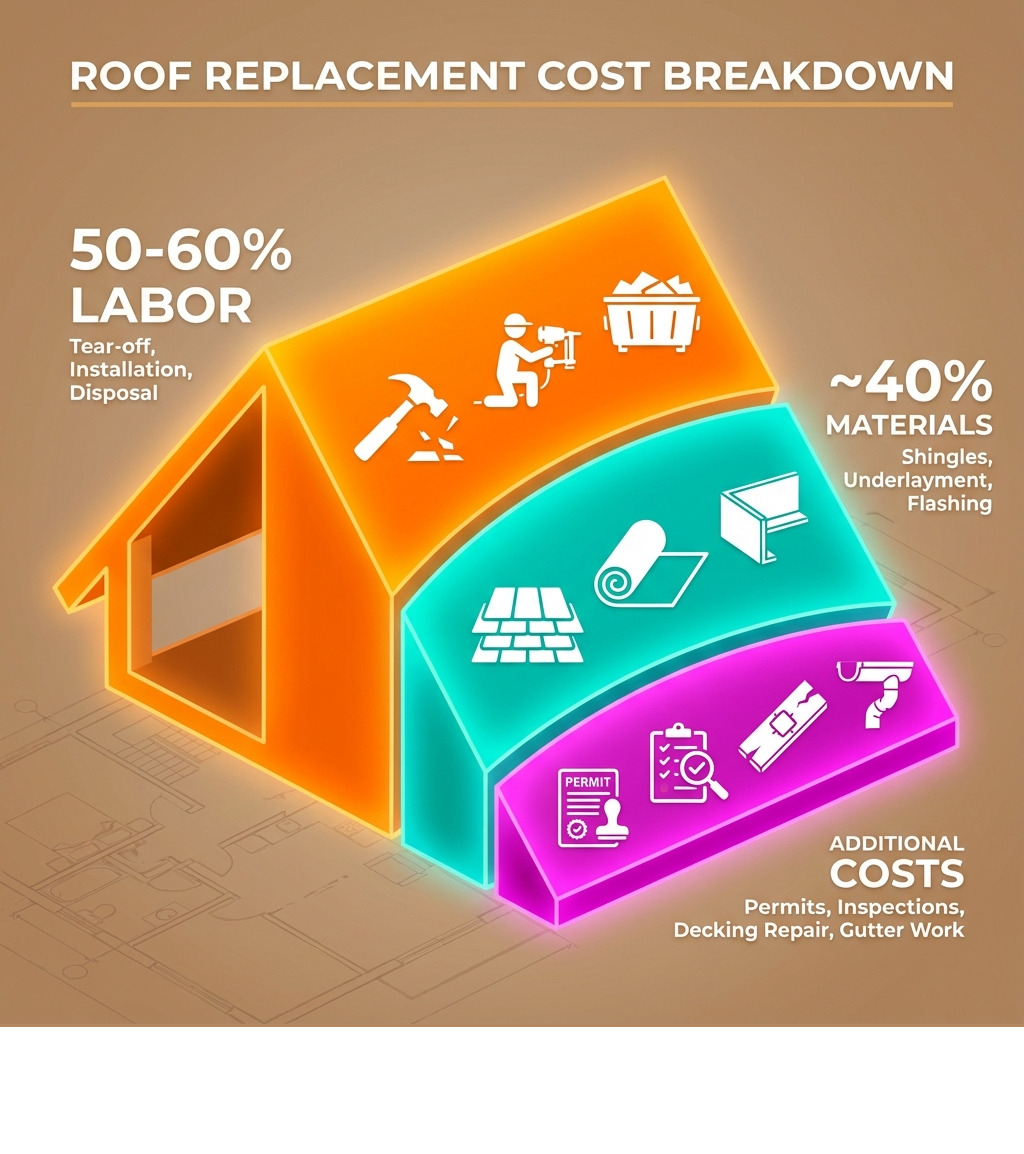
- Labor: The cost of skilled labor is a significant portion of the total price, often accounting for 50-60% of the final bill. In Utah, labor costs can average between $3 and $7 per square foot, depending on the complexity of the job.
- Complexity: A simple, low-pitched gable roof is far less expensive to replace than a steep, multi-faceted roof with numerous dormers, valleys, and skylights. These features require more time, skill, and materials, which can increase the cost by 20-50% or more.
- Location: Where you live matters. Urban areas with a higher cost of living will naturally have higher labor rates. Furthermore, homes in regions prone to extreme weather, like Utah’s “Hail Alley,” may require more durable (and expensive) materials and specialized installation techniques.
Your roof is more than just a covering; it’s your home’s first line of defense against Utah’s challenging climate, from heavy winter snowfalls and ice dams to the intense summer sun and sudden hailstorms. A deteriorating roof is not just a cosmetic issue. It can lead to water leaks, which in turn can cause catastrophic damage to your home’s insulation, drywall, and even its structural framework. Over time, this can lead to mold growth, decreased energy efficiency, and a significant drop in your property’s value.
It’s common for homeowners to receive multiple quotes for a roof replacement that vary by thousands of dollars. This can be confusing, but understanding why those numbers differ is the key to making an informed decision. A low bid might seem tempting, but it could signify subpar materials, inexperienced labor, or a lack of proper insurance. This guide is designed to break down exactly what goes into the cost of a new roof, what factors influence the price, and how you can ensure you’re getting a high-quality, long-lasting roof without overpaying. Whether you’re dealing with unexpected storm damage or planning for the replacement of an aging roof, this information will help you steer the process with confidence.
Breaking Down Roof Replacement Costs by Material
When it comes to replacing your roof, the choice of material is often the biggest factor influencing the average price for roof replacement. Different materials offer varying levels of durability, lifespan, appearance, and energy efficiency, all of which affect long-term value. Choosing the right option for your home, budget, and Utah’s climate is essential.
Below is a simplified comparison of common roofing materials, with prices custom to typical installations in Utah. Actual costs for your home can vary based on roof size, complexity, and specific product choices.
| Roofing Material | Average Cost per Sq. Ft. (Installed in Utah) | Estimated Lifespan | Pros | Cons |
|---|---|---|---|---|
| Asphalt Shingles | $3.50 – $7.50 | 20-30 years | Most affordable option, wide variety of colors and styles, relatively quick to install and easy to repair. | Shorter lifespan than metal, tile, or slate; more prone to wind and hail damage; may require more frequent maintenance and occasional spot repairs. |
| Metal Roofing | $7.00 – $15.00 | 50+ years | Extremely durable and long-lasting, fire-resistant, reflects heat for better energy efficiency; available in panels, shingles, and tiles. | Higher upfront cost than asphalt; can be louder in heavy rain without proper insulation; severe hail may dent thinner panels. |
| Slate Tiles | $15.00 – $30.00 | 50-100+ years | Premium, classic appearance; extremely durable and fireproof; can last a lifetime when properly installed and maintained. | Very heavy and may require structural reinforcement; installation is complex and expensive; tiles can break if walked on incorrectly. |
| Wood Shakes | $6.00 – $16.00 | 30-50 years | Natural, rustic curb appeal; provides good insulation and blends well with many architectural styles. | Higher maintenance needs; susceptible to rot, mold, and insects; higher fire risk, and not permitted in all areas due to local building and fire codes. |
| Tile (Clay/Concrete) | $10.00 – $25.00 | 50-100+ years | Extremely durable, fireproof, and resistant to rot and insects; excellent for hot, sunny climates like Utah summers. | Very heavy, often requiring structural reinforcement; tiles can crack if walked on; higher initial material and installation costs. |
| Composite Shingles | $8.00 – $15.00 | 30-50 years | Designed to mimic slate or wood shakes at a lower cost and weight; highly durable, low maintenance, often made with recycled materials. | Higher upfront cost than standard asphalt shingles; performance and appearance can vary significantly between manufacturers and product lines. |
More info about our roofing materials.
How Materials Impact the Average Price for Roof Replacement
The material you choose has a direct impact on both the initial cost of your project and the long-term value you receive. According to the National Roofing Contractors Association, proper material selection based on your local climate and home structure is crucial for maximizing your roof’s lifespan and performance.
- 3-tab asphalt shingles are typically the most budget-friendly option. They are common on starter homes and rental properties, with a lower upfront cost but a shorter lifespan. These basic shingles work well for homeowners who need an economical solution but should be aware they may need replacement sooner than premium options.
- Architectural (dimensional) shingles cost more than basic 3-tab shingles but offer better wind resistance, thicker profiles, and a longer service life. For many Utah homeowners, they strike the best balance between price and performance, providing improved curb appeal and durability.
- Metal roofing requires a higher investment at the start but can last two to three times longer than asphalt. Its energy efficiency can also lower summer cooling costs significantly. You can learn more in The Pros and Cons of Metal Roofing for Your Home.
- Slate tiles are among the most expensive options but provide a timeless, upscale look and exceptional longevity. For the right home, slate can be a once-in-a-lifetime roof that adds substantial value to historic or luxury properties.
- Wood shakes offer a warm, natural appearance that many homeowners love, especially in mountain or cabin-style settings. However, they typically require more maintenance, and fire regulations may limit where they can be used in Utah.
- Concrete and clay tiles are very durable and perform well in Utah’s intense sun, but their weight means your roof structure must be able to support them, which can add to project cost. These materials are particularly popular in southwestern architectural styles.
- Composite shingles are engineered to mimic the look of premium materials (like slate or cedar) without the weight or fragility. They can provide a high-end appearance with lower maintenance needs and often come with impressive warranty coverage.
Lifespan and Long-Term Value
When you are comparing the average price for roof replacement, it is important to think beyond the initial quote and consider cost per year of service, ongoing maintenance, and potential energy savings.
- Cost vs. lifespan: A less expensive asphalt roof that lasts 20 years may actually cost more per year than a metal or tile roof that lasts 50 years or more. National resources like Remodeling Magazine’s Cost vs. Value Report show that quality roofing upgrades consistently offer solid returns when you sell your home.
- Maintenance needs: Basic asphalt shingles may need occasional repairs due to wind or hail, while metal or composite systems tend to require less frequent attention. Wood shakes, on the other hand, can need more care to manage moisture and pest issues.
- Energy efficiency: Reflective metal roofs and properly ventilated, well-insulated roofing systems can help keep Utah homes cooler in summer and reduce ice dam issues in winter. Improving your roof system can contribute to lower utility bills over time. Learn more in Home Energy Efficiency Starts with Your Roof.
A new roof is not just a line item in your home budget; it is a long-term investment in protection, comfort, and resale value. For a deeper look at why roofing often delivers excellent long-term value, see Why a New Roof is the Most Important Investment for Your Home.