

Why Roof Shingle Color Is One of the Biggest Decisions You’ll Make for Your Home
Choosing the right roof shingle color is more than a style preference — it shapes how your entire home looks, affects your energy bills, and can even influence resale value for the next 20 to 30 years.
Here’s a quick overview to help you choose:
| Factor | What to Consider |
|---|---|
| Home exterior | Match warm siding tones with warm shingles; cool tones with cool shingles |
| HOA rules | Check approved color lists before buying anything |
| Climate | Light colors reflect heat; dark colors absorb it |
| Resale plans | Neutral colors (charcoal, gray, weathered wood) appeal to more buyers |
| Visibility | Your roof covers up to 40–60% of your home’s visible exterior |
The stakes are real. According to research by Today’s Homeowner, 40% of U.S. homeowners expect to need a roof replacement within the next five years. That’s a lot of homeowners about to make a decision they’ll live with for decades.
And yet, most people spend more time picking a paint color for a single room.
Your roof deserves the same careful thought — maybe more.
At Heaton Bros. Roofing, we’ve helped Salt Lake City-area homeowners navigate every aspect of roof shingle color selection, from matching the right tone to their siding to making sure their choice holds up under Utah’s intense summer sun and snowy winters. We’re here to make sure you get it right the first time.
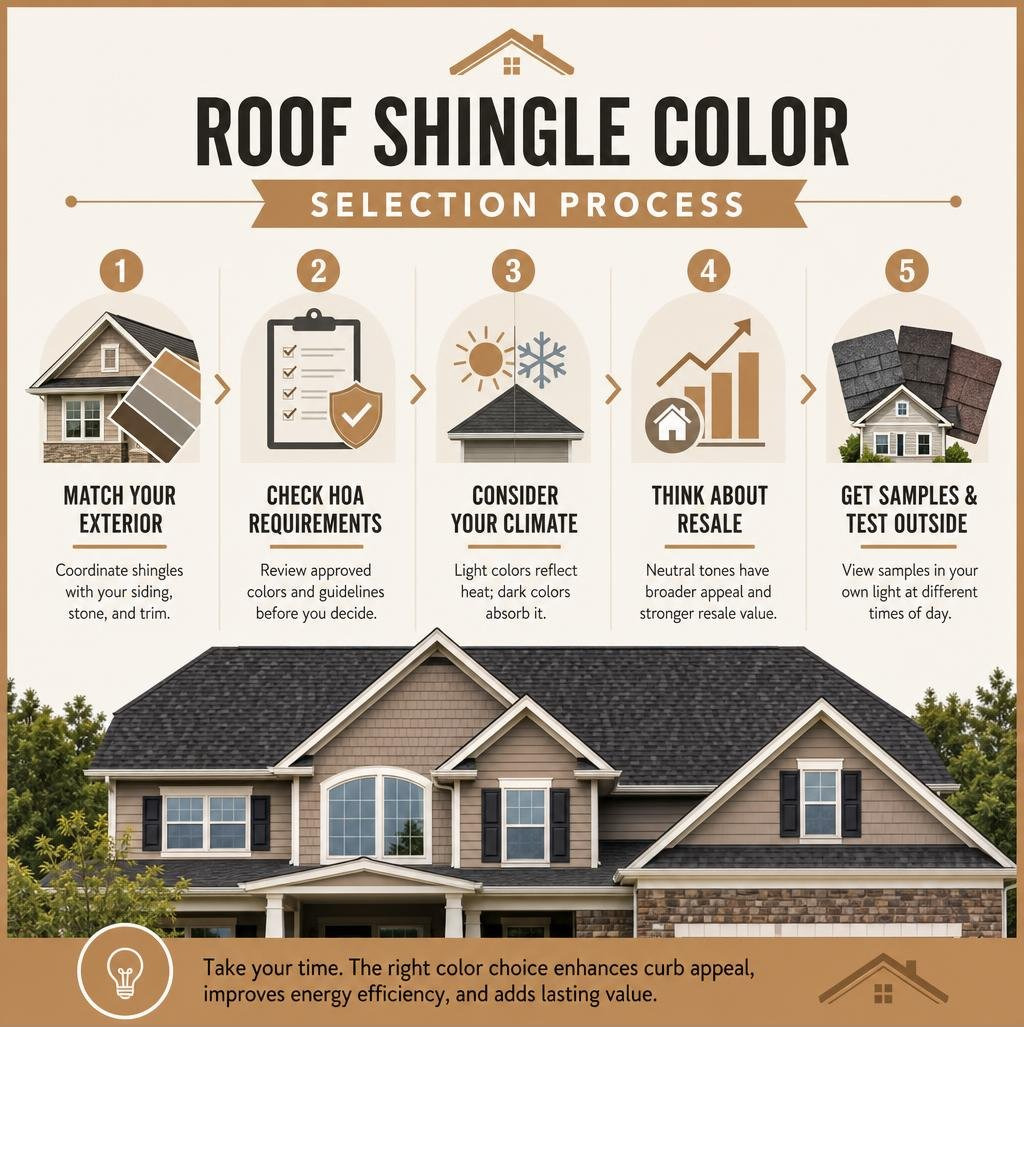
Roof shingle color terms simplified:
Key Factors in Selecting Your Roof Shingle Color

When you begin looking at shingle boards, the sheer number of options can feel overwhelming. To cut through the noise, we recommend starting with a few foundational design principles. Selecting a new roof isn’t just about picking your favorite color from a brochure; it’s about understanding how that color interacts with the permanent fixtures of your home’s exterior.
First, identify the unchangeable elements of your home. Siding can be painted, but brick, stone, and concrete mortar are permanent. Your roof shingle color should complement these fixed features.
A great rule of thumb is to coordinate your color temperatures. Exterior palettes generally fall into warm or cool categories:
- Warm-toned homes (featuring cream, beige, yellow, or warm red brick) look best paired with warm shingle colors like rich browns, tans, or earthy wood blends.
- Cool-toned homes (featuring light gray, blue, white, or cool stone) harmonize beautifully with charcoal, slate gray, and black shingles.
Contrast is another vital design element. If your siding is a light cream, choosing a very light tan roof can make your home look flat and washed out. Conversely, pairing light siding with a dark gray or charcoal roof anchors the structure, framing your home and making architectural details like gables and trim pop.
For a deeper dive into coordinating these design elements, check out our guide on 5 Things to Consider When Choosing a Roof Shingle Color.
HOA Rules and Neighborhood Standards
Before you fall in love with a specific designer shade, your first official step must be checking your local Homeowners Association (HOA) guidelines. Many master-planned communities across the Wasatch Front—from South Jordan and Draper to Alpine and Saratoga Springs—maintain strict Covenants, Conditions, and Restrictions (CC&Rs).
HOAs often enforce a pre-approved list of manufacturer color codes to maintain neighborhood harmony and protect overall property values. Installing an unapproved color can lead to costly fines or, in worst-case scenarios, being forced to tear off a brand-new roof at your own expense. Take a walk or drive around your neighborhood. See what colors your neighbors have installed. Choosing a color that fits the local aesthetic ensures your home looks cohesive while still retaining its individual curb appeal.
Viewing Physical Samples vs. Digital Screens
It is tempting to make a final decision based on website images or online visualizers. However, relying solely on screens is a recipe for disappointment. Laptop screens, tablets, and smartphones render colors differently based on calibration, backlight, and screen quality. Furthermore, asphalt shingles have a coarse, highly textured surface covered in ceramic granules. This texture means that light bounces off them in complex ways that a flat digital image simply cannot replicate.
This is especially true here in Utah. Our high-altitude sunlight along the Wasatch Front is incredibly intense. Under the bright midday sun in cities like Park City, Bountiful, or Herriman, shingle colors will look much lighter and more washed out than they do in a dimly lit distributor showroom. A dark charcoal that looks deep and moody indoors might look like a medium gray on your roof at noon.
We always advise our customers to request physical, full-size shingle samples. Place these samples outside against your home’s siding. View them at different times of day—in the soft morning light, under direct afternoon sun, and on an overcast day. This simple step ensures there are no surprises once the crew finishes the installation. For more professional tips on evaluating materials, refer to the Roof Color Guide: Choose the Best Shingle Color | Owens Corning Roofing.
Popular Shingle Colors and Exterior Pairings

Modern manufacturing has moved far beyond the flat, solid colors of the past. Today’s architectural shingles are engineered with multi-toned color blends and shadow lines that add depth, texture, and visual interest to your roof. Choosing the right blend can transform a standard home into the envy of the block. If you are exploring your options, start by reading The Complete Guide to Roofing Materials to understand how different shingle types showcase these colors.
Popular Roof Shingle Color Options and Siding Pairings
While trends come and go, a few classic shingle colors remain incredibly popular across Utah due to their versatility and timeless appeal:
- Charcoal & Dark Gray: These are the undisputed champions of modern curb appeal. Charcoal shingles provide a crisp, clean contrast that works beautifully with modern farmhouse designs, light gray siding, and painted white brick. To understand why this shade continues to dominate the market, read our breakdown on Why Charcoal Gray Shingles Are Topping the Charts.
- Weathered Wood: This is widely considered the most popular shingle color in North America. Weathered wood is a complex, warm neutral blend of brown, gray, and gold tones. It mimics the natural, rustic look of real cedar shakes while offering the durability of asphalt. It is incredibly forgiving and pairs seamlessly with beige, tan, green, and warm stone exteriors.
- Pewter & Estate Gray: If you want a neutral gray that isn’t as dark or intense as charcoal, mid-toned grays are excellent “neutral heroes.” They provide a soft, elegant backdrop that allows your siding and landscaping to take center stage. Discover how to use these shades effectively in our article on Why Estate Gray Is the Neutral Hero of Brick Homes.
Matching Shingles with Red Brick and Stone
Brick and stone homes have built-in character, but matching them with the wrong roof shingle color can cause a major visual clash.
If your home features classic red brick, you want a shingle color that grounds the warm, vibrant tones of the clay. Dark, dramatic colors like black or charcoal create a stunning, high-contrast framing effect that makes red brick look incredibly stately and polished. You can read more about this classic design choice in Why Black Shingles Make Your Red Brick House Pop.
On the other hand, if your brick has multi-colored variations or if you prefer a softer, more traditional look, warm earth tones like weathered wood, deep browns, or blended grays are the way to go. These colors harmonize with the natural mortar lines and prevent the roof from looking too heavy. For a complete guide on navigating these choices, explore our tips on How to Pick the Best Shingle Color for Red Brick.
Bold and Unique Color Trends
For homeowners looking to break away from standard grays and browns, manufacturers are introducing sophisticated, bold palettes. A prime example is the rise of rich, warm tones like Merlot—which was celebrated as a recent Shingle Color of the Year. This color blend features deep crimson, oaky brown, spiced sienna, and plum undertones. It offers a luxurious, warming alternative that pairs beautifully with cream siding, dark natural wood accents, or traditional brick.
You can read the official industry announcement details here: Owens Corning Toasts the 2025 Shingle Color of the Year: Merlot.
While bold colors like burgundy, forest green, or deep blue-gray can give your home an upscale, custom feel, they must be chosen with care. If you’re wondering whether a warm, reddish roof is right for your property, read our balanced analysis: Should You Use Brownish-Red Roof Shingles.
Performance, Climate, and Value Considerations
Your roof is your home’s primary shield against the elements. While choosing a color is highly creative, you must also weigh how your selection impacts your home’s thermal performance, local climate adaptation, and long-term financial value. To learn how to weigh these factors across different brands, see our guide on How to Compare Different Roofing Options.
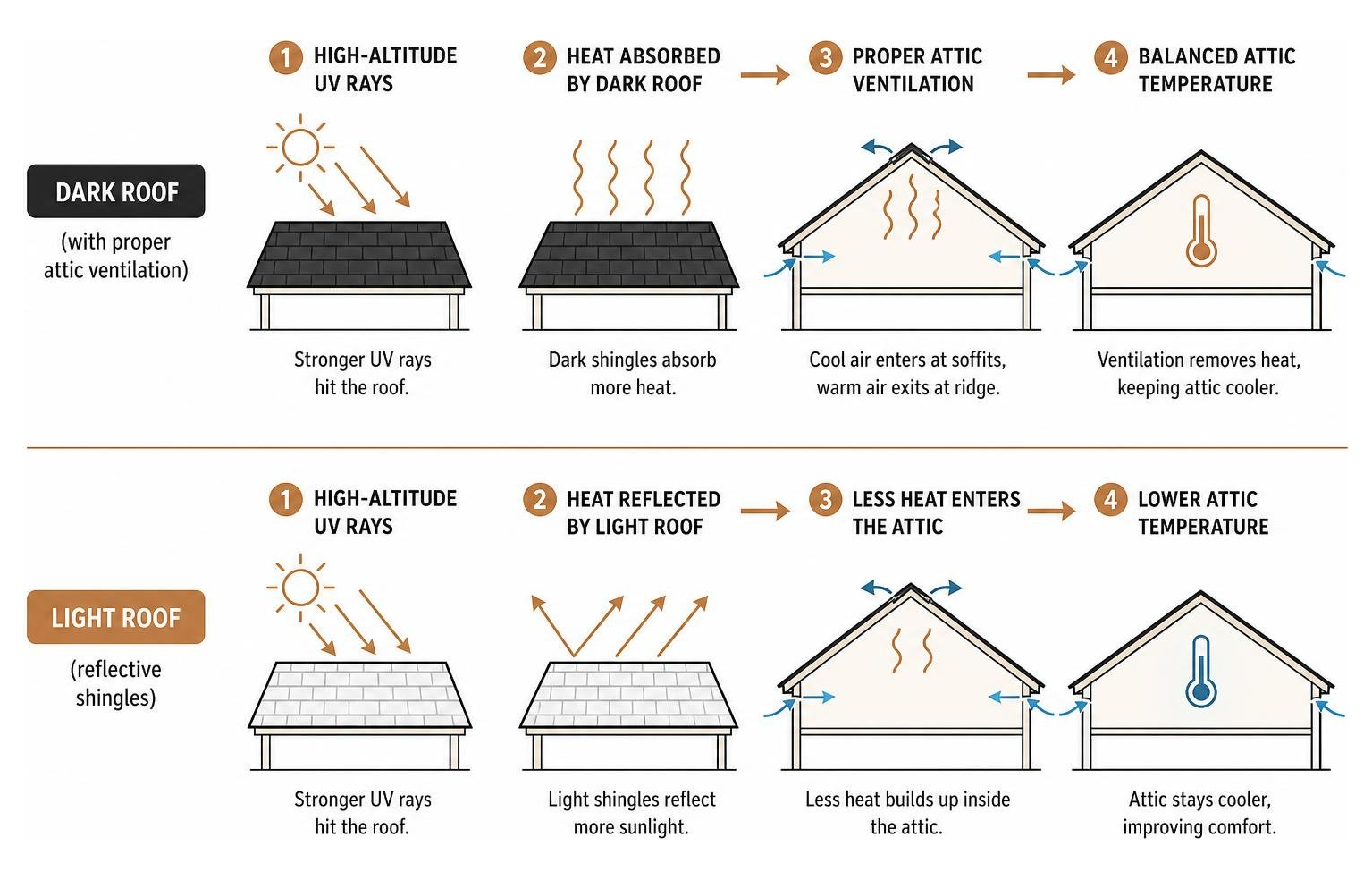
How Roof Shingle Color Affects Home Energy Efficiency
It is a well-known scientific fact that dark colors absorb heat while light colors reflect it. In the roofing industry, this is measured using three key metrics:
- Solar Reflectance: The fraction of solar energy reflected by the roof.
- Thermal Emittance: The relative ability of the roof surface to radiate absorbed heat.
- Solar Reflectance Index (SRI): A value incorporating both reflectance and emittance.
Highly reflective “cool shingles” are designed with specialized granules that bounce solar radiation back into the atmosphere, helping to keep your attic cooler and reduce summer air conditioning loads. If you live in a region with year-round hot weather, choosing a light-colored or cool-rated shingle is highly beneficial. For a broader look at how these efficiency standards work, read the guide on How to choose the best shingle roof color for your home | Iko.
Regional Trends and Utah Climate Factors
In Utah, our climate is defined by extreme seasonal swings. We experience blazing hot summer days along the Wasatch Front and heavy, freezing snow loads in the winters. Because of this four-season climate, the energy efficiency debate between light and dark shingles is highly nuanced.
While light shingles reflect summer heat, dark shingles can actually be beneficial during cold Utah winters by absorbing solar heat, which helps melt snow accumulation and ice dams on your roof. Because these two factors tend to offset each other, the net energy difference between light and dark roofs is relatively minor in our region.
Instead of compromising your home’s design for a super-light shingle, the best approach is to focus on proper attic ventilation and insulation. A well-engineered ventilation system—featuring balanced intake and exhaust vents—will keep your attic cool in the summer and dry in the winter, regardless of your shingle color. To see what styles are currently leading the market locally, check out Roofing Trends for Modern Utah Homes in 2026.
Impact of Shingle Color on Resale Value
An architectural shingle roof generally lasts 20 to 30 years. Because a roof is a long-term investment, your color choice can directly impact your home’s marketability if you plan to sell in the future.
If you anticipate moving within the next five to ten years, we highly recommend sticking to neutral, widely appealing colors like charcoal, weathered wood, or medium gray. Neutral roofs give potential buyers peace of mind because they coordinate with almost any paint color. If a buyer wants to repaint the house blue, green, or white, a neutral roof will accommodate the change. A highly customized, bold color (like a bright red or forest green) might limit your buyer pool, as changing a roof is a major expense most buyers want to avoid immediately after moving in.
How to Preview Shingle Colors Digitally
To help bridge the gap between imagination and reality, modern manufacturers have developed incredible digital tools. These online visualizers allow you to test out dozens of color combinations with the click of a button.
Most platforms allow you to either use a pre-loaded model home similar to your architectural style or upload a high-resolution photo of your actual house. Once uploaded, the software uses AI to map your roofline, allowing you to digitally “apply” different shingle lines, colors, and siding options.
Using these tools is an excellent way to narrow down your choices from twenty possibilities to a shortlist of two or three favorites. It helps you visualize how a dramatic change—like switching from light brown to deep charcoal—will alter your home’s entire aesthetic. To start experimenting with different color palettes on your own home, try out the Shingle Color Studio | Preview Owens Corning Colors on Your Home | RoofDog.
Frequently Asked Questions About Roof Shingles
What is the most popular roof shingle color?
The most popular shingle colors nationwide and across Utah are Weathered Wood and Charcoal. Weathered wood is favored for its warm, natural, wood-shake look that complements earthy siding, brick, and stone. Charcoal provides a clean, high-contrast, modern aesthetic that works perfectly with white, gray, and contemporary home designs.
Do dark shingles make a house hotter?
While dark shingles do absorb more thermal radiation from the sun, they will not make your living space noticeably hotter if your home has proper attic ventilation and adequate insulation. Ensure your roofing contractor installs a balanced system of ridge vents and soffit vents to allow heat to escape naturally.
How do I get approved for a new shingle color by my HOA?
To get approved, consult your HOA’s CC&R documents to find their architectural guidelines and approved shingle list. Fill out their architectural design application, attach the manufacturer’s color brochure, and provide a physical sample of the shingle if requested. Always wait for written approval before scheduling your installation.
Conclusion
Choosing your roof shingle color is a major milestone in your home improvement journey. It is a decision that balances personal style, architectural harmony, local HOA rules, and long-term resale value. By taking the time to match your home’s color temperature, checking neighborhood standards, and viewing physical samples in Utah’s unique natural light, you can make a choice you will love for decades.
At Heaton Bros. Roofing, we are proud to be a 4th-generation, family-owned business with over 65 years of experience serving Salt Lake City and the surrounding Wasatch Front. From South Jordan to Bountiful, and Ogden to Provo, we pride ourselves on providing reliable, affordable, and high-quality roofing solutions.
Ready to see how different shingle colors look on your home? Schedule a professional roofing consultation with us today, and let our family help protect yours!