
Why New Construction Roofing Sets the Foundation for Your Dream Home

New construction roofing is the process of installing a completely new roof system on a building being constructed from the ground up. Unlike roof replacement, it involves designing and integrating the roof into the overall structure from the very beginning—before walls go up and before the first shingle is laid.
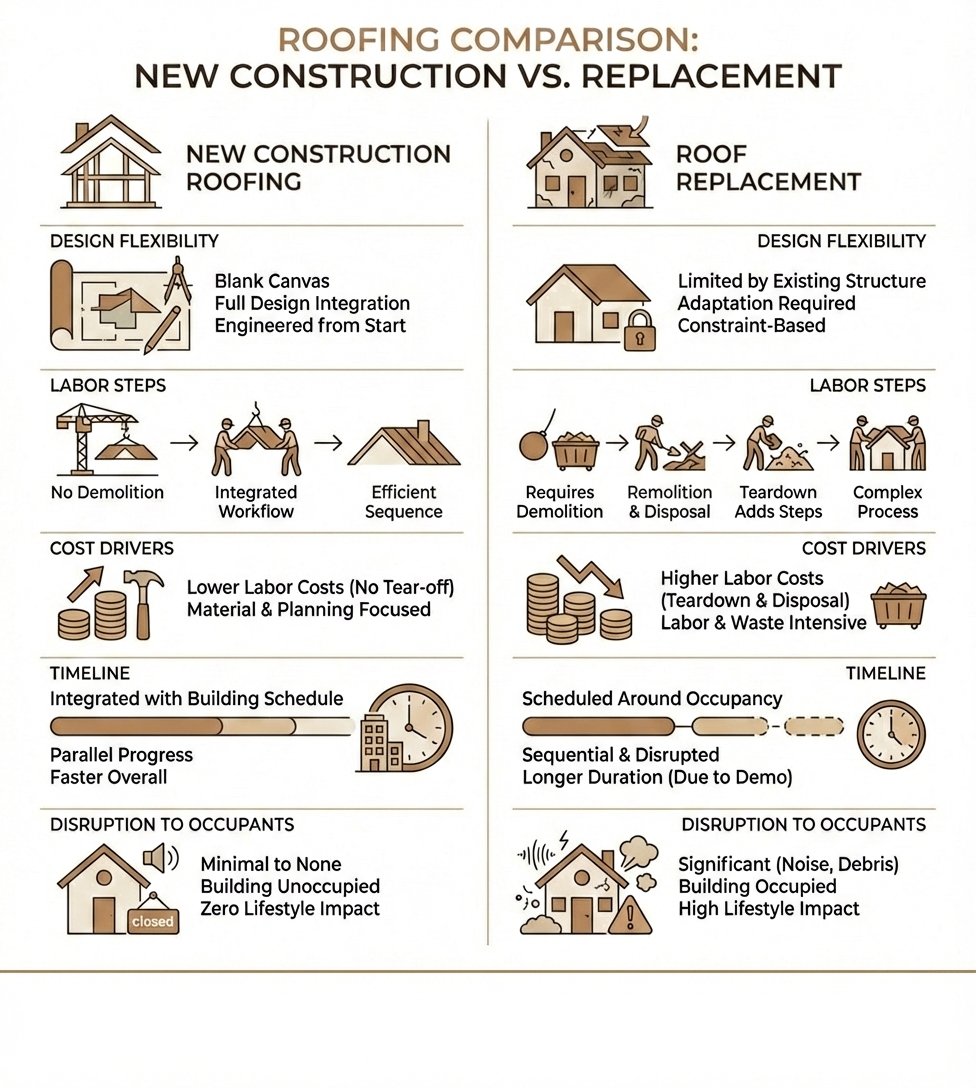
Key differences between new construction roofing and roof replacement:
- New Construction – Blank canvas with full design flexibility, no demolition required, typically lower labor costs, integrated with building timeline
- Roof Replacement – Limited by existing structure, requires removal and disposal of old materials, higher labor costs due to teardown, scheduled around occupied building
Building a new home or commercial property is exciting. It’s your chance to create something perfect from scratch. And nothing protects that investment quite like a properly designed and installed roof.
The roof isn’t just the finishing touch on your building—it’s your first line of defense against Utah’s intense sun, heavy winter snow, and unpredictable weather patterns. Get it right from the start, and you’ll enjoy decades of worry-free protection. Rush through the planning or cut corners on materials, and you’ll face expensive repairs before your building even celebrates its first birthday.
New construction roofing requires more planning than replacement projects. You’re not just swapping old shingles for new ones. You’re coordinating with architects, framers, and inspectors to ensure every layer—from the roof deck to the final cap—works together as a complete system.
This guide walks you through the entire new construction roofing process. You’ll learn when to bring in a roofing contractor, how to choose materials that match Utah’s climate, what to expect during installation, and why professional expertise matters more than you might think.
Whether you’re building your dream home in Salt Lake City or adding a new wing to your business, understanding these fundamentals will help you make smart decisions that protect your investment for decades to come.
Understanding New Construction Roofing vs. Roof Replacement
When you’re starting from scratch, the roof design becomes part of the building’s structure—engineered for local snow loads, wind, and drainage from day one. That’s different from replacement, where we adapt to the existing frame and deck.
- New construction roofing: Designed into the blueprint. We coordinate with your architect and builder, ensure code compliance, and select materials that your framing is engineered to support.
- Roof replacement: We remove the old roof, inspect and repair the deck, then install new materials. It includes demolition, disposal, and extra steps to protect occupants and landscaping.
If you want a deeper dive into what makes new-build roofing unique, explore our overview in All About New Construction Roofing.
New Construction vs. Replacement Costs (At-a-Glance)
Costs vary by roof size, pitch, complexity, and material selection, but here’s how the categories typically compare across the Wasatch Front.
| Cost Category | New Construction (typical) | Roof Replacement (typical) |
|---|---|---|
| Labor | Often lower: $1.50–$3.00/sq ft (no tear-off) | Higher: $2.50–$4.00/sq ft (tear-off, disposal) |
| Materials | Similar ranges (see below) | Similar ranges |
| Demolition/Disposal | Not applicable | Additional $1,000–$2,000+ depending on size |
| Permits | Required; coordinated with GC | Required; varies by municipality |
| Typical Home Roof Total | Commonly within $8,000–$15,000, depending on size/complexity | Often higher due to tear-off and disposal |
Reference ranges: asphalt shingles at roughly $3.50–$5.50/sq ft; metal roofing about $7.00–$20.00/sq ft; tile often $6.00–$18.00/sq ft, per national cost data such as the HomeAdvisor Roofing Cost Guide.
Note: Utah’s busy construction market continues to grow with the U.S. construction industry projected to reach $1.79 trillion in 2024, up 6.1%. In 2023 alone, new residential construction put in place totaled $673.7 billion. Translation: schedules, crews, and materials are in high demand—planning early pays off.
The New Construction Roofing Process: From Framing to Finish
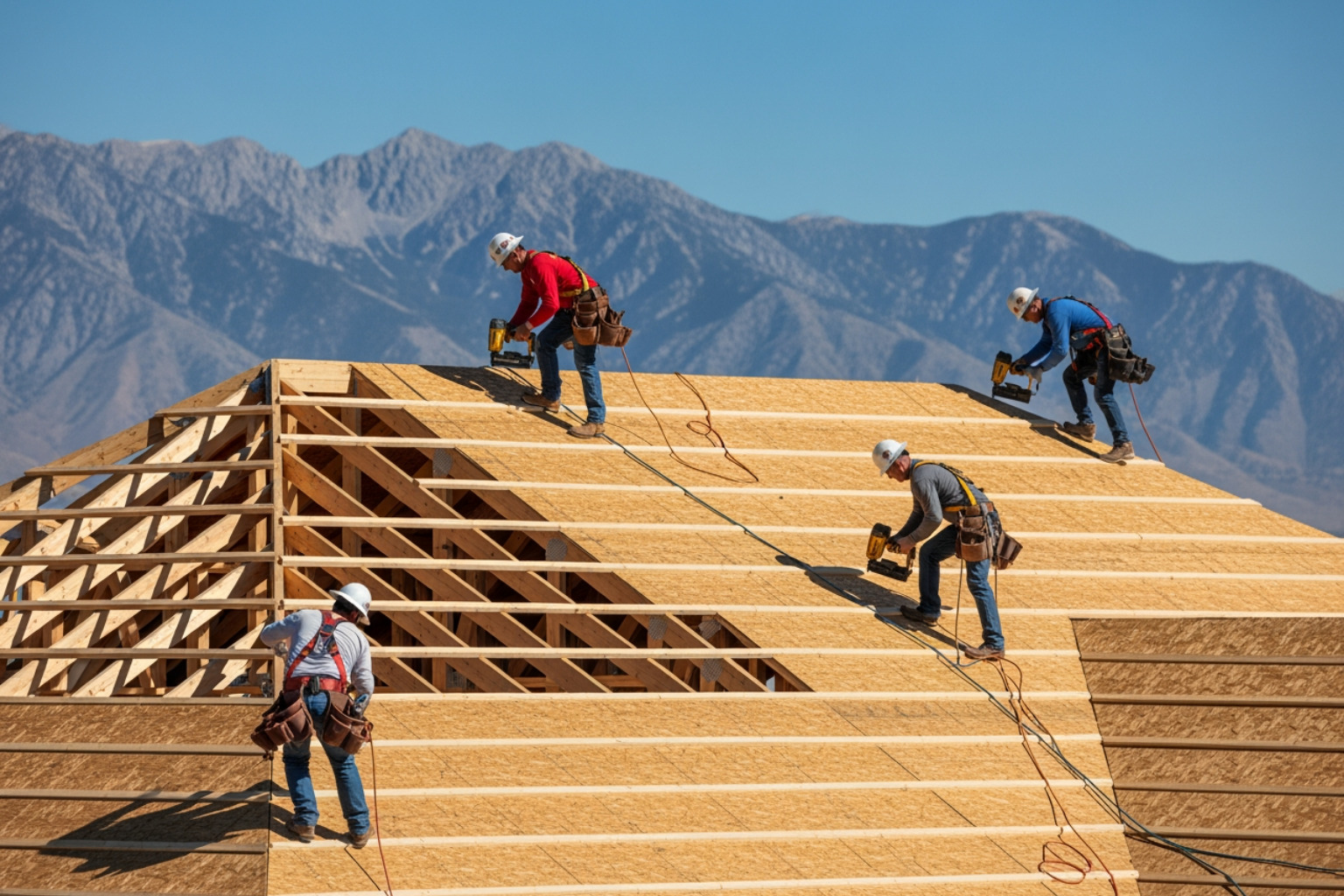
A successful new build roof is equal parts teamwork and timing. We coordinate with your GC, framers, and inspectors to hit milestones and protect the structure between stages—especially important with Utah’s sun/snow/freezing cycles.
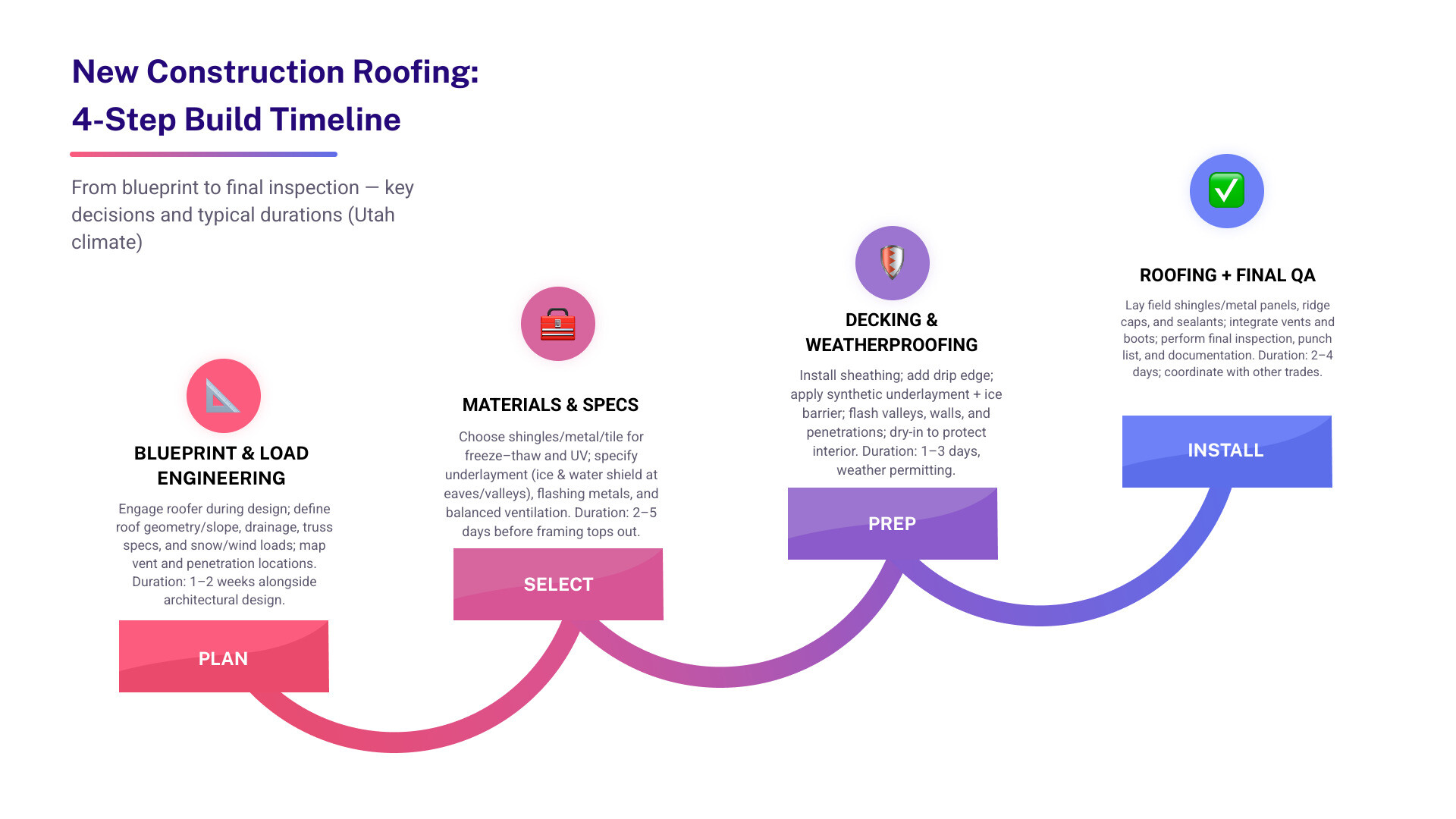
Stage 1: Planning and Design
Early involvement makes everything easier. Here’s how we set up your project for success:
- Blueprint review: We check roof geometry, pitch, drainage paths, ventilation design, and penetrations (vents, chimneys, skylights, solar arrays).
- Structural alignment: We confirm the framing and sheathing specified are appropriate for your chosen material. Heavy systems (like concrete tile) require engineered support.
- Material selection: We match product to your goals—longevity, budget, snow-shedding, fire rating, style—and Utah’s climate. See our guidance on Professional Roof Installation.
- Scheduling: We align with framing completion, inspections, and other trades (HVAC, solar, masons) to reduce delays and protect the dried-in structure.
A note on codes: We install to local building codes across Salt Lake City, Park City, Bountiful, Ogden, Provo, and beyond. That includes ice dam protection in eave areas, proper ventilation, and approved underlayments.
Stage 2: Structural Prep and Installation
- Decking and sheathing: We ensure the deck is square, solid, and properly fastened—your roof is only as good as what’s underneath it.
- Underlayment: We install high-quality synthetic underlayment and ice/water shield in critical areas (eaves, valleys, penetrations). This is your first waterproofing line.
- Flashing and edge metals: Chimneys, skylights, roof-to-wall intersections, valleys, and the drip edge get precision-formed flashing. Done right, flashing is the hero that prevents leaks.
- Roofing system install: Shingles, standing seam panels, single-ply membranes—each system has specific fastening, overlap, and ventilation requirements. We follow manufacturer specs to the letter to protect your warranty.
- Ventilation and insulation: In attics, balanced intake (soffits) and exhaust (ridge) keep your roof cooler in summer and drier in winter. Proper ventilation reduces ice dams and extends roof life.
Want a step-by-step feel? See Understanding the Roof Installation Process: What to Expect.
Most residential installations, depending on size and weather, take from a day to about a week once framing and inspections are complete.
Mitigating Common Challenges in new construction roofing
- Weather delays: Utah can package all four seasons into a week. We watch the forecast and protect partially completed areas with proper dry-in techniques and staging.
- Coordinating trades: We align with masons (chimneys), electricians (solar, conduit), and HVAC (flues) to sequence penetrations and flashing correctly.
- Framing issues: Improper sheathing nailing, misaligned trusses, or lack of backing at eaves can lead to waves and poor fastening. We flag these early for correction.
- Permits and inspections: We keep documentation clean and follow best practices recommended by the National Roofing Contractors Association and envelope guidance from the WBDG Roofing Systems.
Choosing the Right Materials for Your New Build
Choosing materials is where function meets style. Along the Wasatch Front, roofs must handle high UV at elevation, heavy snow (especially in the benches and Park City), and big temperature swings. Consider:
- Durability and maintenance
- Aesthetics and neighborhood context
- Energy performance and ventilation
- Budget and long-term value
- Manufacturer warranties and installer credentials
For a structured approach, see our guide on How to Compare Different Roofing Options.
Popular Residential Roofing Materials
- Asphalt shingles: Today’s asphalt shingles are cost-effective, come in many colors, and can include algae resistance. Architectural (dimensional) shingles add depth and wind performance over basic three-tab.
- Cost ballparks: $3.50–$5.50 per sq ft for materials
- Lifespan: Typically 20–30 years with proper installation and ventilation
- Architectural shingles: Thicker, layered shingles with better aesthetics and improved wind/impact performance. These are a sweet spot for many Utah homes looking for curb appeal without a big jump in cost.
- Metal roofing: Standing seam metal is excellent for snow-shedding, longevity (often 40–50+ years), and fire resistance. It’s lightweight and green (highly recyclable), with modern colors and profiles. See our page on Metal Roofing.
- Cost ballparks: $7.00–$20.00 per sq ft for materials, depending on profile and metal type
- Tile and composites: Tile (concrete/composite) offers distinctive style and long life but requires structural design for weight. Composite slate and shakes deliver premium looks at lower weight than natural alternatives.
- Manufacturer guidance: Material and warranty options vary—explore choices and warranty tiers through Owens Corning Roofing Owens Corning Roofing– Information on material options and warranties.National Roofing Contractors Association– Guidelines for roofing practices and material insights.HomeAdvisor Roofing Cost Guide– Average costs for roofing materials and labor..
Pro tip: Ask about impact-rated (Class 4) shingles if hail is a concern in your area. Some insurers offer discounts for these upgrades.
Commercial vs. Residential Projects
- Roof shape: Residential roofs are typically pitched with shingles or metal. Commercial roofs in Utah are often low-slope, favoring single-ply membranes.
- Materials: TPO, PVC, and EPDM are common single-ply systems on low-slope commercial buildings. Modified bitumen or built-up roofing (BUR) may fit certain designs.
- Performance goals: Commercial roofs must accommodate rooftop equipment, walkways, and traffic, with careful attention to drainage, membranes, and flashings. Snow loads and ponding water mitigation are critical.
- Codes and details: Commercial projects usually involve more complex detailing at curbs, penetrations, and parapets—where the experience of a seasoned team really matters.
For building-envelope integration and commercial system solutions, consider resources like Tremco Construction Products Group.
Maximizing Energy Efficiency
Energy savings start at the roof:
- Cool roof options: Light or reflective shingles and metal finishes can reduce heat gain. In sunny, high-altitude Utah, reflectivity helps in summer.
- Ventilation: Balanced attic ventilation (intake at soffits, exhaust at ridge) prevents heat and moisture buildup, which protects shingles and insulation.
- Insulation: Adequate attic insulation and proper air sealing improve comfort and reduce energy bills. Learn more in Home Energy Efficiency Starts with Your Roof and explore Attic Insulation.
- Daylighting and skylights: Properly flashed skylights and daylighting strategies reduce artificial lighting needs and boost comfort when designed into the roof system from the start.
Why Professional Installation is Non-Negotiable for New Construction Roofing
A great material can’t save a bad installation. New builds require careful sequencing, pristine flashing work, and precise ventilation to perform through Utah winters and summers. Professional installation also protects your warranty and your schedule.
- Safety and quality: Experienced crews use fall protection and follow best practices that prevent leaks, blow-offs, and premature aging.
- Manufacturer compliance: To secure stronger warranties, manufacturers often require certified installers and strict adherence to their specifications.
- Long-term value: Quality installation prevents costly callbacks and damage to new interiors. See why it pays in Why Professional Roof Installation Saves You Money in the Long Run.
The Value of a Reputable Utah Roofing Contractor
We’ve served the Wasatch Front for over 65 years as a 4th-generation, family-owned team based in Salt Lake City. The right contractor will:
- Ensure code compliance across municipalities from Layton to Lehi, Park City to Tooele
- Validate manufacturer warranties through proper installation methods
- Protect critical details: flashing, ventilation, ice-dam mitigation, and drainage
- Coordinate with your GC and other trades to stay on schedule
Questions to ask any roofer (and yes, we’re happy to answer all of these):
- Are you licensed and insured for roofing in Utah?
- What manufacturer certifications do you hold, and what warranties can you offer?
- How will you ventilate my attic and protect against ice dams?
- What is your flashing strategy for valleys, chimneys, skylights, and roof-to-wall intersections?
- What is included in your estimate, and what’s excluded?
- Who supervises the job site each day, and how will you protect my property?
- Can you share local references or recent projects?
For deeper checklists, see Questions to Ask Before Hiring a Local Roofing Company and The Top 8 Questions to Ask Your Roofing Contractor Before Hiring. Also see How to Find Utah’s Best Roofing Contractor.
Key Cost Considerations for your new construction roofing project
Your final price will reflect:
- Material choice: Asphalt shingles are most budget-friendly; metal and tile carry higher material costs but can offer extended service life.
- Asphalt shingles: $3.50–$5.50 per sq ft (materials)
- Metal roofing: $7.00–$20.00 per sq ft (materials)
- Labor: New construction labor is typically $1.50–$3.00 per sq ft; replacements are higher due to tear-off and disposal.
- Roof size & complexity: Steeper pitches, multiple valleys, dormers, and skylights increase time and materials.
- Underlayment & upgrades: Ice-and-water shield, high-temp underlayment (metal roofs), upgraded ventilation, and snow retention (in mountain areas) influence cost.
- Permits & inspections: Costs vary by city and are typically coordinated with your general contractor.
- Schedule & access: Mountain builds (Park City, Alpine) and winter installs can impact staging and crew logistics.
For current market ranges and homeowner budgeting help, review the HomeAdvisor Roofing Cost Guide and our overview of What to Expect from a Roofing Estimate.
Frequently Asked Questions about New Construction Roofing
How early should I involve a roofer in my new build?
As early as possible—ideally during architectural design or when framing plans are drafted. Early coordination ensures the roof is engineered for your chosen materials, ventilation and drainage are designed correctly, and penetrations (chimneys, skylights, solar) are planned to avoid expensive last-minute changes.
What type of warranty comes with a new construction roof?
You should receive two types:
- A manufacturer’s warranty on the materials (length and coverage depend on product tier and whether a certified installer did the work).
- A contractor’s workmanship warranty, which covers installation quality. We walk you through both so you know exactly what’s covered and for how long.
Can I customize the look of my roof during new construction?
Absolutely. New construction gives you the most freedom to pick color, profile, and texture—especially with architectural shingles and metal profiles. Explore design ideas in Stylish Modern Roofing. We also help you consider how sunlight, neighborhood context, and elevation affect appearance over time.
Conclusion: Protecting Your New Investment from the Top Down
Designing a beautiful, durable roof for your new build isn’t about guessing—it’s about planning. When you bring us in early, choose the right materials for Utah’s climate, and insist on professional installation, your roof will perform for decades.
At Heaton Bros. Roofing, we’ve helped families and builders across Salt Lake City, South Jordan, Bountiful, Bluffdale, Draper, Herriman, Layton, Lehi, Ogden, Park City, Provo, Saratoga Springs, Tooele, and beyond turn blueprints into beautiful, worry-free roofs. As a 4th-generation, family-owned Utah company with 65+ years of experience, we know what it takes to get it right the first time.
Ready to talk about your plans? For a reliable partner on your New Construction project, contact us for a free quote. We’ll help you choose a system that fits your vision, budget, and the realities of Utah weather—so you can enjoy your new space from the top down.