

Why Fixing a Flat Roof Before It Gets Worse Can Save You Thousands
Fixing a flat roof is something most Utah homeowners can tackle — at least for minor damage. Here’s a quick overview of how it’s done:
- Identify your roof material (EPDM, TPO, BUR, or modified bitumen)
- Locate the leak by measuring interior water stains and searching uphill from that point on the roof
- Clean and dry the damaged area completely
- Apply the right patch or sealant for your roof type
- Seal edges and protect with UV coating or gravel
Flat roofs are common on garages, commercial buildings, and modern homes across Utah. They work well — but they don’t shed water the way sloped roofs do. Without gravity pulling water off the surface, even a small crack or failed seam can let moisture sit and work its way in.
The result? A drip in your ceiling that seems minor but can quickly lead to damaged insulation, mold, and costly structural repairs.
The good news: many flat roof problems are caught early and fixed without replacing the whole system. A well-maintained flat roof can last 20 to 30 years — sometimes longer.
At Heaton Bros. Roofing, we’ve spent years helping Salt Lake City homeowners and business owners diagnose and repair flat roof damage before it spirals into a full replacement. Whether you’re weighing a DIY fix or need a professional hand with fixing a flat roof, this guide walks you through exactly what to do.
Identifying Your Material and the Source of the Leak
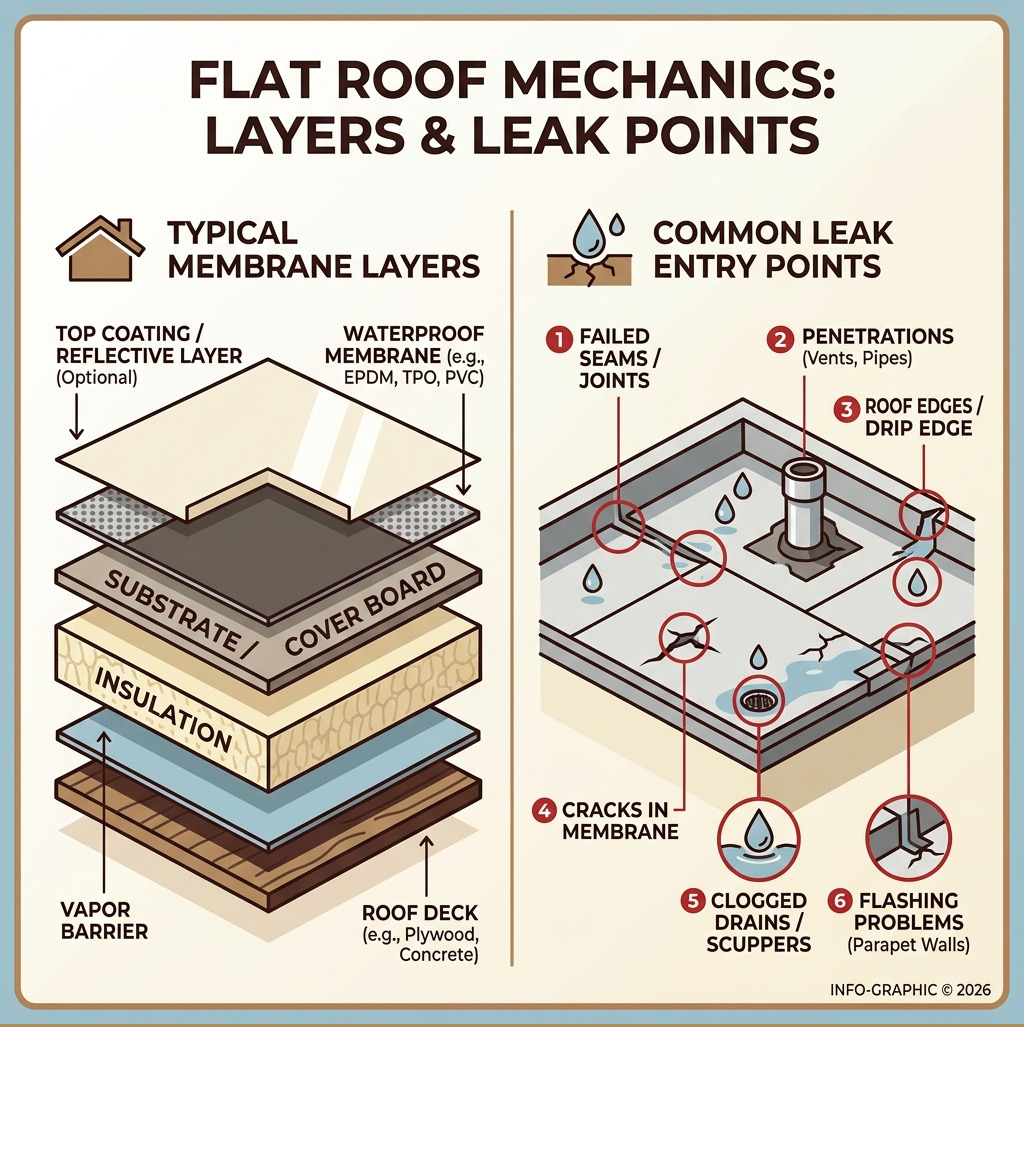
Before you grab a ladder, you need to know exactly what you’re standing on. Not all flat roofs are created equal, and using the wrong repair product on the wrong material is a recipe for a sticky, non-waterproof disaster. In Utah, we see a variety of systems ranging from modern plastics to traditional layered asphalt.
Common Flat Roof Materials
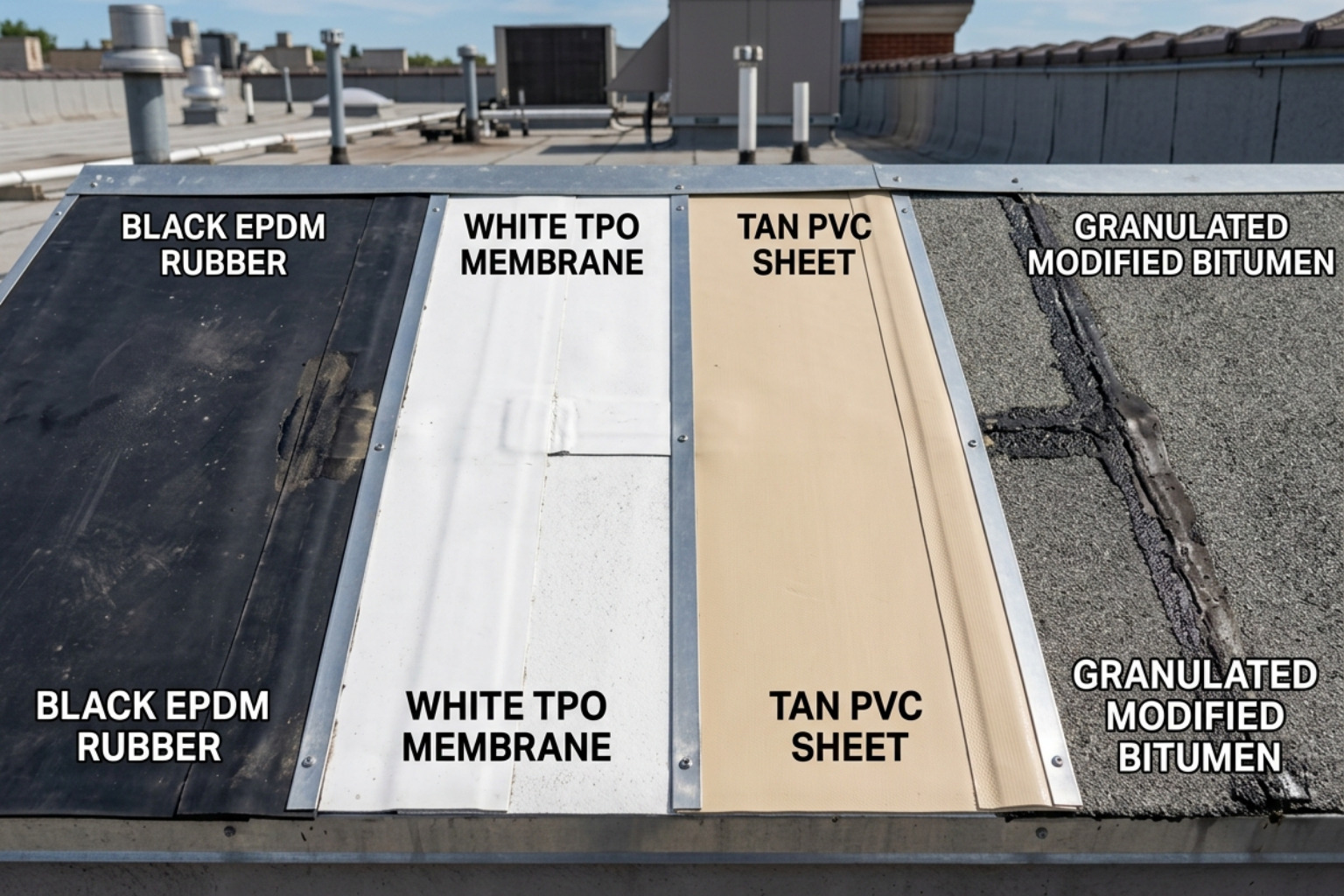
- EPDM (Ethylene Propylene Diene Monomer): This looks and feels like a giant black rubber inner tube. It’s very common on residential additions in Bountiful and Draper because it’s durable and relatively easy to patch. According to Wikipedia, EPDM is a synthetic rubber known for its heat and weather resistance.
- TPO (Thermoplastic Polyolefin) & PVC: These are usually white, light grey, or tan. They feel like a heavy-duty pool liner. If you see visible seams that look like they’ve been “melted” together, you likely have one of these.
- Modified Bitumen: This is a modern take on the old asphalt roof. It usually comes in rolls and has a “granulated” surface that looks like sandpaper or shingles.
- BUR (Built-Up Roofing): Often called “tar and gravel,” this consists of multiple layers of asphalt and felt topped with a layer of small rocks. The gravel protects the underlying layers from our intense Utah sun.
| Material Type | Typical Lifespan | Repair Difficulty |
|---|---|---|
| EPDM (Rubber) | 20–25 Years | Moderate |
| TPO / PVC | 15–20 Years | High (requires heat welding) |
| Modified Bitumen | 15–20 Years | Moderate |
| BUR (Tar & Gravel) | 20–30 Years | High (messy/heavy) |
Finding the Leak: The “Uphill” Strategy
Water is sneaky. Because flat roofs actually have a very slight slope (usually 1/4 inch per foot), water rarely enters the building directly below the hole in the membrane. It often hits the roof deck, travels along a beam, and drips into your living room ten feet away from the actual leak.
To find the source, start inside. Measure the distance from the drip to the two nearest exterior walls. Take those measurements up to the roof and mark that spot with chalk. Now, look “uphill.” Water flows toward the drains or scuppers, so the hole is almost always higher than the drip. Check for punctures, separated seams, or cracked flashing around vents and chimneys. For more on spotting these early signs, check out Flat Out Fixes Your Guide To Low Slope Roof Maintenance/.
Essential Tools and Safety for Fixing a Flat Roof
Safety isn’t just a buzzword; it’s the difference between a successful weekend project and a trip to the ER. While flat roofs feel safer than steep ones, the edges are just as far from the ground.
Stay Safe Up There
- Fall Protection: If you are working near the edge, wear a safety harness.
- Non-Slip Shoes: Flat roofs can be incredibly slippery, especially if there’s a bit of morning dew or algae growth. Wear rubber-soled boots with good grip.
- The Weather Window: Never attempt fixing a flat roof while it’s raining or if the surface is damp. Most adhesives and sealants require a bone-dry surface and temperatures above 40°F (and ideally below 90°F) to bond correctly.
Your DIY Repair Kit
Depending on your roof type, you’ll need:
- Cleaning Supplies: A stiff brush, a leaf blower, and a specialized cleaner (like EPDM cleaner or simple denatured alcohol).
- Roofing Cement: Look for high-quality “wet or dry” plastic roofing cement.
- Reinforcement: Fiberglass mesh or “scrim” to give the cement structural integrity.
- Sealants: Silicone or polyurethane sealants for gaps around flashing.
- Tools: A utility knife, a small heavy roller (for EPDM patches), and a trowel.
If you’re in a high-wind area like Provo, ensuring your patches are weighted and rolled properly is vital. You can learn more about local priorities in our guide on Why Provo Flat Roof Repair Is A Top Priority/.
Step-by-Step Guide to Common Flat Roof Repairs
Once you’ve identified the material and the leak location, it’s time to get to work. Proper preparation is 90% of the job. If you apply a patch over dirt or old, flaking sealant, it will fail within months.
Fixing a flat roof: Patching Holes and Cracks
Small punctures from fallen branches or cracks from age are the most common culprits.
- Clean the Area: Clear away all gravel (if applicable) and scrub the area with a cleaner. The surface should be spotless.
- Apply Cement: Spread a layer of roofing cement about 1/8 inch thick. Extend the cement at least 6 inches beyond the damage in all directions.
- Embed Mesh: Press a piece of fiberglass mesh into the wet cement. This acts like rebar in concrete, preventing the patch from cracking as the roof expands and contracts.
- Second Coat: Apply another layer of cement over the mesh until it is completely covered.
- Protect: If you have a gravel roof, press the rocks back into the wet cement to protect it from UV rays. For smooth roofs, you may want to apply a reflective coating once the cement has cured.
This process is similar for Small Commercial Roofing/ systems found on many local storefronts.
Fixing a flat roof: Repairing Blisters and Bubbles
Blisters happen when moisture or air gets trapped between layers of the roof. When the Utah sun heats the roof, that air expands, creating a “bubble.”
- The X-Cut: Use a utility knife to carefully cut an “X” through the blistered membrane. Be careful not to cut into the roof deck below.
- Dry It Out: Peel back the flaps and let the interior dry completely. If it’s damp inside, your repair won’t stick.
- Seal and Press: Apply roofing cement inside the blister, press the flaps back down, and use a heavy roller to squeeze out any air.
- Patch the Cut: Treat the “X” cuts just like a hole (see the patching steps above) by using mesh and a top layer of cement.
Addressing Ponding Water and Flashing Failures
If you look at your roof 48 hours after a storm and see a “lake” sitting there, you have ponding water. This is the arch-nemesis of a flat roof.
The Problem with Ponding
Ponding water adds immense weight to your structure and accelerates the breakdown of the roofing membrane. Often, this is caused by clogged drains. Before you panic, check your scuppers and downspouts for leaves and debris. If the drains are clear but the water remains, you might have a sagging roof deck or a “low spot” created during installation.
Professionals often fix this by installing tapered insulation, which creates a slight artificial slope to guide water toward the drains. This is a common upgrade during Finding Your Perfect Match Commercial Roofing In Salt Lake City/ projects.
Flashing Failures
Flashing is the metal or membrane material that seals the edges of the roof and transitions around vents. Because metal and roofing membranes expand at different rates, the seal between them often breaks. If you see flashing pulling away, clean the gap and apply a generous bead of polyurethane sealant. Avoid cheap caulk; you need something that stays flexible for years.
When to Call a Professional for Flat Roof Repair
We love a good DIY project, but sometimes fixing a flat roof requires heavy hitters. Here is when you should put down the trowel and call us:
- The 25% Rule: If more than 25% of your roof surface is covered in patches, blisters, or cracks, the system is likely at the end of its life. Patching it further is just throwing good money after bad.
- Structural Issues: If you notice the roof “bouncing” when you walk on it or see sagging from the inside, you may have rotted wood decking that needs replacement.
- Specialized Materials: TPO and PVC roofs require a “heat welder”—a specialized tool that uses hot air to fuse seams together. DIY adhesives rarely work long-term on these materials.
- Insurance Concerns: If your leak is the result of storm damage, improper DIY repairs could lead to an insurance claim denial.
For those in the Salt Lake Valley and beyond, finding The Best Flat Roof Repair Specialists In Utah And Beyond/ ensures your warranty stays intact and the job is done right the first time.
Frequently Asked Questions about Flat Roofs
How much does a typical flat roof repair cost?
Repair costs in Utah vary based on the extent of the damage. A quick service call for a minor leak typically ranges from $400 to $600. For more extensive repairs that take a full day and require more materials, you might look at $1,200 to $1,500. If you are looking at a full tar and gravel repair, expect costs between $5 and $10 per square foot.
How long do flat roof repairs last?
A well-executed patch using high-quality roofing cement and mesh can last several years, often until the rest of the roof reaches its natural expiration date. However, sealants around flashing usually need to be inspected and “touched up” every 3 to 5 years due to Utah’s extreme temperature swings.
Can I repair a flat roof without replacing the whole system?
Absolutely! If the underlying insulation and wood deck are dry and in good condition, we can often perform a roof restoration. This involves cleaning the entire surface and applying a high-performance elastomeric or silicone coating. This can add 10 to 15 years to your roof’s lifespan at a fraction of the cost of a tear-off and replacement.
Conclusion
Fixing a flat roof doesn’t have to be a nightmare. By catching leaks early, identifying your materials correctly, and following the right steps, you can protect your home and your wallet. Whether you’re dealing with a small blister or a stubborn seam leak, the key is to act before the next Utah snowstorm hits.
At Heaton Bros. Roofing, we’ve been serving the Wasatch Front for four generations. From Salt Lake City to Provo, and Bountiful to Park City, we bring over 65 years of experience to every project. We pride ourselves on being a family-owned business that treats your roof like it’s our own.
If you’ve discovered a leak and aren’t sure if it’s a DIY fix or a professional job, we’re here to help. We offer reliable, affordable repairs and replacements tailored to our unique Utah climate. More info about our professional flat roof services can be found on our website, or you can give us a call to schedule an inspection. Let’s keep your home dry together!